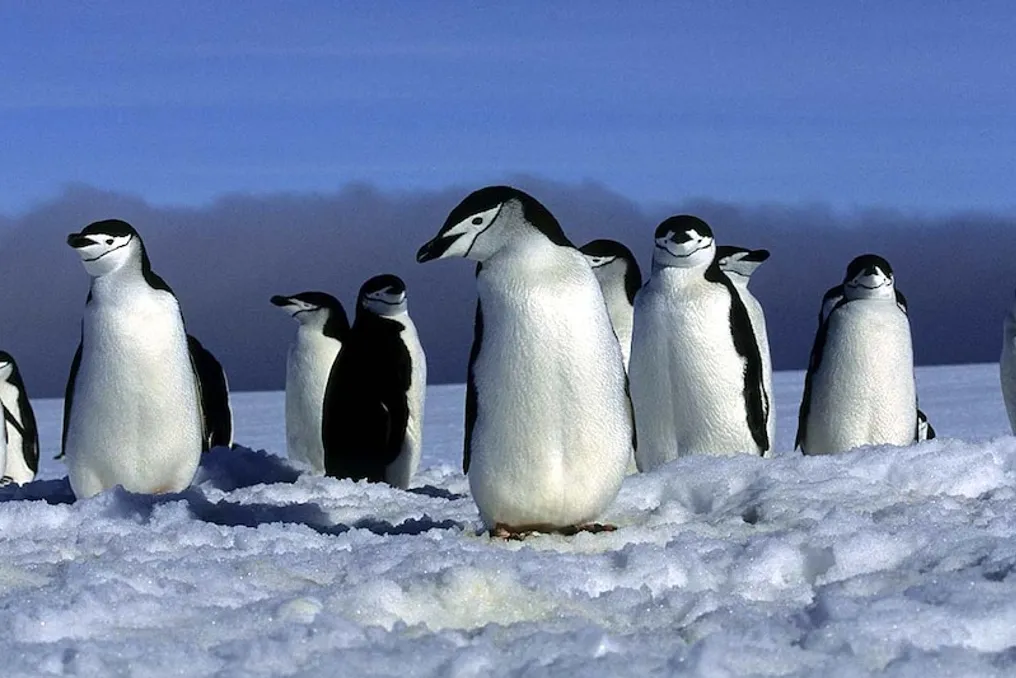
A significant decrease in the number of penguins has been recorded on Zavodovsky Island in Antarctica. According to data, the number of Chinstrap Penguin nests on the island decreased by 63% between 2011 and 2025. Experts calculated that the total population dropped from approximately 10.9 million to 4.02 million individuals, representing a loss of over 6.8 million penguins.
This information was published in the journal Current Biology. Scientists identified climate change and rising sea temperatures as the main factors affecting food availability.
Zavodovsky Island is part of the South Petermann Islands and was previously considered the world's largest penguin colony, hosting a large number of Chinstrap Penguins. The study was conducted by scientists from the British Antarctic Survey (BAS) using drones, aerial photographs, satellite data, and trackers fitted to the penguins.
The study established a continuous decline in the number of Chinstrap Penguins on the island. Chinstrap Penguins are highly dependent on Antarctic krill, a small marine organism similar to shrimp. However, changes in sea temperature can shift krill habitats, making it difficult for penguins to find food.
Scientists fitted tracking devices onto the penguins to monitor their foraging routes. Data showed that they prefer to feed in the cold waters northwest of the island, where krill is expected. Nevertheless, sea warming is altering the distribution and availability of krill, which researchers believe could negatively affect the health and numbers of the penguins.
According to the study's estimates, there were about 10.9 million breeding Chinstrap Penguins on the island in 2011, while this number decreased to 4.02 million by 2025. These changes were documented by comparing aerial and satellite records from different years.
Scientists also accounted for the volcanic eruption on the island in 2016. However, it was determined that the population decline began before this event, so the eruption is not considered the primary cause of the reduction in numbers. Long-term changes in the sea are likely the main causes.
Following the decline in the Chinstrap Penguin population, Zavodovsky Island lost its status as the largest penguin colony. Cape Adare in the Southern Ocean of Antarctica is now recognized as the largest colony, home to a large number of Adélie Penguins. Macaroni Penguins are also found on this island, whose population, according to the study, has increased. This indicates that the impact of changes in the sea and environment does not affect all penguin species equally.
The growing concern over penguin populations is linked to the fact that a significant portion of the global Chinstrap Penguin population lives on the South Petermann Islands. The rapid decline in this region raises serious alarm. If sea warming continues to affect krill availability, penguins will find it harder to find food and raise offspring.
This research demonstrates that the consequences of climate change are manifesting even in remote areas with minimal human activity. It is crucial for scientists to understand how quickly the decline in penguin populations might continue and what steps can be taken to prevent it.