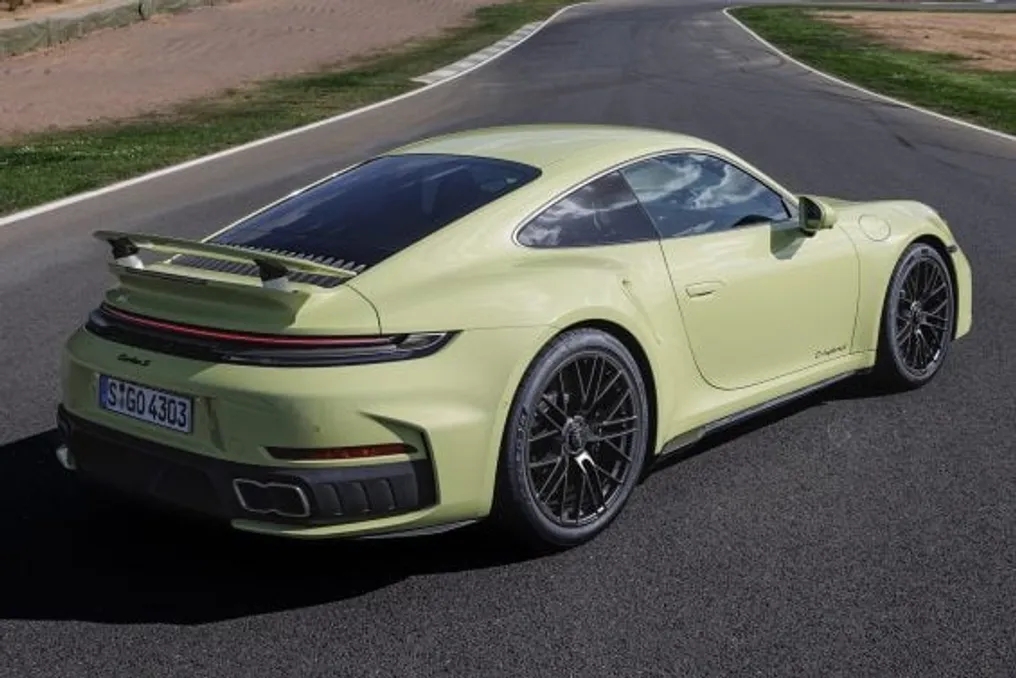
Porsche intends to decrease sales volume while simultaneously raising the prices charged for its highest-cost models. The Stuttgart-based automaker aims to increase the average selling price of its most luxurious vehicles by approximately 20%. Currently, these models cost around R$ 1.6 million (equivalent to € 270 thousand) this year, but the projection is that in the medium term, they will exceed R$ 1.9 million (€ 330 thousand).
The strategic plan aims for high-end automobiles to constitute 45% of the brand's portfolio. If this goal is achieved, Porsche could maintain cost coverage even while selling fewer than 200,000 units annually. It is relevant to note that in 2025, the manufacturer registered the delivery of 279,449 vehicles.
For comparison, the new price level approaches almost double the value of a 2026 911 Carrera in the Brazilian market, whose price on the Fipe table is estimated at around R$ 1 million.
The market strategy includes the launch of new special editions of the 911 model and an unprecedented mid-engine hypercar. Additionally, there will be volume-focused models, such as a gasoline-powered crossover intended to replace the first-generation Macan. On the other hand, the 718 dual line (which includes Boxster and Cayman) will be available exclusively in electric versions, as combustion engine project plans were discarded. There is also an ongoing evaluation for a large SUV with three rows of seating capacity.
To support this repositioning, the automaker will implement significant cuts in operating expenses. The established goal is to reduce product development expenses by 20%, as well as decrease the number of variants offered to consumers by an equivalent proportion. Furthermore, Porsche will seek to cut warranty costs by 45% and sales and distribution costs by 20%.
In terms of labor, the company reached an agreement with unions aiming to eliminate 9,000 jobs by 2035, which represents about one-fifth of the current workforce. This restructuring is being led by CEO Michael Leiters and occurs during a challenging period, particularly in China, where strong competition from local manufacturers prevents agile commercial recovery.
The company faces the challenge of harmonizing development between combustion engines, plug-in hybrids (which can be externally charged), and fully electric vehicles, which increases R&D costs. Despite these changes, the manual transmission of the 911 will remain available for sale.