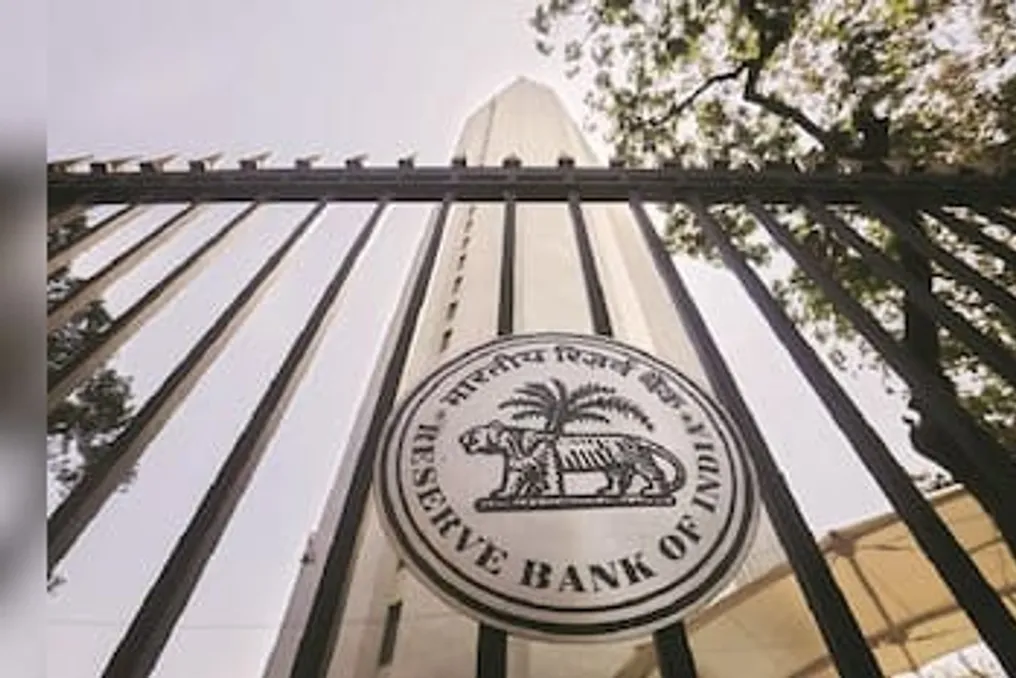
The Reserve Bank of India (RBI) has tightened liquidity management by raising the minimum daily Cash Reserve Ratio (CRR) requirement from 90% to 99% of the prescribed norm. This change took effect over a two-week period starting October 16, 2026.
This move followed the central bank's decision to increase the key repo rate by 25 basis points to 5.50%, marking the first hike in two and a half years. Furthermore, the RBI announced an Open Market Operation (OMO) to sell government securities worth 25,000 crore rupees on October 13 to absorb excess liquidity from the banking system.
The last time RBI set the minimum daily CRR requirement at 99% was in July 2013, amidst increased volatility in the foreign exchange market following the US Federal Reserve's so-called 'tightening crisis.' CRR represents the portion of bank deposits that they are obligated to hold as cash with the RBI, for which banks do not receive interest income.
Under the revised requirement, banks must maintain at least 99% of the prescribed CRR daily during the reporting two-week period, provided their average daily CRR balance for this period does not fall below the prescribed norm by 3%. This decision will reduce banks' flexibility in managing daily liquidity needs and may lead to tighter conditions in the money market.
In addition, RBI announced the sale of bonds through OMO worth 25,000 crore rupees on October 13 to absorb surplus liquidity. On October 8, the liquidity surplus, measured by the amount placed by banks in the RBI's liquidity management window, stood at 3.88 trillion rupees. These measures aim to bring the Weighted Average Call Rate (WACR), the operational target of monetary policy, closer to the repo rate of 5.50%.
On Friday, the WACR stood at 5.31%, compared to 5.30% on Thursday, bringing it closer to the lower bound of the interest rate corridor. The Savings Deposit Facility (SDF) rate is 5.25%, setting the lower floor, while the Marginal Standing Facility (MSF) rate is 5.75%, defining the upper ceiling. Since the monetary policy review in August, the WACR has traded, on average, 14 basis points below the repo rate.
In its monetary policy statement on Wednesday, RBI Governor Sanjay Malhotra stated that the central bank would use an appropriate combination of liquidity management tools to align the WACR with the repo rate.
History of CRR Requirement Changes
After raising the minimum daily CRR requirement to 99% in July 2013, RBI reduced this requirement to 95% in September 2013, and subsequently lowered it further to 90% in April 2016.
Banks noted that increasing the daily CRR requirement will decrease their capacity for fund management, as they will have to maintain a higher proportion of prescribed reserves with the RBI daily. One senior banker from a public sector bank commented: 'This step will leave banks with less funds for other purposes. However, the overall impact may be limited, as banks generally maintained CRR balances exceeding 95% of the prescribed requirement.'
Bond Sale to Absorb Excess Liquidity
RBI reported that the decision to sell government securities via OMO was made after analyzing current and evolving liquidity conditions. The auction for 25,000 crore rupees will be conducted using a multiple price method, offering six government securities with maturities between 2030 and 2034. RBI did not specify the individual notified amount for each security.
The central bank will determine the volume of sale for each security and reserves the right to accept bids for amounts less than the notified aggregate amount or to reject bids fully or partially. Previously, RBI sold government securities worth 1 trillion rupees through OMO in September in three tranches: 50,000 crore rupees on September 17 and 25,000 crore rupees each on September 21 and 28, to absorb surplus rupee liquidity.
Meanwhile, banks placed 18,170 crore rupees in RBI's Variable Rate Reverse Repo (VRRR) auction for 10 days. Market participants attributed the weak demand for longer-term auctions to the lack of additional income for locking up funds for extended periods. The response to the three-day VRRR auction was stronger, with banks placing nearly 1.4 trillion rupees against a notified amount of 1.5 trillion rupees.
A senior private bank banker commented: 'At a maximum rate of 5.49% across all tenors from one to 29 days, banks may be reluctant to invest for longer periods without a term premium.' RBI plans to conduct a three-day VRRR auction worth 2 trillion rupees on Monday.