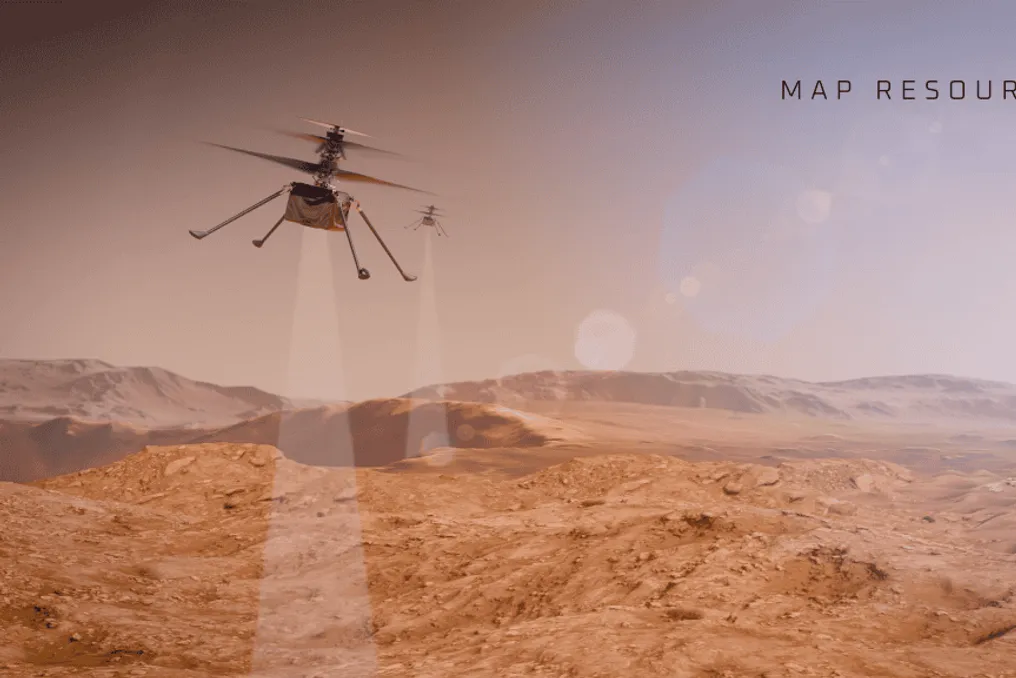
NASA details Skyfall mission, which will transport helicopters to Mars using a nuclear spacecraft
Read more
Olhar Digital
olhardigital.com.br

NASA details Skyfall mission, which will transport helicopters to Mars using a nuclear spacecraft

NASA plans to send helicopters to the surface of Mars in a mission scheduled for completion by the end of 2028. This initiative, named Skyfall, is part of a broader project that will utilize a nuclear-powered spacecraft to test new deep space propulsion technologies.

The announcement was made on March 24 during an event called Ignition, at which time the American space agency presented various actions aimed at fulfilling U.S. space policy.

The mission will be conducted by the Space Reactor-1 Freedom (SR-1 Freedom), which NASA describes as the first interstellar spacecraft powered by nuclear energy. It is estimated that this spacecraft will travel to Mars before the end of 2028 and, upon reaching the planet, will release the Skyfall payload, consisting of Ingenuity-class helicopters.

Importance of the SR-1 Freedom

The SR-1 Freedom represents a crucial step in NASA's planning to transition nuclear energy and propulsion systems from a research environment to actual space missions. The agency aims to use this mission to prove the functionality of nuclear equipment in space, define regulatory and launch standards, and boost the development of an industry focused on future fission power systems.

This project is being developed in collaboration with the U.S. Department of Energy. According to NASA itself, this initiative should assist in future long-duration expeditions, covering both Mars exploration and areas further out in the Solar System.

The forecast released by the agency is to launch the SR-1 Freedom before the end of 2028, with the deployment of the Skyfall payload occurring as soon as the spacecraft reaches Mars.
Similar stories

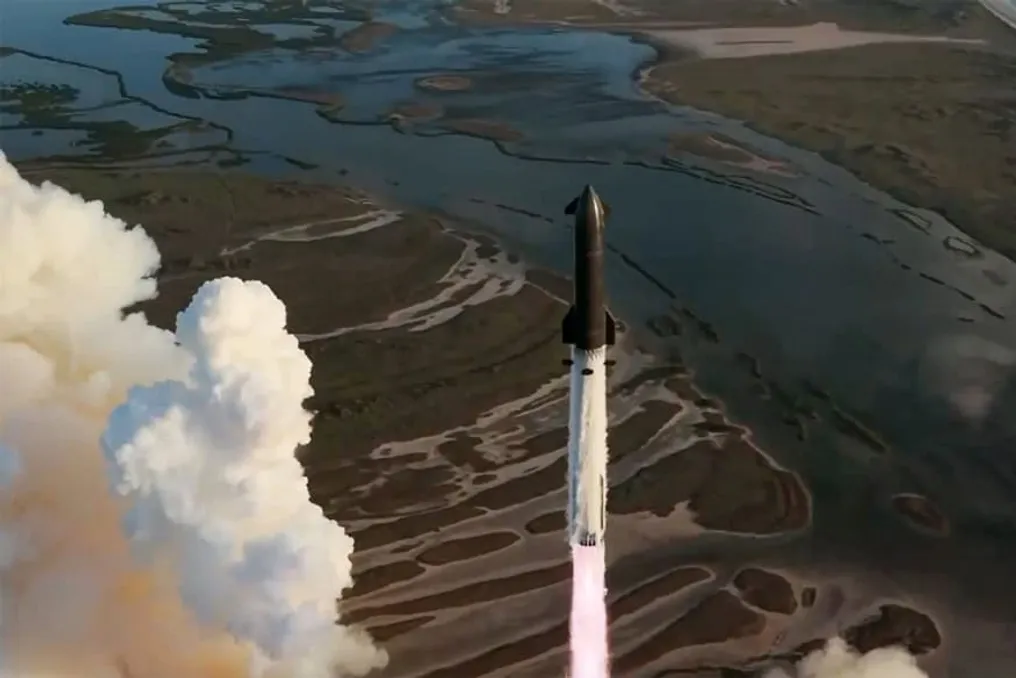
Starship orbits Earth, Saturn appears bright, and astronauts are launched into space this week
Read more
olhardigital.com.br

Starship orbits Earth, Saturn appears bright, and astronauts are launched into space this week

Several notable events marked the week, including a historic milestone for SpaceX with the launch of the 14th test flight of Starship. This giant rocket ascended to the skies on Monday, the 28th, precisely at 9:48 AM Brasília time, achieving its first orbital mission. The live broadcast of this event was made available by Olhar Digital on social media and YouTube.

Initially, the flight was predicted to last approximately 9 hours and 50 minutes. However, during the broadcast, SpaceX announced a change in schedule, reducing the expected duration to only three hours. In a statement, SpaceX clarified that previous tests were conducted with suborbital trajectories to ensure public safety while the team gathered data on the rocket's performance. With reaching orbit, the company can begin the next stage in the development of Starship aimed at making it fully and rapidly reusable.

In another scientific record, a strong earthquake registered off the coast of Russia in July 2025 reactivated the Krasheninnikov volcano, which had been inactive since around 1550. The volcanic activity is being monitored by the NISAR mission, which represents a collaboration between the space agencies of the United States and India. Using radar technology, the satellite can capture landscape changes even under dark or cloudy conditions. The images obtained reveal lava filling the deepest part of the volcano and subsequently progressing up the slope.

Astronomically and culturally, this is the ideal period for observing Saturn. This occurs because the ringed planet is near opposition, a moment when a celestial body is on the diametrically opposite side of the Sun relative to Earth, which is positioned between them. Additionally, the gas giant will reach its closest point to our planet, known as perigee, resulting in a brighter and larger appearance in the sky.

According to the astronomical observation guide InTheSky.org, the precise moment for this phenomenon will occur on Sunday, the 4th, at 9:21 AM Brasília time. At that time, Saturn will be 8.43 Astronomical Units (AU) from Earth, a distance equivalent to 1.26 billion kilometers.

Finally, NASA and SpaceX conducted the crewed mission Crew-13 launch on Thursday, the 1st, heading to the International Space Station (ISS), departing from the Cape Canaveral Space Base in Florida. The takeoff occurred around 12:11 PM Brasília time, and the Dragon capsule managed to dock with the orbital laboratory approximately eight hours after launch.

Crew-13 constitutes the 13th crew rotation flight of the Dragon and Falcon 9 rocket. This spacecraft transported NASA astronaut Jessica Watkins and Luke Delaney, CSA astronaut Joshua Kutryk, and Roscosmos cosmonaut Sergey Teteryatnikov.

Popular