
Sanju Samson scores a half-century off 21 balls in Ranchi, matching Virat Kohli's record
Read more
Aaj Tak
www.aajtak.in

Sanju Samson scores a half-century off 21 balls in Ranchi, matching Virat Kohli's record

During the second T20 series match between India and West Indies, held in Ranchi on Friday (October 9), Sanju Samson demonstrated an outstanding performance with the bat. Samson, who scored only 11 runs in the first match of the series, managed to score a half-century off just 21 balls in this game. This marked the fastest half-century by an Indian player against the West Indies in a T20 International match.

Virat Kohli had previously set a similar record, reaching fifty runs off 21 balls at the Wankhede Stadium in Mumbai in 2019. Sanju Samson's aggressive performance also positively impacted the start of the Indian team. During the powerplay, India scored 79 runs while losing one batsman, which is the highest total in the powerplay against the West Indies in T20 International history. Previously, the Indian team had scored 72 runs at the Wankhede Stadium in 2019 without losing any batsmen.

In Samson's innings, aggression was accompanied by luck. He avoided being dismissed for a personal score of six runs when he was caught in the third over. He then received another chance and scored 42 runs. These errors allowed the West Indies to face consequences. Samson completed his half-century by hitting the fourth boundary off Romario Shepherd's delivery in the sixth over.

He achieved this milestone by hitting two consecutive boundaries off just 21 balls. In total, Sanju Samson scored 82 runs off 41 balls, including 9 fours and 4 sixes. His attacking style forced the West Indies players to be under pressure from the beginning of the game.

Indian captain Shreyas Iyer decided to start the game despite losing the toss. Samson and Abhishek Sharma started the innings, adding 42 runs in four overs while losing the first batsman. Abhishek scored 20 runs off 12 balls, but even after his dismissal, Samson did not slow down the scoring rate. After that, he continued to accumulate runs with Ishan Kishan, and Samson's quick start allowed the team to reach a high score.

West Indies captain Shy Hap chose a strategy of starting the game with the visiting team, deciding that the situation with dew might become more complicated as the evening progressed. Gudakesh Motie was included in the squad, while India made no changes to its starting lineup. Samson's half-century off 21 balls not only matched Virat Kohli's record but also set a new benchmark for India's performances in the powerplay against the West Indies.
Similar stories

Kamran Akmal criticized Sam Ayub's celebration after the 2026 Asian Games match
Read more
www.aajtak.in

Kamran Akmal criticized Sam Ayub's celebration after the 2026 Asian Games match

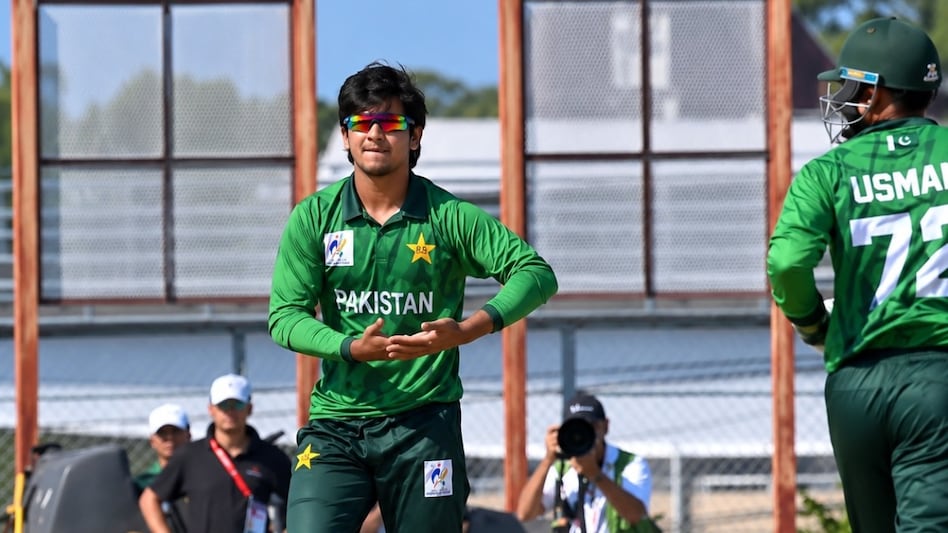
An incident that continues to be discussed occurred during the gold medal match of men's cricket at the 2026 Asian Games between India and Pakistan. Pakistani all-rounder Sam Ayub staged a controversial celebration after dismissing young Indian batsman Vaibha Suryawanshi.

Ayub imitated cradling a baby (celebration in cradle), which drew criticism from former Pakistani cricketer Kamran Akmal. Akmal voiced his opinion on this situation on the show 'Game Plan'. The program host also questioned such behavior in international cricket.

In response, Akmal stated that players should focus on their game rather than actions for social media. He emphasized that such things have been happening for a long time, and despite the team's poor results, players engage in attention-grabbing activities on social media. Akmal urged the management to consider this, noting that it concerns international cricket, and the player's age is irrelevant since he plays internationally. He added that Sam Ayub is not a child and should focus on his performance.

In this match, India defeated Pakistan by 19 runs, defending the championship title. At the beginning of the Indian innings, Vaibha Suryawanshi tried to put pressure on the Pakistani bowlers. He showed his intent by scoring two boundaries in Sad Masood's over. However, he was dismissed while attempting a reverse sweep against Sam Ayub in the third over. Vaibha scored 15 runs off 9 balls.

In the match, India batted first and scored 211/6 in 20 overs. Abhishek Sharma played aggressively, scoring 61 runs off 28 balls. Tilak Verma quietly scored 51 runs without getting out, and Shivam Dube contributed 27 runs. After Vaibha Suryawanshi's early dismissal, Sanju Samson came in at number three.

Pakistan's start while chasing was not the most successful, but Hasan Nawaz tried to change the game's momentum, showing explosive play with 96 runs off 51 balls and putting pressure on the Indian bowlers. Jasprit Bumrah and Shivam Dube performed excellently under pressure, restricting Pakistan to 192/6.

India defeats West Indies in Guwahati, achieving historic success in the pursuit of the target score
Read more
www.aajtak.in

India defeats West Indies in Guwahati, achieving historic success in the pursuit of the target score

Records were broken in Guwahati: the target of 406 runs was surpassed, and India secured an unassailable 2-0 lead in the series. Although West Indies managed to score an impressive 405/7 on Wednesday (September 30), Shubman Gill's and Rohit Sharma's batting made this target insignificant. India won the match by scoring 406/2 in just 43.3 overs, ensuring a confident lead in the three-match series.

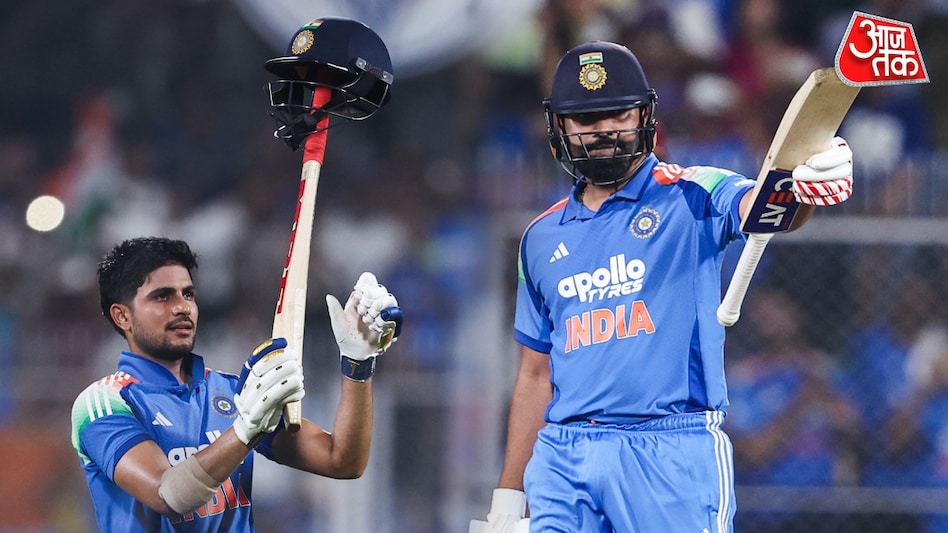
Captain Shubman Gill demonstrated incredible play that entered the ODI record books. He reached a double century off 117 balls, marking the fastest double century in 50-over cricket. In his innings, Gill scored 133 runs, hitting 26 fours and 8 sixes.

This achievement allowed Gill to surpass Ishan Kishan's record, who had previously scored a double century off 126 balls in ODIs. Furthermore, it was Gill's 11th century in ODIs, which he achieved in just 62 balls, making it the fastest century in ODI format.

At the other end of the pitch, Rohit Sharma played in his usual style. He scored 101 runs off 75 balls, utilizing powerful drives down the ground and pick-up shots. During this innings, Rohit also crossed the 12,000-run mark in ODIs, becoming the seventh player globally to reach this milestone and the third Indian after Sachin Tendulkar and Virat Kohli.

The start of the match was very strong: Gill and Rohit attacked the West Indies bowlers, and India scored 100 runs in just 12 overs. Gill completed his half-century in 38 balls, and Rohit in 32 balls.

By the 22nd over, India's score without loss stood at 200 runs. In the chase of over 350 runs, this was the first instance in ODIs where the opening pair scored 200 runs. Both players contributed 255 runs to the team for the first wicket. This partnership was broken after 26.2 overs when Rohit was dismissed after scoring 101 runs. At that point, India needed 151 more runs with 24 overs remaining. Gill continued to play aggressively and led the team to victory.

Prior to this, West Indies created a real storm, scoring 405/7, exposing the weakness of the Indian attacking pace. John Campbell scored 101 runs off 68 balls, Shay Hope scored 104 off 94 balls, and Amir Jangu scored 114 off 77 balls. Campbell reached a century in just 65 balls, displaying an aggressive style similar to Chris Gayle, including 9 fours and 5 sixes.

Hope, who was caught early by Virat Kohli, managed to stabilize the innings and then started scoring runs, hitting 8 fours and 3 sixes. Jangu achieved his second ODI century in just 69 balls, hitting 13 fours and 3 sixes. Thus, West Indies recorded three centuries in ODIs for the first time and surpassed their previous best score of 389 runs.

However, the Indian bowlers faced questions. In the absence of Jasprit Bumrah and Mohammed Siraj, young players were given a chance, but the results raised doubts. Akib Nabi conceded 84 runs in 8.5 overs, becoming the best Indian bowler in terms of runs conceded in his debut ODI. Guruveer Bar took 2 wickets, conceding 96 runs in 10 overs, while Prasidh Krishna took one wicket, conceding 45 runs in 5 overs. Naman Dir sustained an ankle injury during the game and left the field after 6.1 overs.

A positive aspect for India was that Kuldeep Yadav completed his 200 wickets in ODIs, taking 2/65. Ravindra Jadeja also performed well, taking 2/75.

Historical context: India became the second team after South Africa to chase a score of over 400 in ODI history. Previously, the Indian team had reached a score above 400 eight times, but all these instances occurred in the first half of the match.

Kuldeep Yadav reaches 200 ODI wickets, surpassing Shane Warne in balls bowled
Read more
www.aajtak.in

Kuldeep Yadav reaches 200 ODI wickets, surpassing Shane Warne in balls bowled

In the match between India and West Indies, players from the West Indies demonstrated strong play, dealing a serious blow to the Indian bowlers. John Campbell, Shai Hope, and Amir Jangu each scored a century, bringing the West Indies total to 405 runs. In rainy conditions, Kuldeep Yadav recorded a significant record.

In his 123rd ODI match, Kuldeep Yadav completed his 200th wicket, becoming the second fastest bowler in Indian history to reach this milestone. He is only surpassed by Mohammed Shammi, who took 200 wickets in 104 ODIs. Following him are Ajit Agarkar (133), Zaheer Khan (144), and Anil Kumble/Javagal Srinath (147).

Kuldeep secured his 200th wicket of Kemi Paul, who was caught by Virat Kohli in the long-on region after 45.1 overs. This moment marked Kuldeep's achievement of a double century in ODIs. Furthermore, Kuldeep surpassed Shane Warne in the number of balls required to achieve 200 ODI wickets, completing them in only 6319 deliveries. Among spinners, only Shaklan Mushtaq (5451) and Rashid Khan (5782) achieved this result with fewer balls. Following Kuldeep are Adam Jampa (6385), Adil Rashid (6881), and Shane Warne (6983).

Despite the record attack by the West Indies, Kuldeep remained among the few Indian bowlers who managed to partially contain the pace of the game. In his full quota of 10 overs, he took 2 wickets, conceding 65 runs, resulting in an economy rate of 6.50.

Before the West Indies reached 405 runs, Campbell scored 101 runs off 68 balls, Hope scored 104 runs off 94 balls, and Jangu scored 114 runs off just 77 balls. This was a rare sight in one ODI match where three batsmen score a century.

Popular