Indian professionals have made a significant contribution to transforming America into a technological superpower by working at giants such as Google, Microsoft, Meta, and Apple. Indians hold leadership positions in major tech companies and play a key role in software development and artificial intelligence. However, new discussions regarding the future of Indian IT professionals have recently begun in the US.
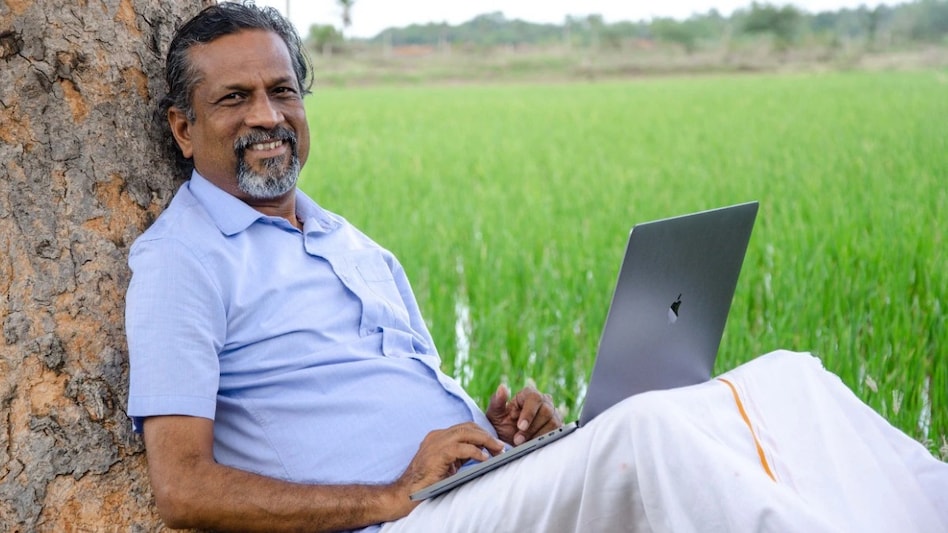
The US government has paused a significant part of the green card application process for several large technology and IT companies through the PERM program. Following this, Zoho founder Shridur Vembu appealed to Indians working in America, urging them to return to India and contribute to strengthening the country's technology industry.
Vembu wrote on the social network X that Indians have significantly contributed to enhancing America's technological power, but now a large part of American society is unwilling to accept them. He noted that Indians residing on American visas may face difficulties related to abandoning lives and careers built through their own efforts. In this regard, he called on Indian specialists: 'Come back, let's build India.'
This appeal comes against the backdrop of tightening immigration rules in the US. Nevertheless, an important question arises: are opportunities for Indians in America truly shrinking, or is this a consequence of a decision limited to certain companies and a specific green card application process?
The US Department of Labor announced on October 8th the suspension of the PERM program for numerous large companies. This list included Microsoft, Adobe, Cognizant, as well as Indian IT companies such as Infosys, Tata Consultancy Services (TCS), Wipro, HCL, and Capgemini.
US officials claim that these companies improperly used the rules when hiring foreign employees and processing permanent residency documents. The US government insists that the purpose of the PERM procedure is to ensure that a foreign employee is not offered a job while ignoring a qualified and available American worker in that position.
As a result of these measures, the affected companies will be unable to file new PERM applications, and the review process for already submitted applications has also been halted. It is important to understand, however, that this decision does not mean the automatic cancellation of green cards for all Indians, nor is it an order for all Indians to leave America immediately.
A green card in the US grants a foreign citizen the right to permanent residence and work. There are several paths to obtaining a green card based on employment, and in some cases, PERM (Permanent Labor Certification) is a necessary step.
As part of this procedure, the company must prove that it could not find a suitable, interested, and available American worker for the position. Furthermore, it cannot be allowed that the attraction of a foreign specialist negatively affects the salary and working conditions of American workers performing similar work. However, even after PERM approval, the green card is not issued immediately; additional stages must be completed depending on the application category and employee status.
Therefore, the suspension of this program may affect Indian employees whose permanent residency process was advanced through the affected companies. This uncertainty can cause serious concern for those who have worked in America for many years, started families, and planned their futures.
In his post, Shridur Vembu also mentioned that people from countries such as China, Taiwan, and South Korea moved abroad in search of better opportunities, but these countries continued to develop at home. In his opinion, the work of Indians abroad and the development of India do not contradict each other. The real need is to create companies and opportunities where Indian talent would want to work in their own country.
Vembu also emphasized the practical aspect: specialists working abroad possess technical experience, understanding of global markets, and experience working in large corporations. If some of them return to India to start startups, conduct research, or bring Indian companies to the global level, it will benefit the country.
However, the call itself will not lead to people returning. For this, India needs good jobs, decent pay, research opportunities, a strong startup ecosystem, and the necessary conditions for doing business. For a person working abroad, issues of family, children's education, housing, salary, and permanent residence remain equally important.