Asian markets approached the weekend on Friday with mixed results. The technology sector faced increased concerns regarding the investment bubble in artificial intelligence, while it received support due to falling oil prices after Donald Trump ruled out the possibility of a pre-election attack on Iran.
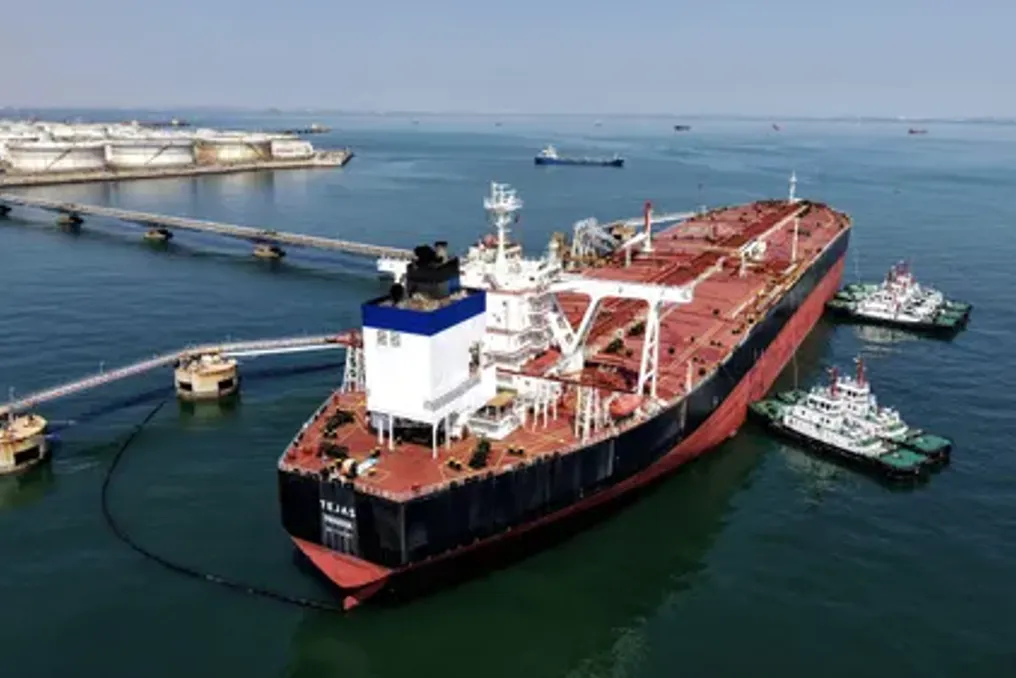
Traders felt some relief from the decrease in oil costs, as US President Donald Trump stated that Washington is having 'productive discussions' with Tehran, ruling out military action against Iran before the midterm elections.
These statements came after reports that the White House instructed the Pentagon to develop plans for a possible attack ahead of the November 3rd vote, hoping that a display of strength would help the chances of the competing Republicans.
Both major contracts dropped by approximately 0.7% on Friday; Brent crude oil price was $103.53, although it had previously risen by four percent due to concerns about potential increased Iranian attacks in the Strait of Hormuz.
New impetus for the technology sector
The prospects for the development of artificial intelligence in recent weeks gave a new boost to the technology sector, sparking optimism ahead of the earnings season. Chip giant Nvidia reached a record high this week, approaching a market capitalization of $6 trillion.
However, this optimism was overshadowed by a Financial Times report stating that OpenAI, the developer of ChatGPT, forecasts annual revenue of $50 billion for the current year, significantly less than the previously stated $70 billion.
Steven Innes from SPI Asset Management noted: 'Most of this boom was driven by the market's willingness to follow incoming money. More large data centers, more GPUs, more memory, more energy, more debt, more capital expenditure.' He continued: 'Every new spending commitment became another brick in the bull wall because it was based on the simple assumption: if the industry is willing to spend that much, demand will eventually justify it.'
Nevertheless, the figure provided by OpenAI made traders look at the other side of the balance sheet.
On Wall Street, the Nasdaq index closed more than one percent lower, with Nvidia shares falling almost three percent, and Microsoft, AMD, and Amazon also showing sharp declines.
However, Chris Weston from Pepperstone added that 'the divergence may reflect differences in revenue measurement methods, not a direct deterioration of OpenAI's core business.' He also noted that 'in a market where valuations increasingly depend on ambitious revenue and cash flow forecasts, headlines were enough to cause significant single-day repositioning.'
Decline in Asian stocks
In Asia, Tokyo fell, and tech giant SoftBank lost more than four percent. There was also a noticeable drop in Kioxia and Advantest shares. Markets in Shanghai and Singapore also showed a decline, but Hong Kong, Sydney, Wellington, Manila, and Jakarta showed growth.
Seoul and Taipei, which are heavily dependent on technology companies, were closed for holidays.
Key figures around 4:30 (Australia time)
According to the report, the Nikkei 225 index in Tokyo fell by 0.8% to 68,512.30. The Hang Seng index in Hong Kong rose by 1.2% to 24,059.76. The Shanghai Composite Index decreased by 1.2% to 3,767.83. The West Texas Intermediate crude oil price fell by 0.7% to $90.89 per barrel, and Brent North Sea Crude also fell by 0.7% to $103.53 per barrel.
Currency pairs showed the following changes: Euro/dollar rose to 1.1222 from 1.1213 on Thursday; Pound/dollar rose to 1.3241 from 1.3228; Dollar/yen fell to 157.89 yen from 157.92 yen; Euro/pound fell to 84.75 pence from 84.77 pence. In New York, the Dow index rose by 0.1% to 51,231.64, and in London, the FTSE 100 closed down by 0.2% to 10,441.60.