Over the past six months, the National Consumer Commission (NCC) in South Africa has recalled thousands of vehicles across the country due to safety issues. Manufacturers continue to notify the NCC about mechanical malfunctions or software glitches in already sold vehicles, causing concern among drivers.
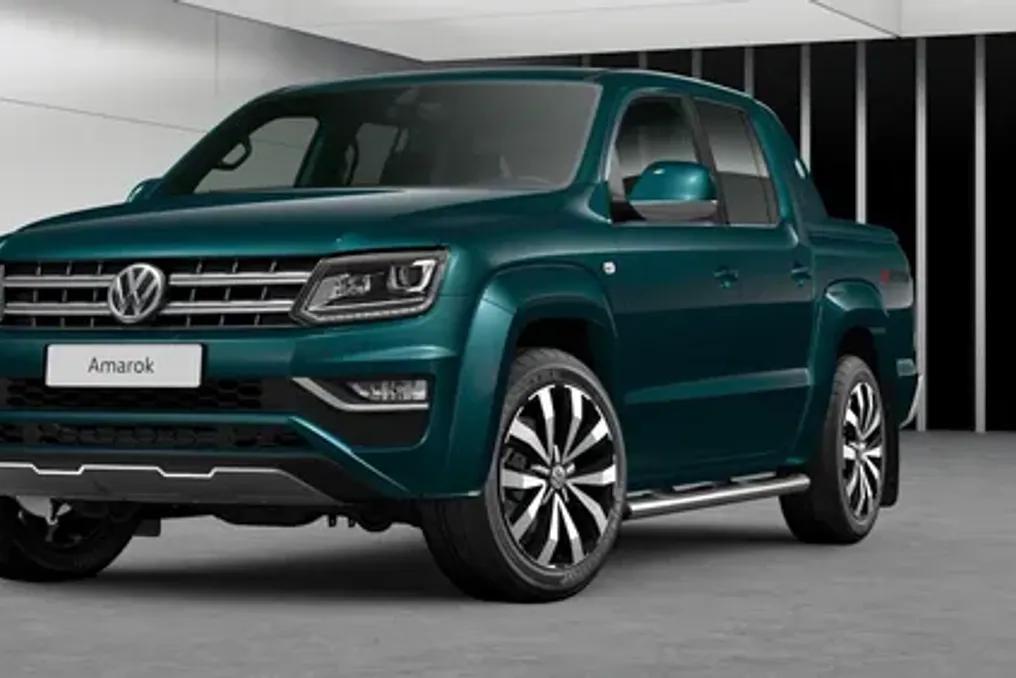
Reports from the last six months revealed numerous instances of recalls across various models. For example, the latest notification involved the recall of nearly 300 VW Amarok vehicles. Volkswagen Group Africa (Pty) Ltd informed the Commission about this recall. A commission representative, Fethu Ntaba, stated that the affected vehicles were sold nationwide between June 2, 2026, and September 15, 2026. The recall affects 291 vehicles in South Africa.
Ntaba explained that according to the supplier, in a side or frontal collision, the curtain airbag might not fully deploy due to contact with an interior cabin component. There is also a risk that sharp plastic parts could detach or remain in the airbag, reducing protection for the driver and front passenger. Furthermore, sharp edges of the guide element could separate or remain in the head or neck contact area, increasing the risk of injury in an accident.
Additionally, over 500 Suzuki Grand Vitara vehicles were recalled due to a fuel warning issue. This recall concerns 543 Suzuki Grand Vitara vehicles that were available for sale through Suzuki dealerships nationwide starting in May 2025. Ntaba noted that the manufacturer warned the commission that the low fuel indicator might fail to illuminate as the fuel level decreases. This could result in the driver not receiving a low fuel warning, potentially leading to engine stalling and inability to restart.
More than 2,500 Toyota Land Cruiser Prado, Lexus GX, Lexus UX, and Jeep Grand Cherokee (WL) vehicles were recalled due to software errors. A total of 2,279 Toyota Land Cruiser Prado vehicles were affected. Ntaba explained that the recall is related to a software error in the instrument cluster. Upon starting, the 3D graphics microcontroller unit may not initialize completely, resulting in a blank image in the 3D graphics area, which is part of the instrument panel.
255 Jeep Grand Cherokee (WL) vehicles were recalled, of which 251 units were sold nationwide between 2023 and 2025. Ntaba added that four vehicles are still with the manufacturer. According to Stellantis South Africa, the airbag control module might have been manufactured with software that can cause persistent pressure sensor failures on the door airbag throughout the sensor's service life.
Also, 41 Lexus GX and Lexus UX vehicles were recalled. These vehicles were available from April 17, 2024, to September 8, 2025, and were sold nationally. Lexus reported that the module in the affected vehicles might have been created with software that can cause persistent pressure sensor failures on the door airbag throughout the sensor's service life.
In August, over 500 Toyota vehicles were recalled. The recall concerned an instrument cluster reprogramming issue, affecting a total of 16 Toyota RAV4 PHEV, four Corolla Cross, 391 Corolla Hatchback, 12 Crown, and 86 GR Corolla. These vehicles were sold through the Toyota dealer network nationwide and were manufactured on the following dates: RAV4 PHEV – from July 8, 2024; Corolla Cross – from July 2, 2024; Corolla Hatchback – from October 7, 2022; Crown – from October 17, 2022; GR Corolla – from February 16, 2023.
NCC representative Fethu Ntaba stated that the affected vehicles are equipped with an instrument cluster system that displays various vehicle data, including indicators and warning signs, sensors, and messages, on a 12.3-inch display monitor located on the dashboard. He clarified that due to incorrect instrument cluster programming, unnecessary data might be repeatedly written to the memory during the instrument's operation, which could lead to premature wear of this device.
In July, the NCC recalled certain models of Nissan Qashqai Sport Utility Vehicle (SUV), Toyota Land Cruiser 300, and Lexus LX600 based on notifications from respective suppliers. Nissan recalled 314 vehicles. According to Nissan, there is a possibility of the fuel tube shifting inside the retaining clip in the engine bay while the engine is running. This movement could lead to fuel tube wear, potentially causing perforation and fuel leakage.
The vehicles were available between May 4, 2021, and September 17, 2024. Toyota recalled 507 Toyota Land Cruiser 300 vehicles, and Lexus SA Motors Pty (Ltd) recalled 124 Lexus LX600 models. According to the suppliers, the affected Land Cruiser vehicles were sold from December 13, 2022, to May 7, 2024, while the Lexus vehicles were sold from December 15, 2022, to May 7, 2024, and exported to Botswana and Namibia.
Ntaba explained that both Lexus and Land Cruiser are equipped with the V35A engine, which contains crankshaft main bearings allowing the shaft to rotate in the engine while running. During a specific production period, manufacturing residues might not have been completely removed during assembly, leading to contamination of the engine unit. If manufacturing residues adhere to the main bearings and the engine continues to run under increased loads, the bearings could fail. This could cause engine knocking, rough engine running, starting difficulties, or engine stalling. Engine stalling while driving can lead to loss of traction, increasing the risk of an accident at high speeds.
BMW recalled nearly 11,000 vehicles due to starter problems. The recall covers BMW 3 Series, 4 Series, 5 Series, 7 Series, X3, and X4 vehicles sold in South Africa since 2016. The recall affects 10,961 vehicles equipped with a Pinion Starter. Fethu Ntaba reported that due to manufacturing factors, the affected vehicles might experience increased wear of the electromagnetic switch after many start cycles. As a result, the engine's ability to start deteriorates, and under certain circumstances, the engine may fail to start.
In June, over 6,500 Toyota and Lexus vehicles were recalled for safety reasons. The recall affects 4,858 Toyota and 1,667 Lexus vehicles sold across South Africa. Affected vehicles include Toyota Crown, Land Cruiser 300 (LC300), Land Cruiser Prado, RAV4, and bZ4X, which were available for sale between 2022 and 2025. Among the affected Lexus vehicles are the ES, GX, LC500, LX500/700, LX600/500d, NX, RX, and RZ, which were sold between 2021 and 2025.
These recalled vehicles are equipped with an Electronic Parking Control Unit (ECU), which is part of the Panoramic View Monitor (PVM) system displaying the rear camera image. The supplier discovered that the software in the electronic parking ECU could cause a brief freezing of the rear view image when selecting reverse shortly after starting the vehicle. In some cases, the rear view image may not display at all.
The NCC also recalled over 300 Hyundai Tucson NX4 N-Line vehicles for safety reasons. The recall affected 337 vehicles sold across South Africa in 2023. The supplier reported that the affected vehicles might have an issue related to the Forward Collision Avoidance System (FCA). Some vehicles may experience unintended emergency braking due to the sensitive operation of the FCA, which could pose a safety threat to passengers and other road users and increase the likelihood of a collision.
The NCC also recalled certain 2022–2026 Range Rover and Range Rover Sport models. This occurred after discovering a manufacturing defect in the side elements of the panoramic roof, which might have been improperly secured during factory repairs. The NCC noted that poor adhesion could lead to the trim weakening or detaching over time, posing a potential risk to road users.
The Audi e-tron GT model was recalled. A safety recall was issued in April for 40 Audi e-tron GT vehicles across South Africa. The vehicles were sold nationally between November 2, 2021, and March 20, 2026. Audi SA informed the National Commission that the recall is related to the bolt connection between the brake pedal input shaft and the brake servo actuator rod, which may loosen. If the connection completely disconnects, braking will only be possible using the controlled emergency braking function.
In the same month, over 100 Land Rover Defender and Jaguar I-Pace vehicles were recalled due to safety issues. Specifically, 60 Land Rover Defender 2026 vehicles sold through authorized dealerships between November 3, 2025, and February 21, 2026, were affected. The supplier reported that the third-row seatbelt anchor might contain a weld pin of insufficient strength due to material contamination during production. This defect could impede the proper functioning of the seatbelt in an accident, increasing the risk of passenger injury.
Jaguar recalled certain 2019–2021 Jaguar I-Pace vehicles sold nationally from June 23, 2019, to June 18, 2021, affecting 67 units. The supplier identified a potential issue affecting the high-voltage battery pack. Under certain circumstances, the battery may overheat, potentially leading to smoke or fire. As a temporary measure, an over-the-air software update was provided to the affected Jaguar I-Pace vehicles, limiting the maximum battery charge level to 90%. Consumers were advised to limit charging to 90%, park vehicles away from buildings, and charge them outdoors where possible.
Among the recalled vehicles was the 2025 Ford Ranger XLT. Over 400 Ford Ranger XLT, Wildtrak, Puma, and Toyota Hino vehicles were also recalled in April. Ford notified the Commission about the recall of 438 units of 2025 Ford Ranger XLT and Wildtrak due to safety issues. The recall concerned vehicles available for sale between February 18, 2025, and March 18, 2025, distributed nationwide. Ford reported that the Exhaust Gas Recirculation (EGR) valve in some affected vehicles might fail, potentially leading to a loss of engine power, typically at speeds below 15 mph (24 km/h). Drivers may also notice warning indicators, such as the check engine light illuminating on the dashboard, sluggish acceleration, engine vibration, or inability to start. Loss of engine power while driving can increase the risk of an accident.