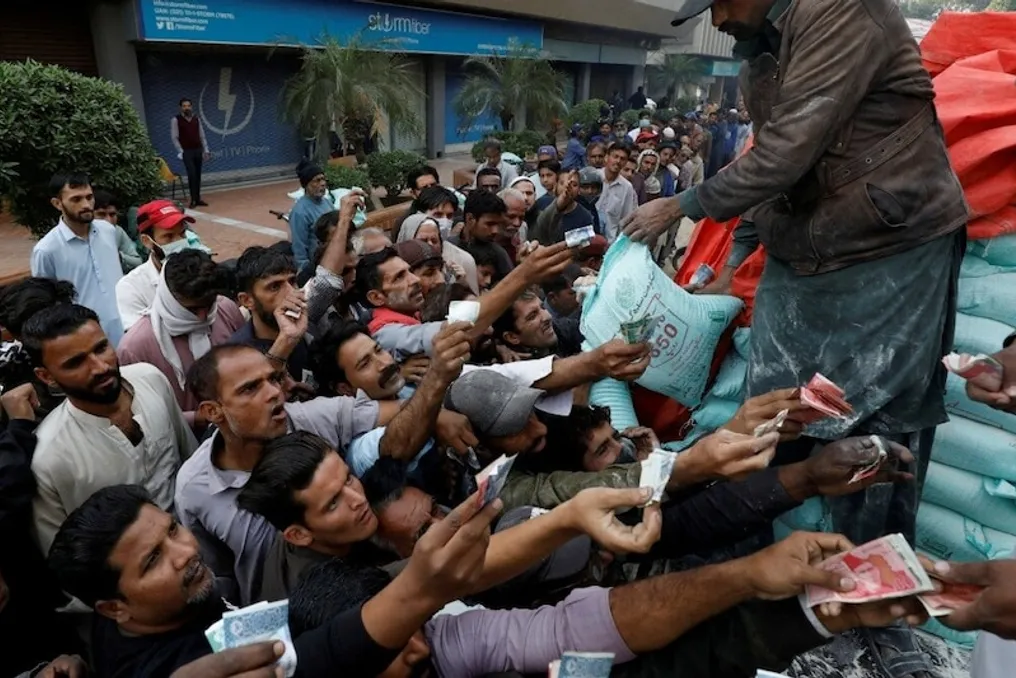
Despite forecasts of economic growth in Pakistan, the financial situation of ordinary citizens looks different. Rising prices, high fuel costs, and reduced employment opportunities are exacerbating the population's problems. According to a World Bank report, about 48% of the poor population in the Middle East, North Africa, Afghanistan, and Pakistan (MENAAP) region is forced to live on less than $3 per day, with the majority of these poor people being from Pakistan.
This means that Pakistan accounts for nearly half of the poor residents in the entire region. The difficulty lies in the fact that the pressure of poverty is not easing but, on the contrary, intensifying. In Pakistan, the poverty rate among the population living on less than $3 daily has increased by 6.4 percentage points between the 2018-19 and 2024-25 fiscal years. A similar increase was noted in the poverty rate at the $4.20 per day level, which rose by 3.2 percentage points.
The World Bank indicates that the rise in poverty in Pakistan is due not to one cause, but to a number of economic shocks. These include the coronavirus pandemic, the devastating floods of 2022, sharp inflation, currency depreciation, and prolonged economic reforms, all of which have negatively affected people's incomes and employment opportunities. Thus, the country faces the task of stabilizing the economy while simultaneously managing the daily expenses of ordinary families. The World Bank also noted that MENAAP remains a region where the poverty rate is still higher than before the COVID-19 pandemic.
Pakistan's problems are not limited to poverty. Rising fuel prices amid conflicts in West Asia have further increased economic pressure. According to the report, gasoline prices in Pakistan and some other countries have risen by 40% or more, while diesel fuel has become 40% or more expensive. This directly affects the pockets of ordinary people. The increase in fuel prices raises transportation and delivery costs, which in turn affects the price of other goods. For families already suffering from inflation, this makes managing expenses even more difficult.
The World Bank warns that the greatest burden of high food and fuel prices falls on poor families. Such households spend between 35% and 50% of their total income exclusively on food. This means that even a small increase in food prices can disrupt their entire budget. While wealthy families can compensate for increased spending by cutting costs in other areas, poor families have very few such options.
Another problem in Pakistan is related to remittances coming from Gulf countries. A decrease in these inflows can put pressure on Pakistan's foreign exchange reserves and family incomes. Furthermore, there is a risk of increased borrowing costs and pressure on the country's external payments and state budget. Dependence on oil imports exacerbates Pakistan's difficulties, turning expensive fuel from a local gas station issue into a challenge for the entire economy.
The World Bank forecasts a 3.8% growth in Pakistan's economy in the current fiscal year. However, during the same period, inflation is expected to reach 8.2%. Excluding the effect of population growth, real GDP per capita is projected to grow by only 2.2%. This represents the main dilemma of the Pakistani economy: growth is visible on paper, but the path to relief remains difficult for the average citizen due to inflation and daily expenses. The benefits of economic growth will only be felt when people's real income improves and necessary goods become affordable for them.
The World Bank recommended against providing broad subsidies, instead suggesting direct financial aid to needy families through targeted cash transfers. This would support the most affected groups and limit the burden on the state treasury. Currently, Pakistan faces a dual challenge: maintaining economic development momentum while simultaneously helping families struggling with poverty and inflation. Although statistical development indicators are important, the true test lies in how much the lives of ordinary people improve.