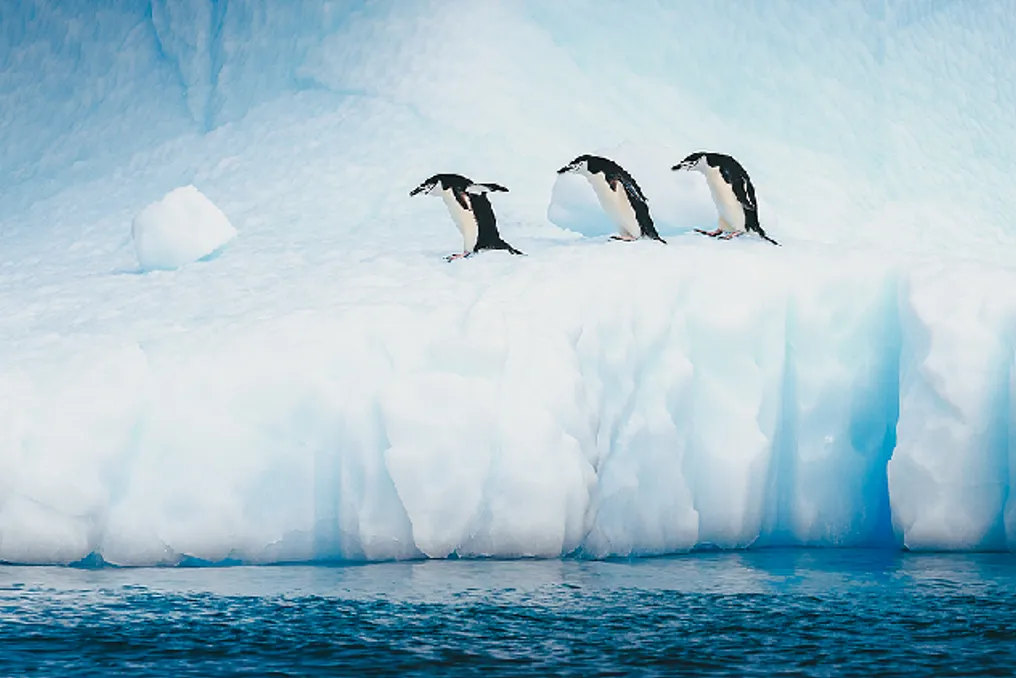
The population of Adélie penguins breeding on Zavodkov Island, located near Antarctica, has decreased by 63% since 2011. This has caused the colony to lose its status as the world's largest, according to researchers from the British Antarctic Survey (BAS).
Adélie penguins belong to the most numerous species of penguins. A significant part of their known population nests on islands in the South Pacific Ocean, including Zavodkov Island.
BAS researchers indicated that climate change complicates the survival of these birds. Rising sea temperatures force Antarctic krill, which is their primary food source, to move further south.
Professor Norman Radcliffe, an ecologist at BAS, told China Media Group that this region is warming and is among the fastest-warming zones on the planet. Since krill is the main food for Adélie penguins, they have virtually no other food sources during the breeding season.
Radcliffe added that as the climate warms, the range of krill shrinks and shifts south, moving beyond the northern range where Adélie penguins feed. This directly contributes to the rapid decline in the number of Adélie penguins.
The penguins face an additional problem: there are few suitable islands in the south where they could establish new colonies for breeding. Consequently, they cannot simply follow the food source as it shifts towards colder waters.
Scientists warn that the continued population decline could put Adélie penguins at risk of being classified as an endangered species.