The Man Called the 'Sixth River' of Punjab and His Contribution to the Development of Chandigarh
Read more
The Better India
thebetterindia.com

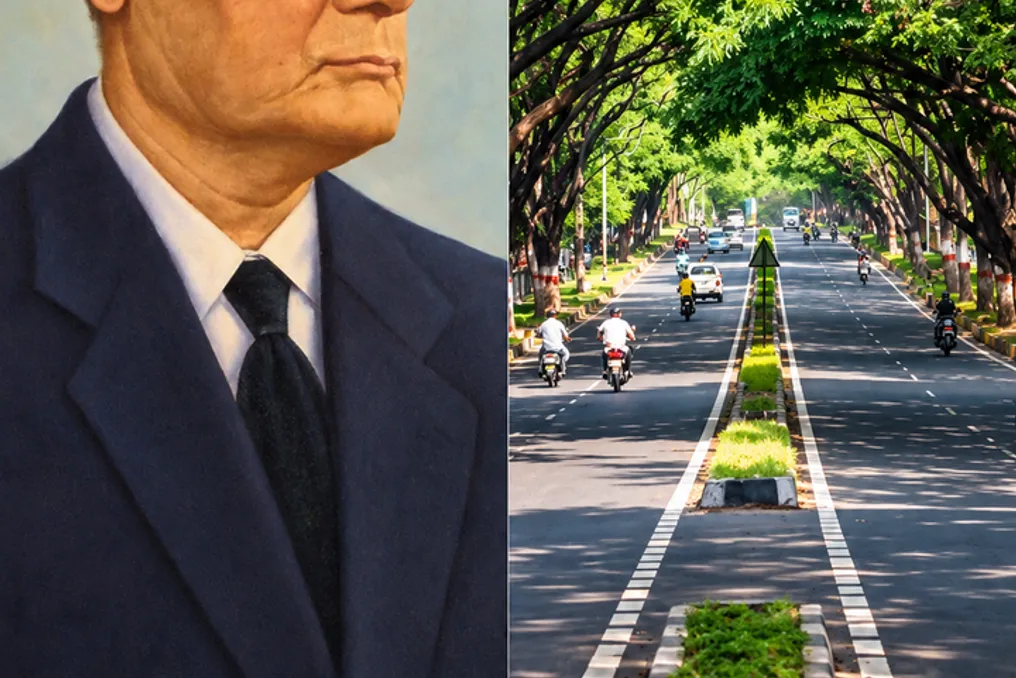
The Man Called the 'Sixth River' of Punjab and His Contribution to the Development of Chandigarh

Punjab has five rivers, but its 'Sixth River' was a person—a civil servant who contributed to the restoration of Punjab, the transformation of its agriculture, the formation of Chandigarh, and the preservation of its cultural heritage.

Born in Zira, Punjab, in 1909, Randhawa received a Master's degree in Botany from the Government College in Lahore. In 1934, he successfully passed the examination for the Indian Civil Service (ICS) and began a career spanning administration, agriculture, science, art, and urban planning.

In 1947, during one of the darkest periods in Indian history, Randhawa, serving as Deputy Commissioner of Delhi, worked amidst the violence and upheaval associated with the Partition.

Afterward, he returned to Punjab to help rehabilitate people displaced by the Partition. He introduced the Murabbandi system—an organized method of dividing land into larger plots, which increased farming efficiency and paved the way for the use of tractors and modern agriculture.

Randhawa's ambitions extended beyond mere resettlement; he aimed to revitalize Punjab's rural economy. He actively promoted the construction of water wells, the improvement of road networks, and the creation of larger, structured farms to boost productivity and improve village life.

He then took on a more complex task—ensuring India's food security. In 1955, Randhawa became Vice-President of the Indian Council of Agricultural Research (ICAR). His work helped transform Punjab into an agricultural powerhouse, for which he received the Padma Bhushan award in 1972.

In 1966, Randhawa became the first Chief Commissioner of the newly created Union Territory of Chandigarh. He collaborated with city architects, including Le Corbusier and Pierre Jeanneret, to make greenery an integral part of its identity.

Randhawa actively supported the creation of gardens and flowering trees, such as Gulmohar and Jacaranda, as well as the famous Rose Garden, helping to integrate greenery into Chandigarh's design. However, perhaps his most unexpected contribution was in the field of art.

Randhawa traveled through Punjab and the mountains, documenting local art, folk traditions, and culture. He also participated in establishing cultural institutions in Chandigarh and preserving Pahari miniature painting. For him, progress meant preserving the past.

From aiding the post-Partition rehabilitation of Punjab to shaping Chandigarh, Randhawa's work went far beyond a single role. This is why he became known as 'Punjab Da Chevan Dariya'—the Sixth River of Punjab.
Similar stories

Indo-French satellite mission 'Trishna' aims to monitor Earth's resources
Read more
timesofindia.indiatimes.com

Indo-French satellite mission 'Trishna' aims to monitor Earth's resources

India and France are preparing to launch the 'Trishna' satellite from the Sriharikota spaceport in 2027. This project is designed to observe Earth's energy and water resources. The 'Trishna' satellite (Thermal Infra-Red Imaging Satellite for High-resolution Natural Resource Assessment) is a joint venture between ISRO and the French space agency CNES.

It is designed to provide monitoring of Earth's surface temperature, emissive, biophysical, and radiation variables with high spatial and temporal resolution, which will allow for surface energy budgeting on regional and global scales.

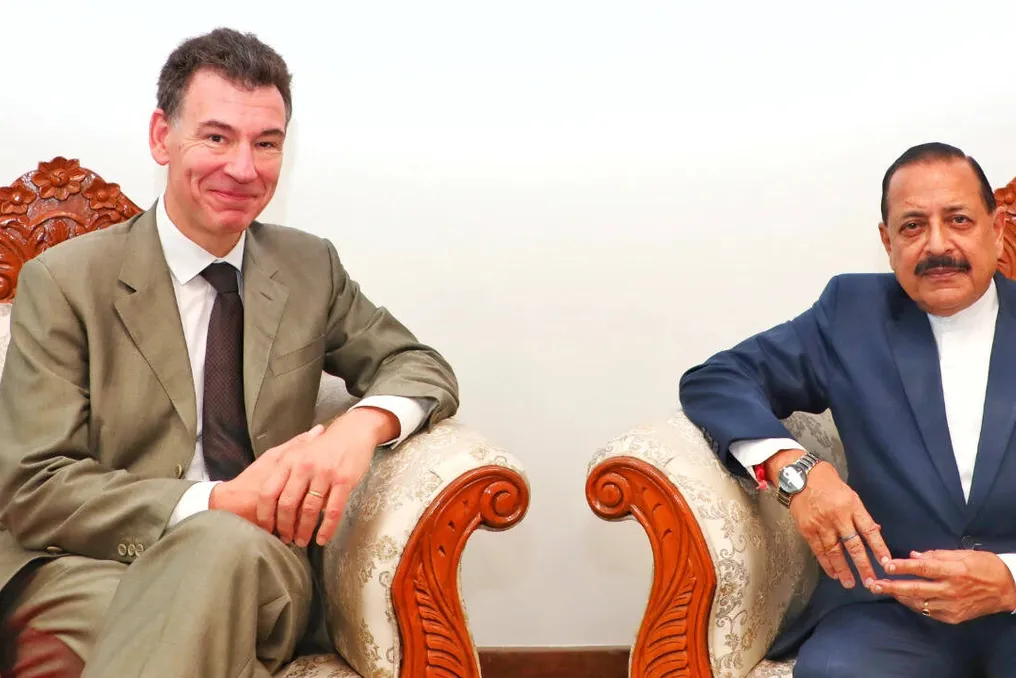
During a meeting with a large French delegation focused on scientific and space cooperation, Minister of Science and Space Jitendra Singh stated that the implementation of the joint 'TRISHNA' satellite is progressing successfully. He also highly praised CNES's support for India's Gaganyaan program, including the supply of consumables and training for flight surgeons.

Indian and French teams have begun discussions on research in microgravity and parabolic flights in the context of manned space missions. The 'Trishna' mission will also assist in the comprehensive assessment of urban heat islands, the detection of thermal anomalies related to volcanic activity and geothermal sources, as well as the precise monitoring of snowmelt runoff and glacier dynamics.

Furthermore, the mission will provide valuable data on aerosol optical depth, atmospheric water vapor, and cloud cover. A high-level French delegation led by Philippe Baptiste, Minister of Higher Education, Research, and Space, met with Singh in Delhi on Monday. They discussed the Space Summit, the Year of Innovation for India and France in 2026, and priorities in scientific and technological cooperation, including space, CEFIPRA, and the blue economy.

Singh noted that the cooperation between India and France in the space sector has transformed from early experiments with sounding rockets in the 1960s into an extensive partnership. This partnership covers joint satellite missions, launch vehicle technologies, manned flights, and new space applications. Discussions on microgravity research and parabolic flights have also commenced.

Referring to reforms in India's space sector and the growth of the private ecosystem, he reported that over 400 Indian space startups operate in areas such as rocket manufacturing, satellite assembly, and space applications. He emphasized that the next phase of cooperation between India and France could unite state institutions, industry, and startups from both sides to create a broader ecosystem and a larger pool of resources.

Philippe Baptiste called 'Trishna' a prime example of what India and France can achieve together and welcomed the strengthening of cooperation in manned space flights, astronaut health, microgravity and parabolic flight research.

Popular