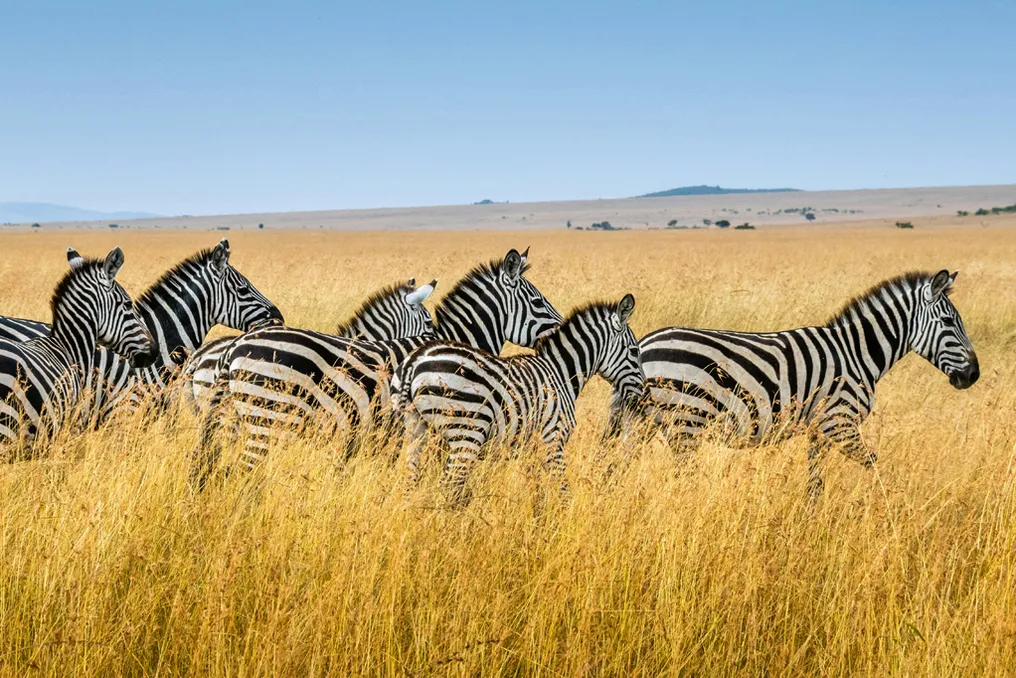
Many people have tried to explain why zebras were never domesticated, unlike horses and donkeys. Although there were attempts, such as records of Europeans trying to tame zebras during the colonization of Africa, the process proved excessively laborious to be viable.
Europeans showed interest in zebras due to their natural resistance to diseases common in the environments where they lived, a characteristic that differentiated them from horses. Despite being similar, zebras possess peculiarities beyond being striped and fierce horses.
Although anecdotal accounts exist of English, German, and French people riding or using zebras to pull carriages, the required effort makes domestication impractical. Capturing a zebra, which can reach speeds of up to 64 km/h, is already a considerable challenge.
However, the problem worsens after capture: the zebra's body triggers a physiological reaction called capture myopathy. This symptomatic condition begins with acute muscular and metabolic problems and can culminate in severe heart damage, necrosis, and sudden death.
The intense fear these animals experience when fleeing danger can literally be fatal. This high risk is justified by the greater probability of survival against the fast and powerful predators of the savanna. Evolutionarily, zebras have developed greater vigilance, aggression, speed, and tend to flee even when the threat is distant.
This dramatic response is not exclusive to zebras; it also affects most ungulates (such as horses, zebras, tapirs, giraffes, and wild boars) and birds. While zebras evolved to be more skittish, horses and donkeys lost this trait when migrating to more northern regions with fewer predators. They had capture myopathy millions of years ago, but became more docile because there was no need to bear the high cost of bravery.
In summary, while horses are described as brave, donkeys and mules are characterized as cautious, zebras are characterized as impulsive and terrified. Old hypotheses, such as difficulty in domestication due to social structures, dietary preferences, or reproductive and parental behaviors, are often repeated but are not sustained, given that other equids with these characteristics have been domesticated.
A study conducted in 2024 concluded that there is no statistical correlation between these behavioral factors, and concrete proof that they influence domestication potential is still lacking. However, researchers indicated that capture myopathy is related to domestication, although this does not mean direct causality, and more research is needed to confirm this assumption.