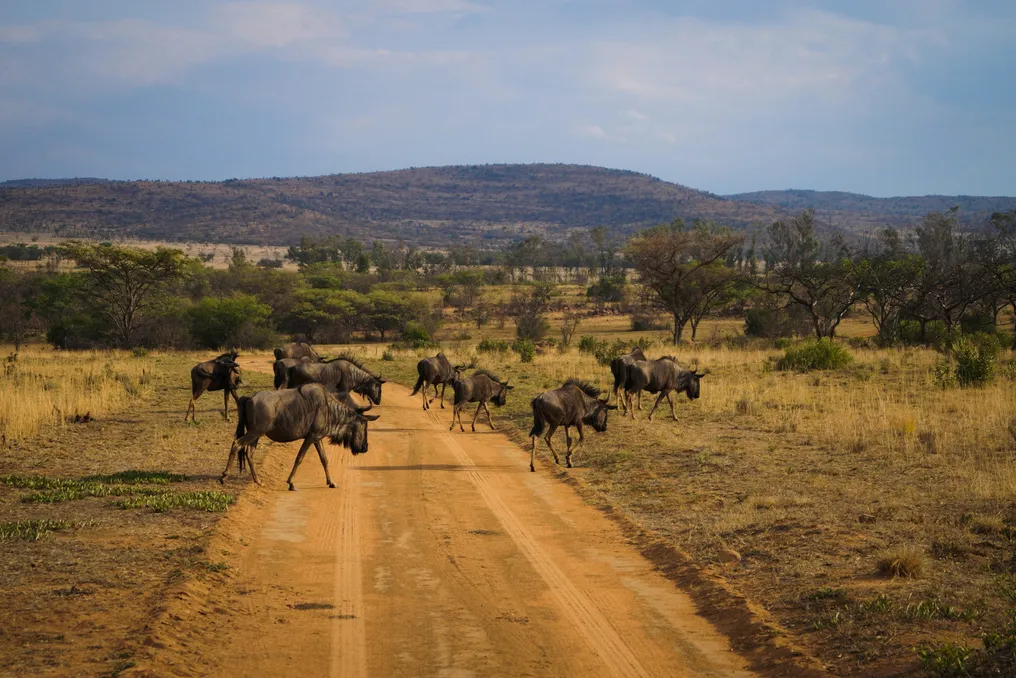
The Limpopo Province is an ideal destination for drivers who prefer scenic routes. This northern province of South Africa stretches from the Waterberg region in the south to the Limpopo River and the border with Zimbabwe in the north. Instead of viewing Limpopo merely as a transit point on the way to Kruger National Park, it is recommended to turn the journey itself into a vacation. Below are five different road trips showcasing the diverse facets of this province.
Mokopane → Vaalwater → Marken → Tabazimbi
Waterberg serves as a natural starting point for a trip through Limpopo, especially if the journey begins in Gauteng. The N1 road leads to Mokopane, from where the R518 passes through Waterberg towards Marken. This is one of the most scenic sections of the province, where the road crosses the Waterberg mountains and the characteristic Red Rocks. These rusty-red sandstone formations began forming about 1.9 billion years ago, and their color is due to iron particles in the rock. Time should be allocated for wildlife viewing, hiking, and stops at nature reserves. Waterberg is also part of a UNESCO Biosphere Reserve, which includes protected areas and private reserves across the landscape. The Nylsvlei Reserve, an internationally recognized wetland, is also worth visiting for bird lovers.
Polokwane → Haenertsburg → Magomeabaskloof → Tsaneen
The R71 road, heading east from Polokwane, offers a sharp change in scenery. The relatively open landscape gradually gives way to cooler, greener mountains around Haenertsburg and Magomeabaskloof before descending to Tsaneen. Magomeabaskloof, known as the Land of Silver Mist, features forests, waterfalls, mountainous landscapes, and fertile agricultural land. This area is also famous for fruit plantations, including avocados, blueberries, and kiwis. Time must be planned for hiking, stopping by a waterfall, or a leisurely lunch in Haenertsburg. The hiking trail in Magomeabaskloof is another option for travelers wishing to trade wheels for feet. A three-day, 50 km route passes through local forests, grasslands, rivers, and waterfalls.
Tsaneen → Modjadji Kloof → Modjadji → Balobedu
From Tsaneen, one proceeds towards the mountains and the world of the Modjadji people. This region combines lush landscapes with one of Limpopo's most unique cultural landscapes. The Modjadji Cicada Reserve protects an unusually high concentration of ancient cicadas. These plants are among the oldest surviving seed plants on Earth, and the reserve is particularly impressive when the cicadas produce their orange seeds in the summer. This area also offers the opportunity to learn about the traditions of the Modjadji and the Rain Queens of the Balobedu people. A guided tour can add important context to the landscape and its history.
Mahado → Elim → Tohoyandou → Fundudzi Lake → Tate Vondo
Travelers interested in culture, mountains, and landscapes with a strong sense of place should head north to the Sophensberg region. Mahado, formerly known as Louis Trichardt, is located under Sophensberg and serves as a convenient base for exploring the area. From here, routes lead to Venda cultural sites, artists' studios, forests, and mountain landscapes. Fundudzi Lake and the sacred forest of Tate Vondo hold special significance in Venda traditions. Since many places have cultural and spiritual importance, travelers should visit them with respect and use local guides where appropriate. The route may also include the Ribola Art Route, where visitors can meet local artists and artisans.
Mahado → Musina → Mpungubwe National Park
This route is designed for those who want to combine wildlife viewing with archaeology and some of Limpopo's most unusual landscapes. Continuing north towards Musina, the landscape becomes hotter and drier, and baobabs become increasingly noticeable. The Musina Nature Reserve protects one of the notable concentrations of these giant trees in South Africa. From Musina, one can continue to Mpungubwe National Park. The cultural landscape of Mpungubwe is a UNESCO World Heritage site and holds evidence of a powerful South African kingdom that flourished approximately between 1220 and 1300 AD. One of the most memorable stops is the Confluence viewpoint, where the Limpopo and Shashe rivers meet, and the borders of South Africa, Botswana, and Zimbabwe converge.
The main strength of Limpopo lies in its diversity. The best way to experience it is to slow down, allow for detours, and let the landscape become part of the journey.