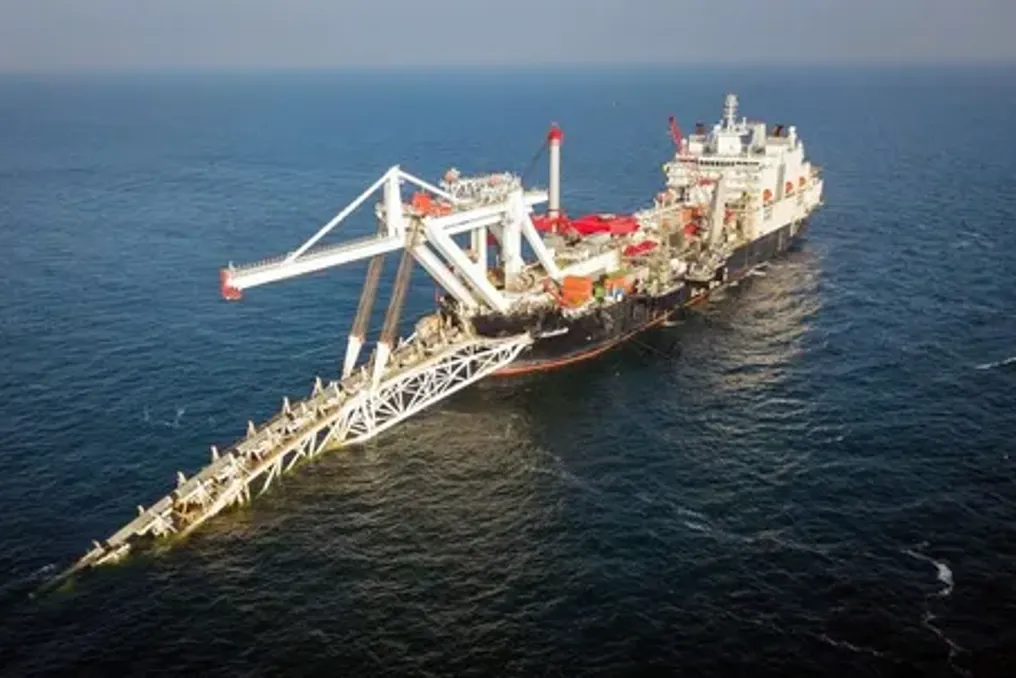
Reports that Washington and Moscow are discussing finding an American investor for the Nord Stream project and organizing Russian gas supplies to Europe have brought back one of the most controversial ideas in the energy sector. According to Reuters, in recent weeks, US Ambassador Jared Kushner and Kirill Dmitriev, head of Russia's sovereign fund, met in Moscow and New York to explore possibilities for energy agreements as part of mediation efforts between Russia and Ukraine. However, the White House insists that no discussions regarding Nord Stream have taken place recently.
Sanctions and Legislative Barriers
The rapid advancement of this idea is impossible because the Nord Stream and Nord Stream 2 pipelines remain under sanctions from the US and EU. The $11 billion Nord Stream 2 project never began operation after Germany suspended its certification in early 2022. In September of the same year, Russia halted operations on Nord Stream 1, citing sanctions as the reason for the inability to repair turbines. Additional physical damage to political barriers came from leaks discovered on both lines at the end of that month, which were allegedly the result of sabotage.
Berlin maintains a clear position: Chancellor Friedrich Merz has promised to do everything possible to keep Nord Stream 2 non-operational. The German economic ministry and the ministry of energy stated that they have found alternatives and do not wish to resume the operation of the gas pipelines, which would in any case require government approval. EU legislation is also moving in the opposite direction. The bloc adopted a mandatory regulation banning the import of Russian LNG starting in 2027, and pipeline gas starting in autumn 2027. Violators will face fines of at least 2.5 million euros. Furthermore, Brussels has stated that it will not resume supplies from Russia even after the war ends. Thus, the American version of Nord Stream will face not just political but also legal obstacles.
Reasons for the Idea's Appeal
The appeal of the proposal is driven by economic factors. In 2022, Russia supplied about 40% of Europe's gas needs, but this share has dropped to approximately 19%, mainly due to LNG flows and TurkStream. Meanwhile, Europe enters the winter period against a backdrop of a tense market. TTF futures for October reached about 82 euros per MWh in mid-September, compared to about 45 euros in June. On September 15, reserves stood at 68.5%, lower than the 80.6% recorded the previous year and the five-year average of 84%. Morgan Stanley forecasts the average winter temperature at 85 euros per MWh, with the possibility of exceeding 100 euros in a cold winter or if supplies from Qatar are further disrupted.
Europe's dependence on American cargoes adds another aspect. In 2025, American LNG accounted for 58% of LNG imports into Europe. Consequently, Washington is the largest LNG supplier to Europe and acts as a mediator in Ukraine negotiations, creating a complex dual role. Earlier Reuters reports suggested that America's involvement could give Washington visibility and possibly some control over volumes reaching Europe. The White House emphasizes that any deal must be agreed upon with the U.S. Development Corporation and the Treasury Department, and must benefit taxpayers and U.S. companies.
Implications for LNG Markets
For LNG exporters, including American producers who have gained market share in Europe, the return of Russian pipeline gas volumes represents a competitive threat. Investment decisions and long-term contracts depend on maintaining structural demand stability in Europe. Even the prospect of concluding a deal can influence market sentiment, and this may be a deliberate action.
Our Viewpoint
Three key points stand out. First, this initiative is a subject of bargaining, not a supply plan. Given the current sanctions, damaged infrastructure, and EU legislation, Russian gas will not pass through Nord Stream this winter. Second, internal disagreements within Europe are important. Some EU countries view Russian gas as a way to reduce energy costs, while officials in Brussels and some Eastern European countries react extremely negatively. Germany's position will be decisive. Third, price pressure is the main driver. If reserves remain low and supplies from the Persian Gulf continue to be interrupted, political resolve will be tested more by heating costs than by any diplomatic offer.
What to Watch For
It is necessary to monitor winter reserve levels and TTF prices, progress toward a ceasefire in Ukraine, any changes in Berlin's stance, as well as the role of the Development Corporation and the Treasury Department in structuring deals. Currently, Nord Stream represents more of a negotiating position than the pipeline itself.