Long before the advent of modern cities, cranes, and concrete, people moved massive stones, sculpted mountains, and erected structures intended to outlast them. Some of the world's oldest monuments have survived for over 5,000 years, enduring climate change, wars, earthquakes, and the slow passage of time. Some remain in astonishingly intact condition, while others exist as fragments, ruins, or archaeological layers.
Each of these sites offers a rare glimpse into the lives, beliefs, and ingenuity of people who lived thousands of years ago. For instance, at Göbekli Tepe, the stones are older than almost anything we associate with civilization. The earliest structures at this site in southeastern Turkey date back to approximately 9600 BCE, making them roughly 11,500 years old.
This monumental complex was built by hunter-gatherer communities during the transition to a settled lifestyle. It features enormous T-shaped limestone pillars up to 5.5 meters high, decorated with images of animals such as snakes, foxes, and birds. It is important to note that this site challenges the notion that monumental architecture only arose after people settled down and began farming.
On Malta and Gozo, prehistoric communities constructed some of the world's oldest freestanding stone structures. The megalithic temples of Malta primarily date to the fourth and third millennia BCE. The Ġgantija Temples on Gozo appeared around 3600 BCE, consisting of carefully planned chambers and courtyards made of huge limestone blocks.
The Megalithic Temples of Malta
The scale of these constructions is astonishing considering the builders lacked modern technology, steel cranes, or concrete. Nevertheless, they created monumental architecture that has stood for over 5,000 years. The Maltese name Ġgantija is related to a word meaning 'giant,' reflecting an old belief that only giants could have built them; however, the truth proved even more impressive—human beings did it themselves.
Stonehenge has become one of the world's most recognizable ancient monuments, but a personal visit gives the stones a different weight. The wider Stonehenge area developed over approximately 2,000 years, from 3700 to 1600 BCE. Its construction involved massive earthworks and the movement of tons of stone. The visible stones today are only part of the original landscape; other structures have disappeared, and buried remains and earthworks continue to reveal the complexity of the site.
Debates persist about why Stonehenge was built, and these unanswered questions make the site so fascinating. Few ancient monuments make time seem so insignificant as the pyramids. The Pyramids of Giza are part of the ancient necropolis of Memphis—a vast burial landscape including pyramids, tombs, and temples. The Great Pyramid of Khufu is the only surviving monument from the ancient Seven Wonders of the World.
Built over 4,500 years ago, it has lost much of its original smooth outer casing, but its massive stone core remains untouched. Its scale is still difficult to comprehend; even after millennia, the Great Pyramid dominates the landscape as it must have looked in its prime.
Petra is another place that seems almost unreal. This ancient Nabataean city was carved directly into the sandstone cliffs of southern Jordan and became an important trade hub connecting Arabia with the wider region. Many of its most famous monuments date from the 4th century BCE and the early centuries CE. The Nabataeans did not just carve impressive facades into the rock; they also built a complex water supply system consisting of canals, dams, cisterns, and reservoirs, which allowed a large settlement to thrive in an arid landscape.
The stone has endured, but it has not remained pristine. Erosion and flash floods continue to threaten Petra, and centuries of exposure have softened the details of its carved facades. Conservation is now also part of the history of this monument.
The Acropolis Has Watched Athens Change for Thousands of Years
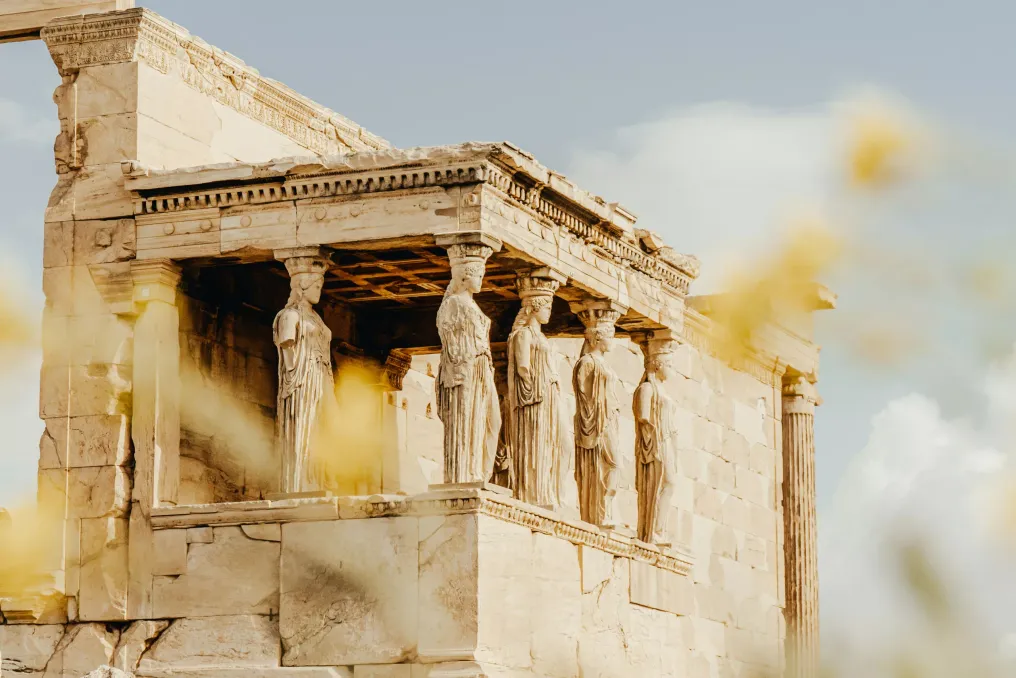
The hill was fortified as early as the 13th century BCE, while the monuments most associated with it today were mainly built in the 5th century BCE. These include the Parthenon, Erechtheion, Propylaea, and the Temple of Athena Nike. However, the Acropolis was never frozen in the Classical era. It survived wars, fires, earthquakes, and changes in function. The Parthenon itself was catastrophically damaged in the 17th century when gunpowder stored inside the building exploded during the Venetian siege.
What remains is not a perfect snapshot of Ancient Greece, but a monument shaped by millennia of history. It is easy to mistakenly assume that ancient monuments are frozen pieces of history, but this is not the case. They were abandoned, damaged, restored, buried, excavated, and preserved. Their survival is a combination of exceptional ancient craftsmanship, sheer luck, and the work done to protect them today.
This is what makes them worth visiting. Not simply because they are old, but because they make history tangible. One can walk through Newgrange, stand beneath the stones of Stonehenge, or traverse the narrow Siq in Petra and witness evidence of human life in a world unimaginably different from our own. After thousands of years, their monuments still give us cause for contemplation, questions, and wonder.