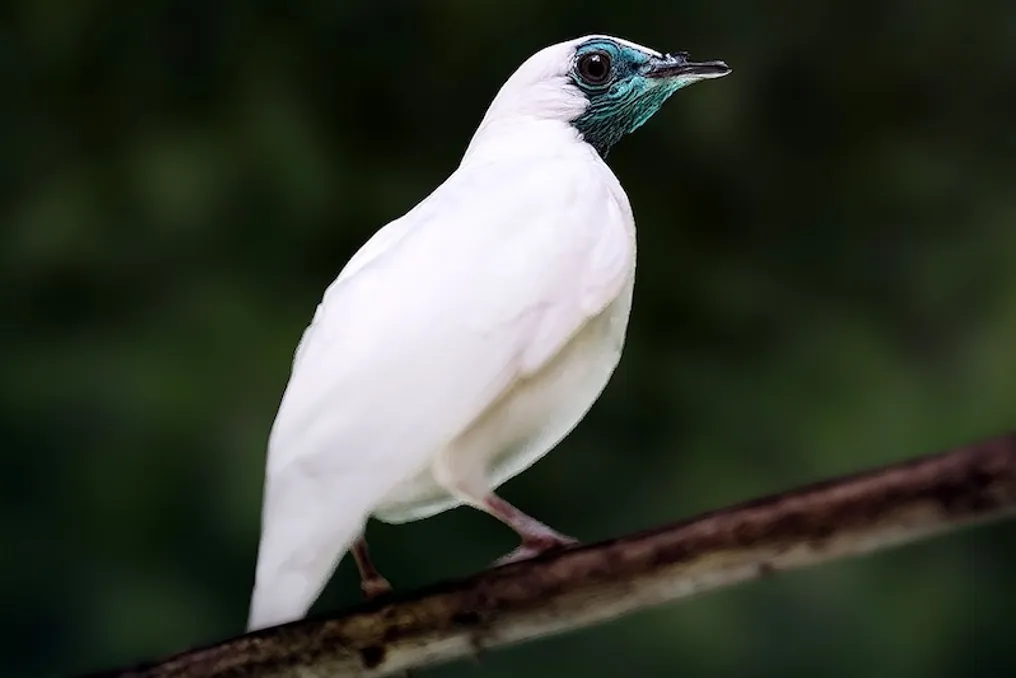
The Baird's Thrush, which inhabits the forests of South America, attracts attention due to its exceptionally loud voice. The peak loudness for males of this species can exceed 130 decibels.
As part of a new study, scientists analyzed the sounds of 123 different bird species and concluded that larger bodies and wider beaks contribute to producing louder sounds. The researchers sought to determine the reason for such high volume in some birds, so sound recordings were made in different locations in the USA and Brazil.
This study covered 123 species, and data on the sounds of 113 of them were previously unavailable. The results of the work were published in the journal Evolution on September 29, 2026.
The scientific name of the Baird's Thrush is Procnias nudicollis. Males of this species have white plumage, and there is a blue-green area near the throat. However, its powerful sound is the most outstanding feature. In the study, the Baird's Thrush and the Red-breasted Seriemas were included in the list of birds with the loudest voices, whose sounds can reach over 120 decibels.
The loudest sound recorded during the study was about 122 decibels. Furthermore, some extremely loud calls of the thrush can reach a peak exceeding 130 decibels. For comparison, a normal conversation has a volume of about 60 decibels, meaning that the voices of these birds can be several times louder than everyday speech. The difference between the quietest and loudest sounds recorded in the study was approximately 58 decibels.
The study revealed a direct correlation: the larger the bird's body, the generally louder its voice. Similarly, birds with wider beaks can also produce louder sounds. Scientists suggest that larger birds may create more air and respiratory pressure, which amplifies the sound. Additionally, a wide beak may help in projecting the sound outwards. Thus, the bird's body and beak may be related not only to feeding but also to the sound production mechanism.
A key question for the scientists was: why do some birds need such loud sounds? The research team studied the birds' habitats, their flight capabilities, and reproductive behavior patterns. However, none of these factors provided a single explanation applicable to all loud-voiced birds. Consequently, although scientists were able to understand how some birds produce such a loud sound, the answer to the reason for this behavior remains unclear.
This study helped better understand the relationship between bird vocalizations and their physiological characteristics. In the future, by collecting more data on bird sounds, scientists will be able to try to figure out why nature endowed some birds with such powerful vocal abilities.