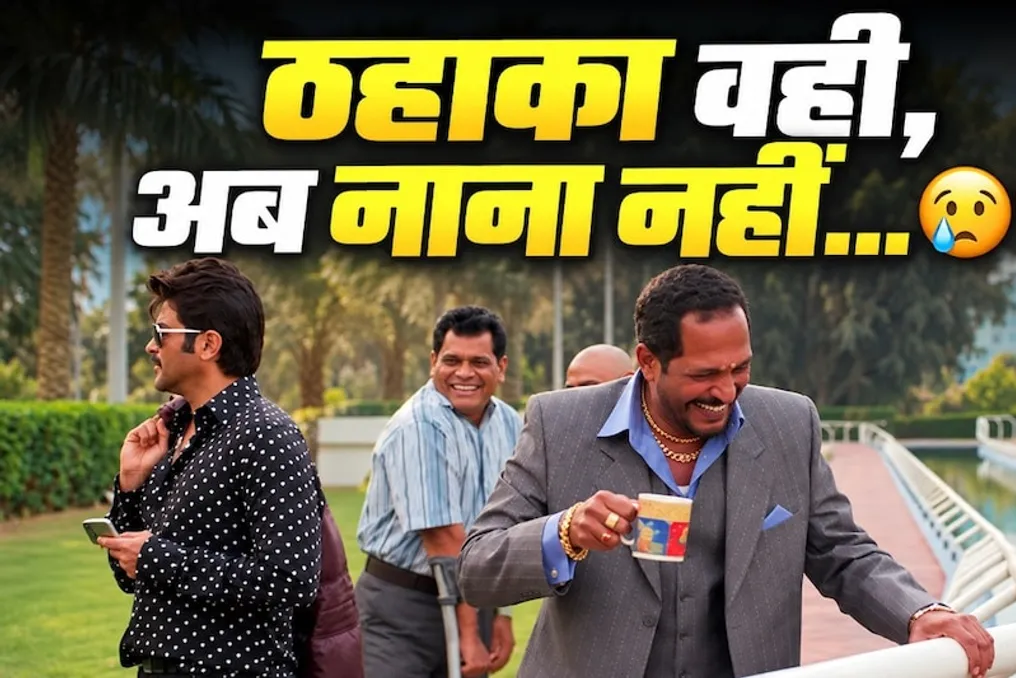
Funny videos that evoke laughter often appear on social media—whether it's an unexpected moment, a strange action, or simply humorous content. In such cases, many have seen Nana Patekar's video. He is shown holding a cup, wearing a thick chain around his neck and bracelets on his arms, with a relaxed smile, after which his loud laughter suddenly erupts.
Although it is just a short video, it has acquired a unique identity online. This laugh by Nana Patekar has become a kind of social media language, used in memes, reels, and viral posts.
However, the story of this viral laugh begins in the film 'Welcome'. Anil Kapoor played Majnu Mohai, Paresh Rawal played Ghunghroo Seth, and Nana Patekar played Uday Shetty in this movie. The chemistry between these three actors made the film's comedy unforgettable. During one of the episodes, a scene takes place that later became one of the most recognizable meme templates on the internet.
Majnu Mohai, i.e., Anil Kapoor, says to Ghunghroo Seth, i.e., Paresh Rawal: 'Char hoke jali se dili karo...' Following this is Ghunghroo Seth's reaction, and that is when Uday Shetty's laugh, played by Nana Patekar, rings out.
First, a light smile, then laughter, and finally, that open, loud roar of laughter. His delivery was so natural that viewers were drawn into the laughter themselves. This scene remained in memory even after the film ended.
Although 'Welcome' was released long ago, Uday Shetty's laugh has become viral again in the age of social media. A small part of the film has found its place in the world of memes. This image of Nana can be used with any funny post or his laugh added to viral videos, and it will be considered complete.
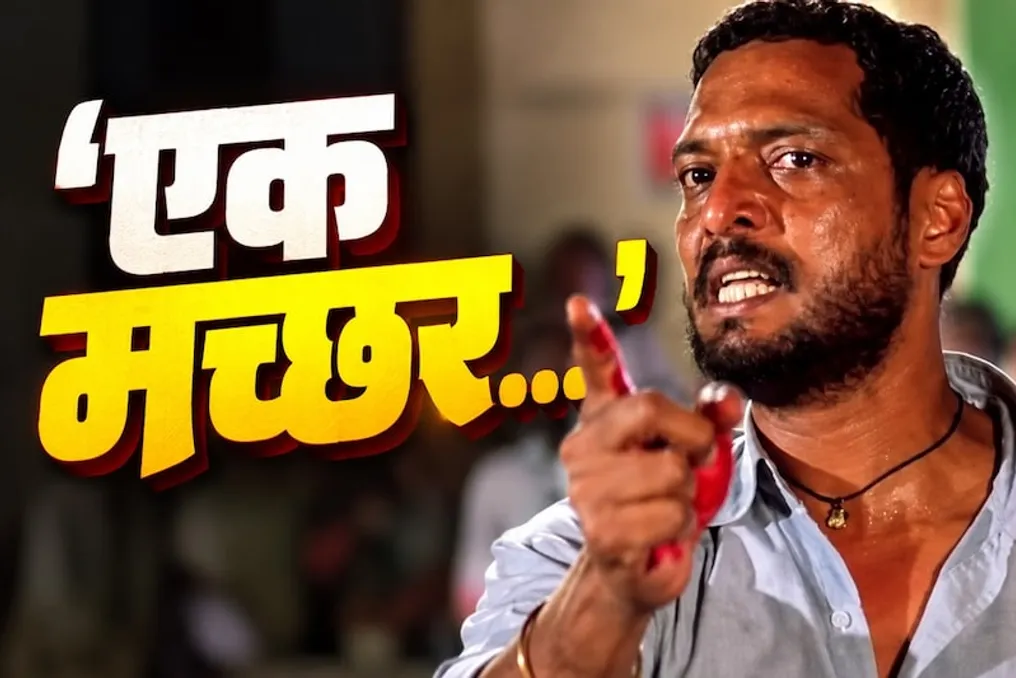
The reason for its popularity lies not only in the comedy of the scene. The reason is in Nana Patekar's style, where there is no distinction between acting skill and naturalness. The anger, facial expressions, voice, and sudden laughter in the character of Uday Shetty were so memorable that viewers could not forget them.
Thus, Uday Shetty became more than just a character in 'Welcome'; he entered the ranks of Nana Patekar's iconic images that an entire generation recognizes even without watching the whole film.
But here the story changes. The video that once evoked laughter on social media might now cause people to pause on the screen for a moment. Nana will look the same: with a cup in his hand, a thick chain around his neck, bracelets on his arms, and the same smile. And then that same laughter will ring out, but the feeling of hearing this laugh will no longer be the same.
Because although Uday Shetty still laughs on screen, the artist who gave this character his voice is no longer among us. This is the power of cinema and memories. The artist leaves, but his characters, his lines, his facial expressions do not disappear... and sometimes his laughter stays with people forever. This might happen with Nana Patekar.
When someone shares the scene 'Char hoke jali se dili karo...' on social media again, Ghunghroo Seth's reaction will appear, and then Uday Shetty's laugh will ring out... we will recognize it. Perhaps we will smile. But behind that smile will be the memory of Nana. Because this laugh is no longer just a funny scene from 'Welcome'; it is Nana's voice that has left the screen and is permanently etched in our memories. That laugh we laughed at yesterday may now bring tears upon hearing it.