New 5G Smartphone Boltt Ace 5G with 8GB RAM and 6000mAh Battery Available for ₹11,999
Read more
Aaj Tak
www.aajtak.in

New 5G Smartphone Boltt Ace 5G with 8GB RAM and 6000mAh Battery Available for ₹11,999

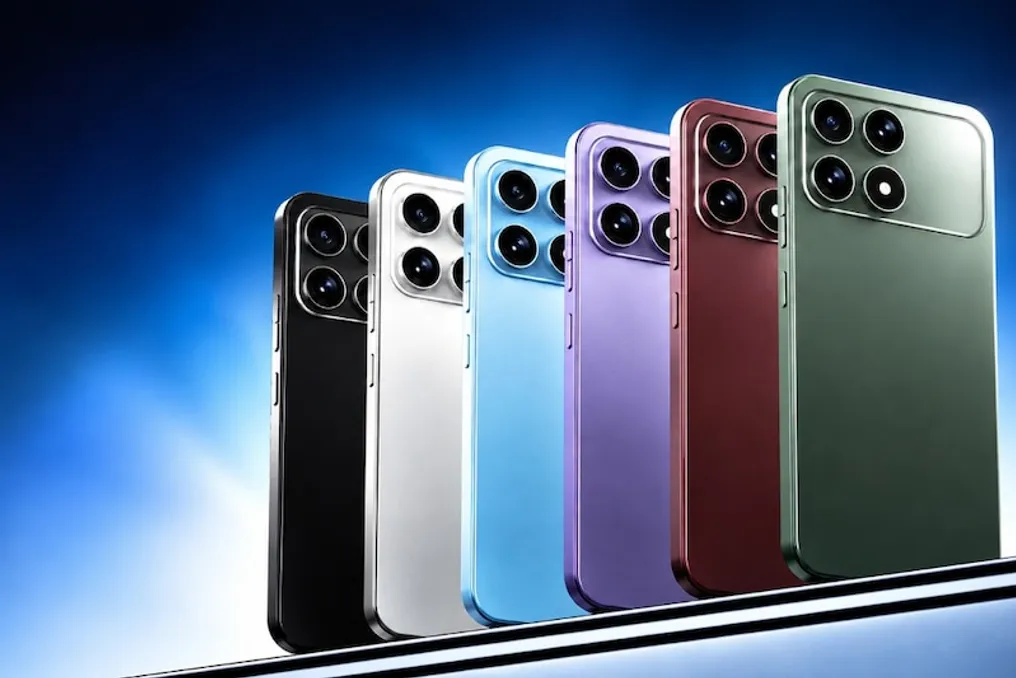
For those planning to purchase a new 5G smartphone priced around twelve thousand rupees before the Diwali festival, a new option will appear on the Flipkart platform. The young smartphone brand Boltt has introduced its first device, the Boltt Ace 5G, which will be reduced to a price of just ₹11,999 during the Big Billion Days sale.

A feature of this offer is that at this price, not only the basic version with 4GB of RAM but also the top-tier version with 8GB of RAM and 128GB of internal storage is available. The company announced that this offer will start on Flipkart on the night of October 8, 2026.

Three Models at the Price of ₹11,999 — The Biggest Offer

The most attractive feature of the Boltt Ace 5G is its pricing policy. In a press release, the company claims that all three configurations of the phone will be available for ₹11,999 during the Big Billion Days. However, it is not specified whether this price is effective or standard.

The assortment includes models with 4GB RAM and 64GB storage, 6GB RAM and 128GB storage, and a model with 8GB RAM and 128GB storage. Thus, buyers will not have to spend extra money for different amounts of RAM and storage.

This special offer, which is even lower than the original price, was developed specifically for the Flipkart Big Billion Days sale. Sales will begin at midnight on October 8, and the phone will be exclusively available on Flipkart.

6000mAh Battery and 120Hz Display

Despite the low cost, the Boltt Ace 5G is equipped with a large battery and a high refresh rate display. The phone features a 6.79-inch display with a 120Hz refresh rate, which provides smoother scrolling and motion display compared to standard 60Hz screens.

The device incorporates a large 6000mAh battery and supports 18W fast charging. This battery can be an important feature for users who watch a lot of videos, use social media, or use their phone for extended periods.

64MP Camera and 5G Connectivity

Regarding the camera, the Boltt Ace 5G is equipped with a 64MP main AI camera, and a 8MP front camera is provided for selfies and video calls. The phone supports both 5G connectivity and NFC. Additionally, there is memory expansion capability.

Moreover, the Boltt Ace 5G runs on Android 16. According to the company, the phone will provide a clean software experience without unnecessary pre-installed software. It also includes features related to Google Gemini, such as Circle to Search and Google Lens.

Currently, when purchasing budget phones, not only the amount of RAM and camera quality are important, but also the software and artificial intelligence features, which Boltt takes into account by providing Gemini features in the Ace 5G.

Phone Runs on UNISOC Processor

To ensure performance, the phone integrates an eight-core UNISOC T8200 processor. The company states that with this processor, the phone achieved a score of over 547,000 in the AnTuTu test. Nevertheless, one should not rely solely on the AnTuTu result to assess the actual performance of the device.

However, if the 8GB RAM and 128GB storage variant is available for ₹11,999 during the sale, it could be a very advantageous offer.

Similar stories

Galaxy Z Flip 8 512 GB returns with 37% discount offer on Mercado Livre
Read more
tecnoblog.net

Galaxy Z Flip 8 512 GB returns with 37% discount offer on Mercado Livre

The Galaxy Z Flip 8 with 512 GB capacity is available on Mercado Livre with a special promotion, reaching the price of R$ 6,773 when paying via Pix using the coupon AGORAOUNUNCA. This is the lowest historical offer recorded for the foldable smartphone manufactured by Samsung, presenting a 37% discount on its original price of R$ 10,799.

It is important to note that this promotional condition applies exclusively to the Pink model.

One of the strengths of the Z Flip 8 is its flexible 6.9-inch Dynamic AMOLED 2X inner screen. This screen operates at a refresh rate of 120 Hz and a brightness of 2,600 nits, providing excellent color reproduction, high fluidity, and good visibility. The external screen, which is Super AMOLED and measures 4.1 inches, supports Always-On features and integration with Now Brief.

The device is equipped with the 2-nanometer Exynos 2600 processor and 12 GB of RAM, allowing simultaneous execution of demanding applications, games, and Galaxy AI functionalities. The 512 GB of internal storage guarantees ample space for those who frequently take photos and record videos.

Regarding the photographic system, it features a 50 MP wide main camera with optical image stabilization (OIS) and a 12 MP ultrawide lens, ideal for capturing outdoor landscapes. Additionally, there is a 10 MP internal front camera, optimized for quality selfies. All camera modules record in 4K resolution at 60 frames per second.

The structure of the Z Flip 8 is built with Armor aluminum and protected by Gorilla Glass Victus 2 on the external screen, providing resistance against impacts and scratches. Furthermore, the IP48 certification ensures high protection against accidental immersion, although it only offers moderate protection against dust.

The device's battery has a capacity of 4,300 mAh and, according to the manufacturer itself, can last up to 31 hours of video playback. Support for 25 W fast charging via USB-C cable and 15 W wireless charging ensures enough power for a full day of use, which is advantageous for people with busy routines.

Running Android 17, the 512 GB Galaxy Z Flip 8 is entitled to seven future operating system updates. The Samsung foldable also integrates modern connectivity such as 5G, Wi-Fi 7, Bluetooth 5.4, and NFC.

Moto G86 with 512 GB and 12 GB of RAM available at the lowest price since July with coupon
Read more
tecnoblog.net

Moto G86 with 512 GB and 12 GB of RAM available at the lowest price since July with coupon

The Moto G86 with 512 GB capacity is being sold for R$ 1,859 via Pix, using the coupon HOJETEM on the Mercado Livre platform. This Motorola device features a 120 Hz POLED screen, 12 GB of physical RAM, and a 50 MP wide camera, reaching its lowest price since July 2026, with a 38% discount compared to the original price of R$ 2,999.

It is important to note that this promotion is valid exclusively this Tuesday, the 29th.

The G86 is highlighted as one of Motorola's best smartphones due to its premium-level features. Its POLED screen measures 6.67 inches, has Pantone certification, operates at a 120 Hz rate, and reaches a brightness of up to 4,500 nits, providing sharp images and high fluidity. Furthermore, impact and drop protection is guaranteed by Gorilla Glass 7i.

Performance is supported by the MediaTek Dimensity 7300 chip and 12 GB of physical RAM, which can be expanded up to 24 GB through the RAM Boost feature, allowing for efficient execution of complex applications and Moto AI suite functionalities.

For photography and video enthusiasts, the 512 GB storage offers ample internal space. The camera system includes a 50 MP wide lens with OIS and Sony LYTIA sensor, along with an 8 MP ultrawide, ideal for capturing scenes in open environments. The 32 MP front camera ensures good selfies, and all recording features support 4K.

The battery life is 5,200 mAh, designed by Motorola to last up to 41 hours of continuous use. Support for 30W fast charging via USB-C allows the device to recharge for a full day in just 30 minutes, a significant benefit for users with busy routines.

In terms of durability, the gadget's body has IP68/IP69 and military MIL-STD-810H certifications, ensuring resistance in adverse conditions such as dust, accidental immersion, and high temperatures. The Moto G86 with 512 GB (R$ 1,859 via Pix with coupon HOJETEM) will have limited software updates up to Android 17 and features 5G, Wi-Fi 6, Bluetooth 5.4, and NFC connectivity.

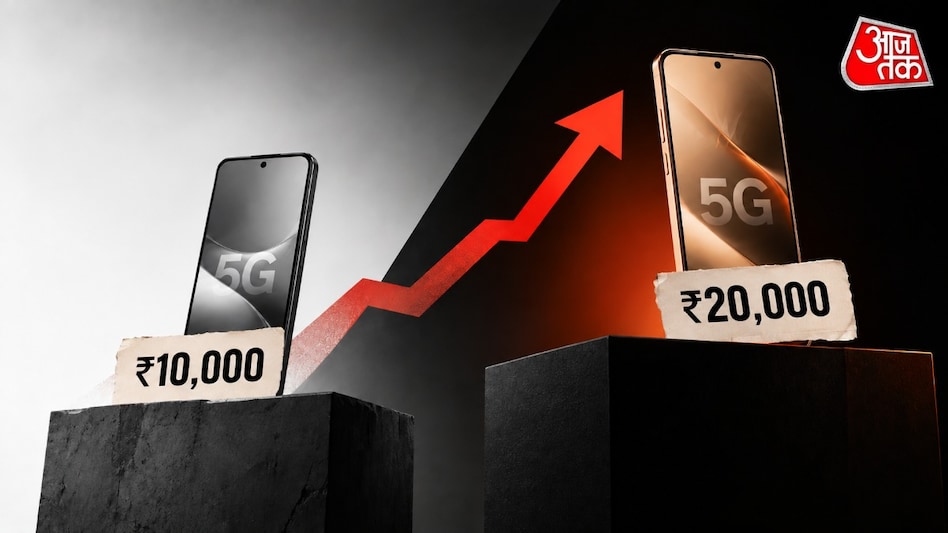
Cost of 5G Smartphones Has Doubled: Is It the Influence of Artificial Intelligence or Company Pricing Policy?
Read more
www.aajtak.in

Cost of 5G Smartphones Has Doubled: Is It the Influence of Artificial Intelligence or Company Pricing Policy?

Previously, consumers could choose from many good options among smartphones priced around 10,000 rupees. In this price range, one could find a 5G phone with a good battery, an acceptable camera, and sufficient performance for daily tasks. However, this budget now seems insufficient. Finding a new 5G smartphone for 10,000 rupees has become difficult, and to get a good combination of screen, camera, battery, RAM, and storage, the budget often reaches 15–20 thousand rupees.

The Vivo T series serves as an example. The Vivo T4 Lite 5G was released in 2025 with a starting price of 9,999 rupees, whereas the Vivo T5 Lite 5G, released in 2026, has a starting price of 19,999 rupees. Although these two phones are not identical, this market shift is evident: new models in the same segment are appearing at higher prices than before.

This trend is not limited to Vivo. Many smartphones from Samsung, Realme, Poco, Xiaomi, Nothing, and other brands have also become more expensive recently. In some cases, the prices of older models have increased, and new models have appeared on the market at higher prices compared to the past.

Questions arise: why are smartphones becoming so expensive? Has the cost of goods truly increased for companies? Is the price related to artificial intelligence? And the most important question—are companies inflating prices by using the rise in AI and memory costs as an excuse?

To understand this situation, it is necessary to examine the factor exerting the greatest pressure on smartphone costs today—memory and storage. Smartphones use types of memory such as DRAM and NAND. Recently, there has been a sharp increase in the prices of these components. According to Counterpoint Research, the rise in memory prices in 2026 has noticeably affected smartphone production costs, especially in low-cost models where memory now accounts for a very large share of the total hardware cost.

Counterpoint reports that the Bill of Materials (BOM) for models with similar configurations in budget smartphones has increased by approximately 70%, and the main reason for this is the surge in memory prices. The increase in costs has also occurred in the mid-range segment. This means that it has become more expensive for companies to provide the same level of hardware at the previous price.

But why has the price of memory risen sharply? This is where artificial intelligence comes in. The use of AI is rapidly growing worldwide. Large technology companies are building massive data centers to train and run AI models. The servers used in these centers require much more and faster memory compared to regular computers. Demand for high-speed memory and other server memory has particularly increased. The AI and data center market has become critical for memory manufacturers. When demand for memory in this sector grew, pressure arose across the entire memory supply chain, leading to price increases.

This affects smartphones in the following way: the number of AI data centers has increased, demand for memory for these centers has grown, memory prices have risen, smartphone production costs have increased, and companies have incorporated part of these expenses into the final phone price. Thus, it cannot be argued that companies are simply using AI as an excuse to raise prices; the rise in memory costs has a real impact on company expenditures.

However, there is another important question: must the entire burden of rising memory costs be passed on to the consumer? Is the company using AI as a cover to inflate prices?

The final price of a smartphone is determined not only by the cost of its components. In addition to the processor, display, camera, battery, and memory, it includes software, research, marketing, logistics, retail markup, and company profit. Consequently, if the production costs of a phone rise, the company has several options: reduce its margin, cut other expenses, make changes to the hardware, or raise the price.

Therefore, the rise in memory prices cannot be considered the sole reason for any increase in smartphone price. The decision on how much to raise the price of a specific model depends on the company's own business strategy. That is, although the rise in AI and memory prices is a real reason, every price increase cannot be explained solely by the name 'AI', and market data shows that companies are addressing this issue not only by raising prices.

The market below 15,000 rupees in India is feeling the greatest pressure. According to Counterpoint Research, in the second quarter of 2026, the volume of smartphone shipments in India decreased by 10% year-on-year. However, in the segment priced under 15,000 rupees, the drop was about 45%. This figure is significant because a large number of customers in India purchase smartphones in this price range.

Popular