The Gauteng government spends over 183 million rand annually on renting ten education district offices from private landlords. Meanwhile, the provincial government is assessing the possibility of using some of its own buildings to house these institutions.
Jacob Mamabolo, Gauteng's Minister of Cooperative Governance and Traditional Affairs (CoGTA) and Infrastructure Development, stated in the Gauteng Provincial Legislature that there are currently no suitable government buildings for the needs of the respective education districts.
Mikhail Waters, the DA representative in Gauteng for education, questioned why 10 out of the 15 district offices of the Gauteng Department of Education are privately owned, and asked if vacant or underutilized provincial properties could be used instead.
Waters noted that the province spends millions on private accommodation despite questions about utilizing state facilities. He added that the Minister acknowledged that the Department of Infrastructure Development and the Gauteng Infrastructure Finance Agency (GIFA) are still analyzing needs and housing assessments.
Waters also challenged Mamabolo's assertion that government buildings should be excluded until the provincial assessment of available facilities is complete. In response, Mamabolo explained that Gauteng aims to divest from rented accommodation because the funds spent on leases do not generate assets for the province.
Mamabolo emphasized that the province wishes to utilize its owned buildings more actively instead of continuing to spend money on rented premises. He reported that they intend to start by using their own buildings through a public-private partnership deal promoted by GIFA.
He specified that the province is conducting a needs analysis and housing assessment jointly with GIFA, including studying the suitability of existing government properties. This follows Mamabolo's statement on September 8th to the legislature that 'there are currently no suitable, available, and sufficiently capacious buildings owned by the Government of the Gauteng Province' in certain districts for housing education district offices.
Mamabolo also mentioned that details were requested in February regarding 41 unused Gauteng government buildings, including 12 in Johannesburg and 29 in Tshwane, concerning ownership rights, lease agreements, and associated expenditures.
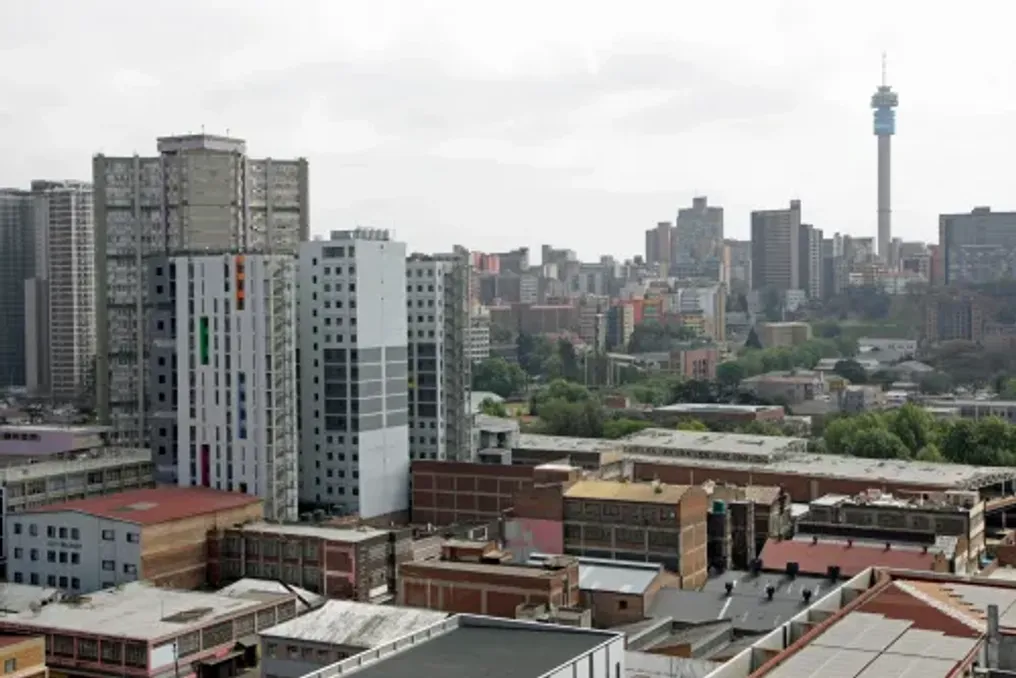
The Minister clarified that the province's plans for more effective use of government buildings include not only relocating offices into existing space. He noted that the GIFA process he mentioned regarding the Johannesburg CBD differs from the current assessment of education district offices.
Mamabolo added that some provincial buildings in the Johannesburg CBD have been deemed unsuitable and require renovation, but the province lacks sufficient funds to carry out all the work independently. Therefore, as he said, they need to collaborate with the private sector.
He also reported that the process in the Johannesburg CBD will be replaced by a second phase that will review regional offices, including those used by the Department of Education. The current housing assessment considers the province's office needs, living conditions, and available state facilities, among which options for renovation, restructuring, consolidation, and utilization of existing government buildings are being considered.