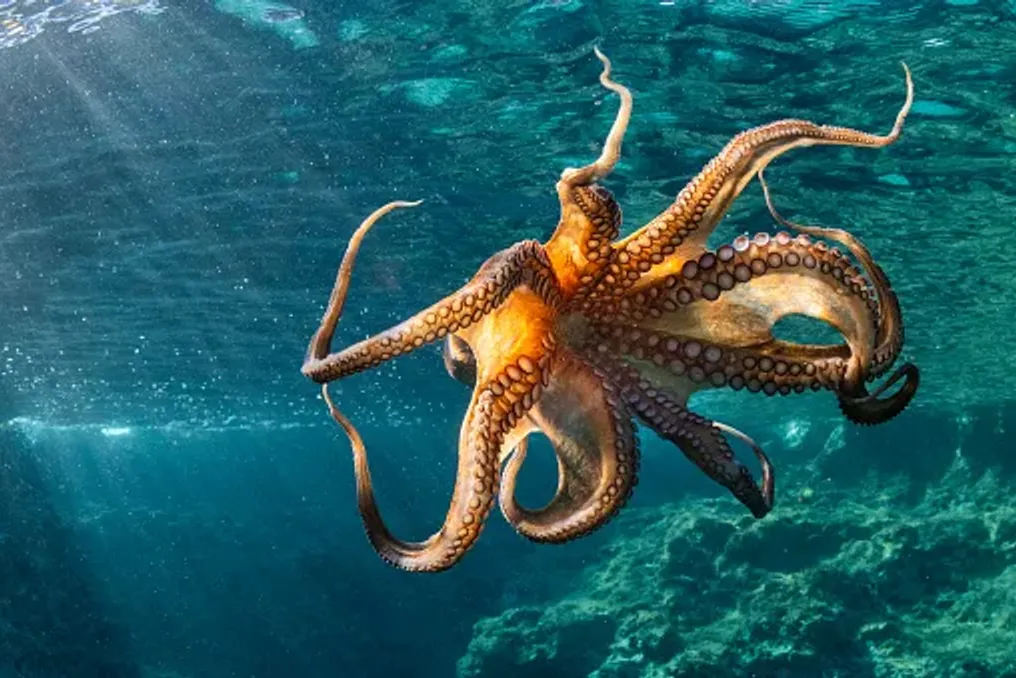
The octopus is considered one of the most amazing inhabitants of the ocean due to its three hearts, outstanding camouflage abilities, and unique ability to squeeze into tiny spaces.
Octopus Day is celebrated annually on October 8th, serving as an occasion to study these intelligent and peculiar marine animals, as well as the problems they face in the wild.
Octopuses can be found in all the world's oceans, from shallow waters to the deep sea. Despite their alien appearance, their intelligence, complex behavior, and ability to interact with their environment have made them some of the most intriguing creatures in the marine world.
Key Features of Octopuses
An octopus has three hearts: two pump blood through the gills, and the third circulates blood to the rest of the body. Interestingly, the main heart stops beating during swimming, which explains these animals' preference for crawling along the ocean floor rather than long-distance swimming.
Octopuses possess a central brain, as well as nerve networks in each of their eight limbs. These networks allow each arm to process information independently, including data about touch, taste, and smell. This unusual nervous system contributes to the octopus's exceptional ability to explore and interact with its surroundings.
These animals demonstrate an incredible regenerative ability: if an octopus loses an arm, it can gradually regrow it, including the nerves and other structures necessary for function. Some species can continue to use their remaining limbs while a new one develops.
Camouflage is one of the octopus's most impressive survival skills. By changing the color and appearance of its skin, some species can blend in with rocks, sand, corals, and other environmental elements. This helps them avoid predators and approach prey unnoticed.
Some species can even change the texture of their skin, making their camouflage more convincing. The octopus lacks an internal skeleton or protective shell, which gives it exceptional flexibility. If its beak can pass through a hole, the rest of its body can often follow. This feature allows octopuses to disappear into cracks, crevices, and other places that seem too small for them, explaining their reputation as underwater acrobats.
Problems and Threats
Despite their intelligence and complex behavior, many octopus species have a relatively short lifespan. World Animal Protection reports that octopuses generally live for about one to two years, although there are exceptions; for example, one mother octopus in the deep sea was observed caring for eggs for an astonishing 53 months.
Currently, octopuses are not considered endangered as a group, but they are subject to various dangers. Changes in ocean temperature and water quality deterioration can negatively affect them, and marine pollution creates additional risks. It has also been found that octopuses ingest plastic waste, which harms their health.
Another problem is overfishing. People catch octopuses for food and for aquarium trade, and some fishing operations use irrational or illegal methods. Growing interest in octopus farming raises questions about animal welfare and the environmental impact of keeping these highly intelligent creatures in captivity.
In July 2026, plans to establish the world's first commercial octopus farm in the Canary Islands of Spain were canceled after years of objections from animal protection groups, scientists, and the public. World Animal Protection opposed this project, citing concerns about octopus welfare under intensive farming conditions. The organization also highlighted the ecological footprint of octopus farming, including the use of wild-caught fish as feed.
Octopus Day is not just an excuse to post photos of these unusual creatures. It is also an opportunity to appreciate the complexity of marine life and to consider what can be done to protect the oceans that call them home.
For travelers, one simple way to mark this day is by studying marine life along the coast and visiting reputable aquariums, marine centers, or conservation organizations that educate visitors about marine ecosystems. Next time you see an octopus in a rock pool, during a dive, or snorkeling, remember that you are looking at an animal with three hearts, an extraordinary nervous system, and some of the ocean's most impressive survival skills.