Solving the Problem of Violence Against Women: Creating Safe Spaces and Holding Perpetrators Accountable
Read more
IOL
iol.co.za

Solving the Problem of Violence Against Women: Creating Safe Spaces and Holding Perpetrators Accountable

The discovery of several women's bodies in the Ekurhuleni area over the past two months has caused significant alarm among city residents. While investigations into the circumstances of these deaths are a priority, it is premature to draw conclusions about a link between these cases.

Nevertheless, it is evident that violence against women remains a widespread issue in South Africa, and the safety situation for women in public spaces requires immediate national attention.

Results from the First National Study on Gender-Based Violence in South Africa, published in 2024, show that 35.5% of women aged 18 and older have experienced physical and/or sexual violence in their lifetime. This corresponds to approximately 7.85 million women living in South Africa. Furthermore, South Africa ranks among countries with some of the highest rates of lethal violence against women globally; the partner homicide rate was 5.5 per 100,000 women in 2020/21, nearly five times the global average.

Although statistics cannot fully reflect the individual and collective consequences of violence, they demonstrate the scale of current problems and provide an important perspective for understanding violence against women and their safety. In light of ongoing investigations in Ekurhuleni and the potential risk to other women, a reactive measure is necessary, leading to recommendations for women to take increased precautions.

Any interested party would act irresponsibly if they advised women to ignore recommendations for greater caution, given the reasonable probability of immediate threat in this area. However, a reactive approach, despite its value in harm reduction and threat assessment, cannot serve as a sustainable method for preventing violence against women.

Preventive behaviors, such as avoiding isolated places, limiting solo trips or travel after dark, maintaining vigilance, sharing locations, altering routes or behavior in response to perceived risk, and using a 'friend system,' are integral to how women interact with public spaces and ensure their safety in the public sphere.

Individually, these strategies are reasonable and eliminate opportunities for the victim. But at a collective level, the question arises: at what point do legal advice and safety mechanisms shift the responsibility for managing violence risk onto the potential victim? Routine activity theory suggests that predatory crimes occur when a vulnerable or suitable target, a motivated offender, and the absence of adequate surveillance converge in time and space. This creates opportunities for crime to be committed.

In the context of violence against women and reactive measures, the concept of a 'suitable target' must be considered. Victims' behavior is often critically analyzed, focusing on what they could have done differently to avoid victimization, which can lead to victim-blaming and reinforce the rhetoric that women are responsible for their own safety. There is a concern that while all people possess free will and can try to mitigate their risk, women are increasingly forced to take on the burden of risk management, restricting normal daily activities and routines.

It is crucial to understand that crime prevention cannot be based on the premise that women must limit and narrow their lives and access to public spaces because violence is expected against them and is otherwise 'unmanageable.' From this perspective, the question might need to shift from 'why were they there?' to 'why is it possible for an offender to act there in the first place?'

Such a shift focuses on adequate surveillance, which goes beyond mere police presence and includes video monitoring, environmental design, safer transportation options, private security, community policing, as well as effective reporting and response mechanisms. The focus shifts from restricting women's movements and placing undue responsibility on them to studying how the environment can be made less conducive to criminal acts.

The physical, emotional, and social consequences of violence affect victims, their relatives and friends, and society as a whole. The mere fear of becoming a victim can influence behavior, and women are already adept at adapting their behavior, lifestyle, and routines in response to perceived risk. Increased threats of violence can further restrict their mobility, independence, and participation in public life.

The emerging danger is that such restrictions may gradually become normalized and accepted as part of women's lives. Consequently, the focus remains on how women can avoid victimization, rather than on adequate surveillance, safe environments, protection, and holding perpetrators accountable. Individual risk management can provide some protection from victimization, but sustainable primary and secondary crime prevention requires greater attention to offenders, opportunities for crime, environmental conditions, and formal and informal surveillance. Essentially, solving the problem of violence against women cannot simply mean making women better at avoiding danger.

The deaths of women in Ekurhuleni demand an urgent response from the criminal justice system that emphasizes practical safety aspects and offers suggestions for mitigating immediate risk. However, they also require us to critically reflect on and consider a long-term response in a country that continues to record some of the highest levels of violence against women. The answer cannot primarily be about what women should do differently, but rather about reducing opportunities for offenses, strengthening adequate surveillance, and improving the safety of public spaces. Ultimately, the responsibility for preventing violence against women should not rest predominantly on those who are most at risk of experiencing it.
Similar stories

Activism in South Africa protests gender-based violence after women's murders in eKhuruleni
Read more
iol.co.za

Activism in South Africa protests gender-based violence after women's murders in eKhuruleni

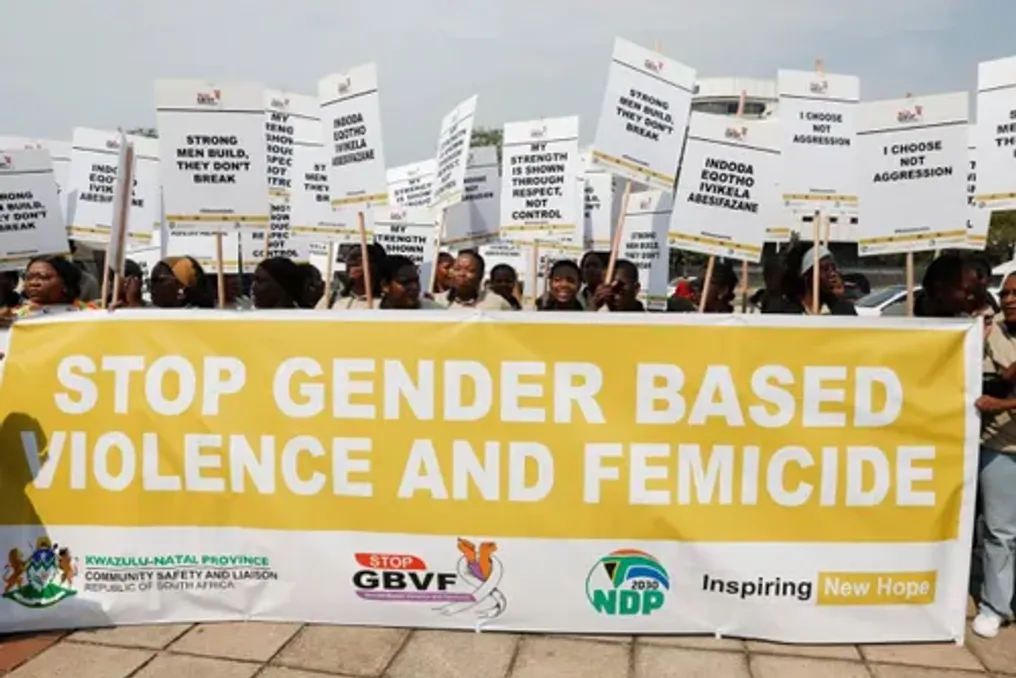
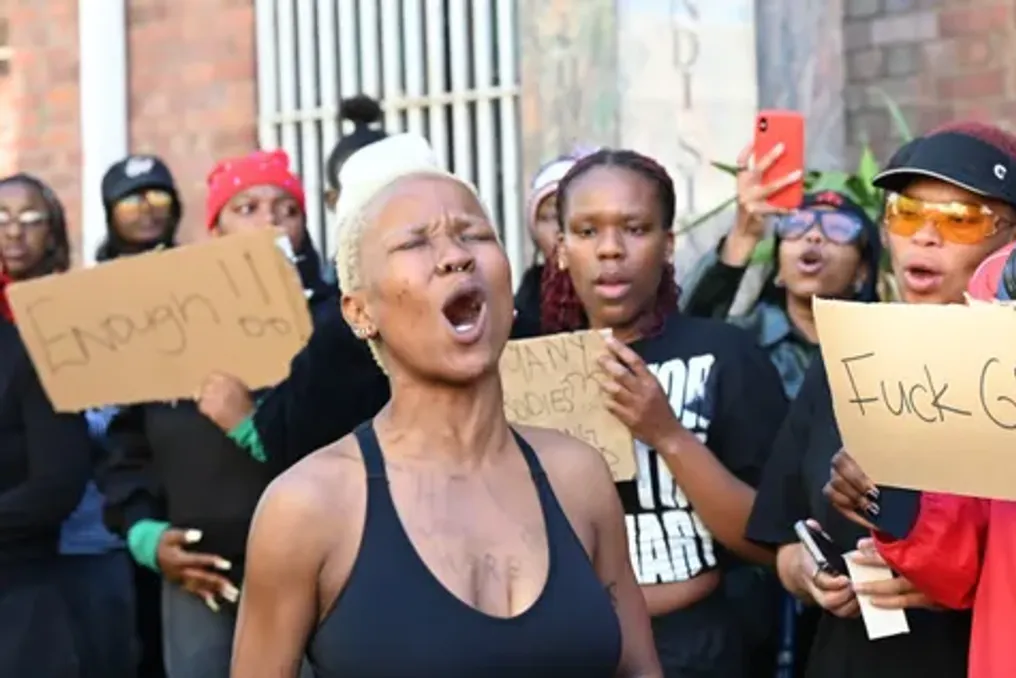
Residents of South Africa took to the streets to pay tribute to the women murdered in eKhuruleni, accompanied by growing demands for action against gender-based violence (GBV). Despite the existence of laws, institutions, and strategies in the country to combat gender-based violence and femicide, prevention remains unattainable until threats are taken seriously, survivors receive protection, and the government is held accountable before violence becomes fatal.

South Africa recognizes gender-based violence and femicide as a national problem, and the country is aware of the causes and statistics. There are laws, policies, institutions, shelters, courts, police structures, and civil society organizations. Nevertheless, women continue to be subjected to rape, assault, violence, and murder.

The discovery of the eleventh woman's body in eKhuruleni has once again drawn public attention to the issue of femicide. The police are investigating the circumstances of the deaths but have not determined if all cases are linked. Regardless of whether the deaths are connected or not, each woman represents a lost life and a family left in mourning.

It is impossible to protect a woman after she has been killed. Therefore, the question is not just how to investigate a murder after it has occurred; it is also necessary to find out what could have been recognized earlier, what warning signs were missed, whether threats were reported, whether protection was provided, whether perpetrators were known, and whether institutions acted before the violence became fatal.

This is the central question of the GBVF crisis in South Africa. The crisis is real, as is society's responsibility towards it. Behind every number is a woman, a family, and a community. The women whose bodies were found in eKhuruleni are not just statistics; their deaths serve as a reminder that femicide is not an abstract national problem, but violence that reaches homes, relationships, streets, and communities, ending in the irreversible loss of human life.

Broader data is also shocking: between April and June 2026, official police figures recorded 569 women murdered and 1052 women attempted to be murdered. In the same quarter, 9201 victims of rape were registered, of which 8814 were women and children. These figures do not reflect all the violence that remains unregistered, but they clearly demonstrate the scale and urgency of the crisis.

South Africa has officially acknowledged the seriousness of the situation: gender-based violence and femicide were classified as a national catastrophe in November 2025, placing the National Executive Body at the center of a coordinated national response. The National Council on Gender-Based Violence and Femicide, established under the National Council on Gender-Based Violence and Femicide Act of 2024, has been formed, and members have been appointed for a three-year term starting in August 2026. The Council is authorized to provide strategic direction and coordinate multi-sectoral and inter-sectoral responses to GBVF.

Frameworks exist, institutions exist, policies exist. The question is whether they work early and effectively enough to prevent the next woman from becoming a victim.

A woman who reports a threat should not disappear into the system. A protection order must mean protection. A repeated threat must be treated as a warning, not just another incident. Survivors must have access to help before the violence escalates. And if an institution fails in its duties, this failure must have consequences.

We are accustomed to counting violence after it has happened. We record murders, rapes, assaults, arrests, and court cases. These measures are important because they show the scale of the problem. However, they also tell us what happened after the woman was harmed.

It is much harder to understand what happens before the crime: how many women were threatened before the attack? How many sought help? How many were afraid to leave? Were perpetrators previously registered? Were restraining orders issued? Were any warning signs known to family, neighbors, schools, workplaces, or authorities? How many opportunities existed for intervention before the violence became fatal?

We cannot prevent every act of violence, but we can create a system that is much better at recognizing danger and responding before the final act. Prevention means early risk identification, taking threats seriously, connecting survivors with appropriate services, follow-up monitoring, and ensuring that institutions fulfill their duties.

Femicide does not begin at the moment a woman is killed. The final act may be murder, but the path to it can include control, intimidation, stalking, threats, assault, isolation, coercion, and repeated violence.

Serious gender-based violence can occur in relationships and places that should provide safety. This means that prevention cannot only begin when a woman enters a police station or hospital; it must start much earlier, in the homes and families where children learn what relationships should look like.

Children learn by watching the adults around them. They absorb whether anger is expressed through violence or self-control, whether refusal can be accepted without humiliation, whether strength means dominance or responsibility, and how women are treated with dignity. This makes responsible fatherhood and positive male role models part of the conversation about prevention.

The 2024 State of Fathers report for South Africa, based on 2023 data, showed that 35.6 percent of children in South Africa lived in the same household as their biological father, while 64.4 percent lived separately. This figure should be viewed carefully: living in separate households does not automatically mean the father is absent from the child's life. A father can live elsewhere and still be involved, caring, and responsible.

However, this underscores the importance of consistent adult presence and guidance in children's lives. Fatherhood is more than biology or cohabitation; it is a continuous responsibility. It means caring, listening, guiding, setting boundaries, showing affection, demonstrating self-control, and taking responsibility for one's children's well-being. It also means treating one's children's mother with dignity, regardless of whether the parents stay together.

This is especially important for boys. They need to see men who demonstrate that strength is not equal to dominance, that refusal does not justify anger, that jealousy is not possessiveness, and that violence is never an expression of masculinity. They need to see that a man can disagree without humiliation, assert authority without abuse, and take responsibility when he is wrong. These lessons must be taught in homes, schools, sports clubs, youth organizations, workplaces, and religious communities. The point is not to blame fathers or condemn men, but to recognize that responsible fatherhood and positive male role models can contribute to a culture of respect and responsibility necessary for prevention.

There is an important distinction between personal safety and shifting responsibility onto women. Women can take reasonable precautions if they wish. But a woman should never be expected to change her appearance, place of work, travel times, whether she exercises, walks alone, or leaves abusive relationships solely because men might want to harm her.

A woman going to work is not a problem. A woman exercising is not a problem. A woman traveling alone is not a problem. A woman leaving an abusive relationship is not a problem. The person choosing violence bears responsibility for that choice. Therefore, society must ensure that safety advice does not become another way to restrict women's freedom. The goal is not to teach women to live a more modest life, but to create a country where women can lead ordinary lives without having to organize their lives around fear.

The focus on violence against women and girls must remain central, as women face specific forms and patterns of GBVF, including intimate partner violence and femicide. At the same time, men and boys can also be victims of violence and abuse, and children require special protection. Recognizing this does not weaken the crisis faced by women. The central question remains the same: how to prevent violence, protect those in danger, and hold perpetrators accountable? Men and boys must be part of the answer.

Men should be encouraged to talk about anger, refusal, relationships, fatherhood, alcohol, consent, and emotional responsibility before these issues become crises. Boys must learn that masculinity does not require control over women. They must learn that 'no' means 'no'. They must learn that jealousy is not love. They must learn that refusal is painful, but never justifies violence. They must learn that asking for help is not weakness. And they must learn that responsibility is a form of strength. The goal is not to create another conversation where men are simply told what not to do; the goal is to develop a culture where responsible masculinity is visible, respected, and expected.

Communities cannot replace the state. The police must investigate. Prosecutors must prosecute. Courts must hear cases. Medical services must treat survivors. Social workers must intervene. Shelters must provide protection. Municipalities must support infrastructure and a safer public environment. The government must coordinate these responsibilities and publicly report on its work.

Classifying GBVF as a national catastrophe and establishing the National Council provides institutional mechanisms for coordination and accountability. However, institutions cannot be judged solely by their existence; they must demonstrate the fulfillment of their duties. The existence of a protection order means little if it is not enforced. The existence of a police station means little to a woman in danger if her complaint is not taken seriously. The existence of a shelter means little if a survivor cannot access it. The existence of a national strategy means little if its implementation does not reach the streets. This is where accountability is critically important.

Every institution involved in combating GBVF must know what it is responsible for, what resources it has, what it has achieved, what remains undone, and who needs to act next. Where something fails, that failure must be identified and corrected. Where something works, it should be strengthened and replicated.

The government cannot be on every corner, enter every home, or know what is happening in every relationship. This is where responsible citizenship becomes important. However, community actions must never turn into vigilantism. Ordinary people should not investigate crimes, confront violent offenders, or attempt to administer justice themselves. Their role is different. A neighbor can call for help when a woman is in danger. A shopkeeper can provide a safe place for a frightened woman.

KwaZulu-Natal records the highest rates of domestic violence-related killings in South Africa
Read more
iol.co.za

KwaZulu-Natal records the highest rates of domestic violence-related killings in South Africa

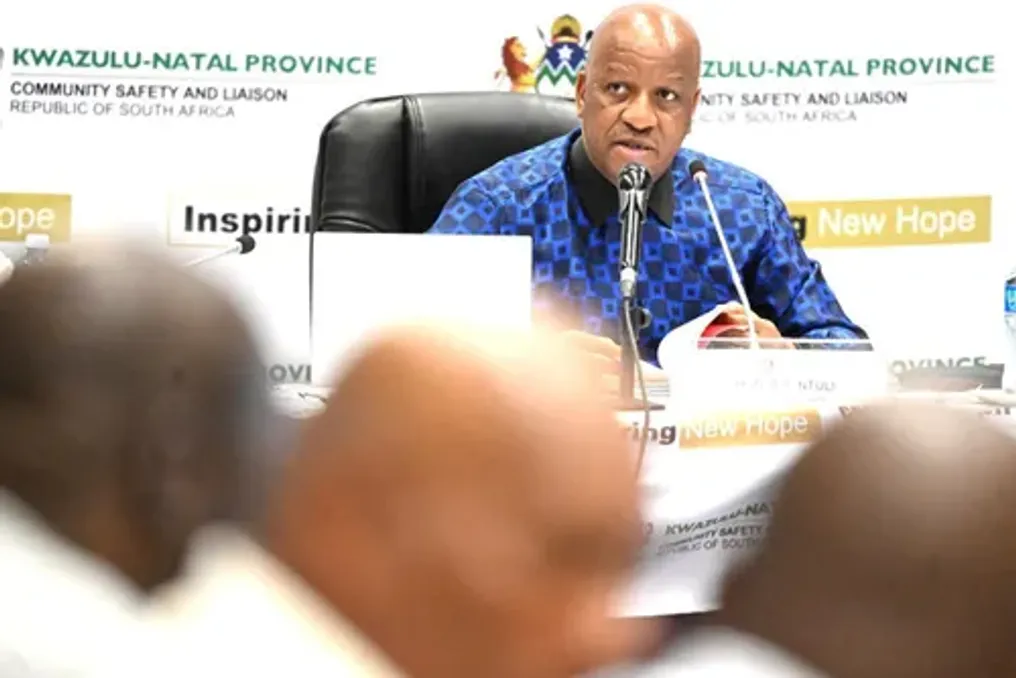
In response to the sharp rise in gender-based violence and femicide (GBVF) across South Africa, KwaZulu-Natal Premier Tamsanga Ntuli called for continuous, year-round countermeasures instead of one-off awareness campaigns.

Highlighting the alarming statistics, Ntuli stated that the ongoing crisis is a serious national disgrace requiring universal public mobilization. In recent weeks, there has been a surge in violence against women across South Africa, particularly in the provinces of Gauteng and KwaZulu-Natal, where victims have been found killed, burned, or shot. Serial attackers have also been identified in Durban and Pongola in KwaZulu-Natal.

Speaking at the Durban Crime Council, Ntuli presented the province's #SilwaNechilo initiative—an action plan aimed at combating the rise in sexual crimes and domestic violence. This call came amid quarterly crime data confirming that KwaZulu-Natal leads the country in the number of homicides and attempted murders related to domestic violence.

He noted: 'Nothing is more important for us to discuss than the grave crime that affects our province, and consequently, our country. The crime I am talking about is the shame of gender-based violence and femicide.' Ntuli emphasized that the statistics show these incidents are not isolated.

'Between April and June of this year, 569 women were killed in South Africa. That is approximately six women every day. During the same period, from April to June of this year, 9,201 cases of rape were registered. In the last financial year, the police received over 50,000 reports of gender-based violence and femicide.'

Following the declaration of GBVF as a national catastrophe, Ntuli announced that he submitted #SilwaNechilo to the KwaZulu-Natal Legislature. He explained that #SilwaNechilo was developed based on the premise that violence against women occurs daily, necessitating a year-round response to this calamity. According to Ntuli, the one-year program shifts the province from sporadic awareness raising to sustainable societal action.

'We did not develop the #SilwaNechilo campaign in a vacuum. When we launched it, we were faced with deeply disturbing evidence. Cases of rape in our province increased; seven of our districts recorded a rise in sexual assaults on children under 12. Among survivors who sought help at our Tutuzela Care Centres, 65% were children. Umgungunduluvu, Ethekwini, and King Cetshwayo were identified as hotspots,' Ntuli stated. He added that 'the campaign has five pillars: protection, education, mobilization, community, and leadership. They must protect, educate, mobilize, transform communities, and demand leadership.'

According to the head of the Provincial Crime Register, Brigadier General Willem du Toit, first-quarter statistics for KwaZulu-Natal (April–June 2026) showed that in cases related to domestic violence involving women, victims accounted for 69% of homicides (32 cases), 61.7% of attempted murders (71 cases), 95.5% of rape cases (168 cases), 73.9% of physical assault cases due to domestic violence (1,091 cases), and 92.7% of general assault cases (2,182 cases).

Du Toit noted: 'Our homicides, attempted murders, as well as rapes and physical assaults due to domestic violence are the highest in the country compared to other provinces. Homicides accounted for 23.8% of the national picture, and attempted murder for 27%.'

He concluded that domestic violence remains a key issue, especially concerning killings, assaults, and rapes. Addressing this problem requires stronger awareness campaigns, conflict resolution, and support and empowerment of victims. Alcohol abuse and disputes are recurring factors in many intimate partner violence crimes. Du Toit added that 'police work alone can reduce certain types of crime in the short term, but sustainable crime reduction also requires broader social measures. These social measures include community policing forums, private security partnerships, urban modernization, and environmental design; social interventions such as education and youth programs, economic opportunities, including jobs and skills development, as well as justice system effectiveness, including sentencing and rehabilitation as supplementary measures.'

Call to stop blaming women for male-perpetrated violence and focus on prevention
Read more
iol.co.za

Call to stop blaming women for male-perpetrated violence and focus on prevention

Women in South Africa, despite all the diversity, are tired of living in constant fear. They no longer want their names to become a topic of discussion after they have been raped, beaten, or murdered. They are tired of brief bursts of public outrage, vigils, candle lighting, marches against Gender-Based Violence Against Women and Girls (GBVF), wearing black on Fridays, holding symbolic funerals, temporary cessation of economic activity, and creating purple profiles on social media.

Furthermore, women are extremely irritated by promises that are invariably followed by predictable silence and inaction until another name, another face, or another hashtag appears. These people are not just statistics; they were women such as Elizabeth 'Thunto' Moselakgomo (2026), Delana Kader (2023), Tshegofatso Pule (2020), Uiyene Mrvetyana (2019), Zolile Humalo (2018), Karabo Mokoena (2017), Susan Road (2016), Jade Panayotou (2015), Riva Stingkamp (2013), and Anene Buysen (2013).

These examples represent only a small fraction of women who have experienced GBVF; they are the faces of those whose stories remain untold, whose bodies are unrecognized, and whose tragic fates do not make headlines in social or mainstream media. Meanwhile, the latest SAPS crime statistics (April–June 2026) indicate that 569 women were killed, corresponding to an average of more than six victims daily, and that 1052 women reported attempted murder during the same period.

Every quarter, the Minister of Police publishes reports that highlight the cruelty women face in a country that seems to be at war with them. Recently, the first National Study on Gender-Based Violence in South Africa (GBV) was published, providing baseline national estimates of Violence Against Women (VAW) alongside domestic violence perpetrated by men. The findings of this study were intended to serve as a call to action and an opportunity to adjust and accelerate the response to GBVF.

South Africa has some of the world's leading researchers in all forms of violence and femicide. Nevertheless, despite all this evidence, VAW remains the most pressing social problem facing South Africa in the post-apartheid era. Researchers have studied the factors contributing to GBV for decades, identifying gender inequality, harmful gender norms, masculinity constructs, early exposure to violence in childhood, alcohol use, economic stress, relationship dynamics, as well as the social and institutional environment that facilitates and may impede violence.

This work has allowed the focus of prevention to shift from simply engaging men and boys and raising awareness to changing gender relations, social norms, and, importantly, the systems that support inequality and violence, as well as what can prevent violence. The evidence base should indicate where and how to intervene to stop violence perpetrated by men. This evidence base must also translate into actionable interventions whose effectiveness can be measured by a reduction in the number of men committing violence and women experiencing violence in South Africa.

Our National Strategic Plan on Gender-Based Violence and Femicide recognizes this. Among its six pillars is the prevention and restoration of social cohesion, with an emphasis on evidence-based prevention, changing behavior and social norms, and shifting toxic masculinity. Although documented effective methods for preventing VAW exist, they remain small in scale and localized to specific population groups.

To date, not all implemented 'interventions' targeting men are evidence-based. Most are assessed merely by the number of men present, dialogues conducted, or promises signed, and so on. However, the number of participants only indicates whether we reached them. The number of dialogues held shows that an event took place. Neither, on its own, says whether men's behavior has changed.

As we fight the latest wave of femicides and tend to continue doing what we always have done, we must be careful not to confuse activity with real impact. Despite all the investment and allocation of funds for GBVF since the launch of the GBVF NSP, we must ask difficult but important questions. Failure to do so will lead to our own failure.

A quick review of current national work with men and boys often points to achieved figures or trained individuals, men's marches against GBV, signed pledges, dialogues held, Men's and Boys' Parliaments convened, positive masculinity and behavior change workshops, school programs, marches, and awareness campaigns, as well as the recent use of drama and poetry as educational tools to address GBVF issues. Some of these efforts are important for creating critically necessary initial spaces for conversations that many men and boys have never had, and can be gateways to challenging unquestioned gender and masculine norms. However, they cannot stop GBVF and reduce violence if implemented outside a well-funded, sustainable, scientifically sound, and effective prevention agenda.

If we are serious about making our response to GBVF evidence-based, we must ask about outcomes. Has the registered number of VAW cases decreased? Has the level of knowledge increased, and has this led to measurable changes in behavior? Have attitudes and gender norms changed? Have these changes been sustained? Has the amount of destructive behavior decreased? Have reports of physical and/or sexual violence decreased? Are men committing less violence?

Five years into the implementation of the GBVF NSP, its review points to the same problems: significant preventive activity, but a lack of implementation of a Comprehensive National Prevention Strategy and too many efforts remaining short-term. It is important to note that this is not a story of nothing happening. The review notes progress in broader national response and calls for the next five years to include the evaluation of key prevention programs and interventions aimed, among others, at men and boys.

However, there is no doubt about whose behavior we have modified and controlled for decades. We have turned GBVF prevention into a women's issue. Women already participate in informal behavior change programs every day. It is intensive. It starts with us girls. It happens everywhere. And it never truly ends. Women are advised: 'Don't sit like that, sit like a girl. Don't walk alone. Don't wear mini-skirts. Don't run too early. Don't run too late. Check the trunk and back seat before getting in. Share your location. Sit in the front of the Uber. Watch your drink. Don't wear headphones. Make your Strava private. Text me when you get home. Don't walk alone. Don't be out after dark.' And these are just the obvious things.

Underneath all this lies a hypervigilance that many women internalize from childhood. The threat of violence shapes women's lifestyles even on days when nothing is happening. There is love in these warnings, but there is also something deeply wrong with how necessary they have become.

Of course, practical safety tips have their place. We can personally attest to their value. Give us all the tools that can help us get home safely. But we must clearly understand what these tools do. They help us manage the risk of someone else's violence. This can save lives, but managing the risk of violence is not the same as preventing and stopping its commission.

And too often, when all our careful calculations fail, attention turns back to women. After decades of asking women to anticipate violence, avoid violence, cope with violence, and protect themselves from it, it is time to focus our national efforts on preventing and stopping male violence. Why are we normalizing freedom for everyone except women? When will we confront the real problem? Why are we making the environment comfortable for offenders while restricting the freedom of women and young girls? Stop telling women to go into 'lockdown' while offenders should be isolated. Stop asking women to prevent men's violence!

Popular