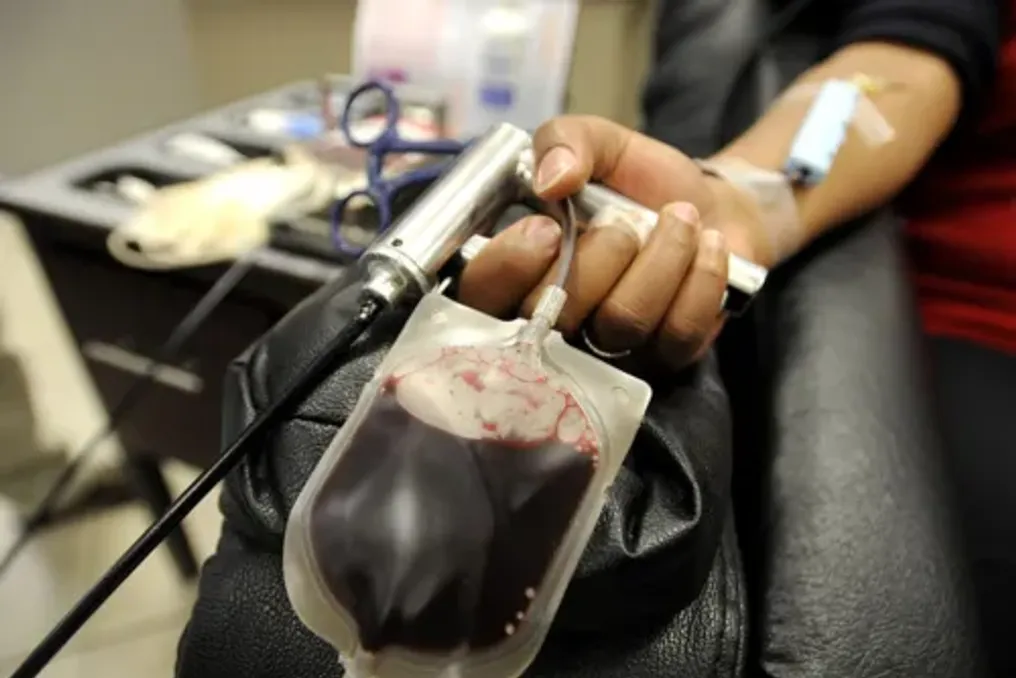
Mashni Pillay, a mother from Port Shepstone, left the ranks of Jehovah's Witnesses almost five years ago to save her child's life. Her 11-month-old daughter was diagnosed with severe thalassemia, requiring regular red blood cell transfusions.
However, because Pillay was raised with the belief that receiving blood contradicted her faith, allowing her daughter to be treated meant making a decision that forever changed her life. She chose her daughter.
Today, the six-year-old girl continues to go to the hospital in Durban every three weeks to receive a dose of red blood cells that sustains her life. Nevertheless, the recent statement by Jehovah's Witnesses that individual members can now decide for themselves whether to accept donor red blood cells, leukocytes, plasma, and platelets has left Pillay devastated and angry.
Pillay shared her indignation: 'The announcement that receiving blood is now a matter of personal choice is incredibly painful for me. It brings me back to the uncertainty, fear, and feeling of rejection we experienced when our child was first diagnosed. I am angry. I cannot help but ask: why didn't this change happen sooner? Why didn't it happen when my child needed it?'
Pillay stated that she could not stand by and watch her child lose the treatment necessary since the diagnosis in 2021. She admitted: 'Suddenly, everything I knew and believed ceased to make sense to me. It was terrible because at that moment in my life, I needed my faith.'
Pillay and her husband sought guidance within the organization but claim that the advice they received aligned with the previous stance against blood transfusions. 'We had to make a personal decision as parents. To give my child life-saving treatment, we had to leave the faith. No one condemned us. We simply no longer followed the teachings,' she said. 'Will this change change our desire to return? No. I made this decision based on the circumstances my family faced at the time. I do not regret this decision.'
She declined to name the branch of the organization she belonged to. After contacting several Jehovah's Witness branches, she was directed to the organization's headquarters, which did not answer calls. The official website of Jehovah's Witnesses in South Africa states that they continue to consider life and blood sacred gifts from God.
They officially stated: 'Decisions regarding major blood components are matters of individual conscience for each witness-patient. This adjustment extends the principle of personal decision-making, which was already applied to plasma-containing therapies and autologous blood management, to the use of major blood components. Thus, clinicians must consult directly with each Witness-patient and ensure clear documentation and respect for the patient's individual decisions.'
For many years, the Department of Health has been forced to go to court to compel parents to consent to life-saving blood transfusions for seriously ill children. Suchaifa Bhamji, a senior lecturer and head of public law at the University of KwaZulu-Natal School of Law, noted that this change is significant but does not alter the constitutional right governing medical consent.
According to her, 'It does not change the constitutional framework governing medical decision-making in South Africa. Nor does it expand the authority of doctors, hospitals, or courts to force treatment. Rather, its main significance lies in the relationship between an individual believer and the religious organization.'
She emphasized that the Constitution protects freedom of religion while recognizing the right of an individual to make decisions about their own body. 'Therefore, a court usually cannot force a competent adult Jehovah's Witness to undergo a blood transfusion against their will just because the treatment might save their life. Respect for personal autonomy requires that competent adults be allowed to make decisions that others might consider irrational, dangerous, or contrary to their own interests.'
In this context, the recent doctrinal development in the Jehovah's Witness faith does not actually change the legal relationship between an adult patient and the state. It changes the religious dynamic within the community of believers itself. If receiving red blood cells, leukocytes, plasma, and platelets is now considered a matter of personal conscience, an adult believer wishing to receive such treatment should not feel that they are violating a mandatory religious prohibition. The decision remains with the individual.
The situation differs when parents make medical decisions for their children. 'South African law draws a clear distinction between an individual exercising rights over their own body and a parent making decisions on behalf of a child. Parents certainly have important rights and responsibilities regarding their children, including the right to raise them according to their religious beliefs. However, parental authority is not absolute. Where there is a conflict between the religious beliefs of the parents and the child's need for life-saving treatment, South African courts consistently give decisive weight to the well-being and best interests of the child.'
Bhamji concluded that this change may reduce conflicts between religious beliefs and medical treatment, but it does not affect the constitutional principles governing medical consent. The South African Medical Association (SAMA) believes that this change should prompt doctors to have more personal conversations with Jehovah's Witness patients instead of relying on assumptions about whether they will agree to or refuse anything.
SAMA views this change as a significant step forward for patients and healthcare workers. 'Doctors should not assume that a Jehovah's Witness patient will accept blood components. Instead, this change strengthens the importance of open, respectful, and individualized discussion with each patient. Healthcare workers must ascertain the patient's wishes, explain the benefits, risks, and available alternatives, and support an informed decision based on the person's circumstances and beliefs.'
SAMA CEO, Dr. Mzulungile Ndikida, added that 'where possible, especially in emergencies, treatment preferences should be established in advance, clearly documented, and communicated to the care team. Patients should also review any existing advance directives to ensure they reflect their current wishes.'
Ndikida noted that the association understands that decisions related to blood and its products can be deeply personal and may involve important religious and ethical aspects for some patients. 'These decisions must be approached with sensitivity, respect, and without judgment. From a medical standpoint, the priority remains ensuring that patients receive safe, appropriate, and scientifically sound care, while respecting their autonomy and legally and ethically valid treatment options.'