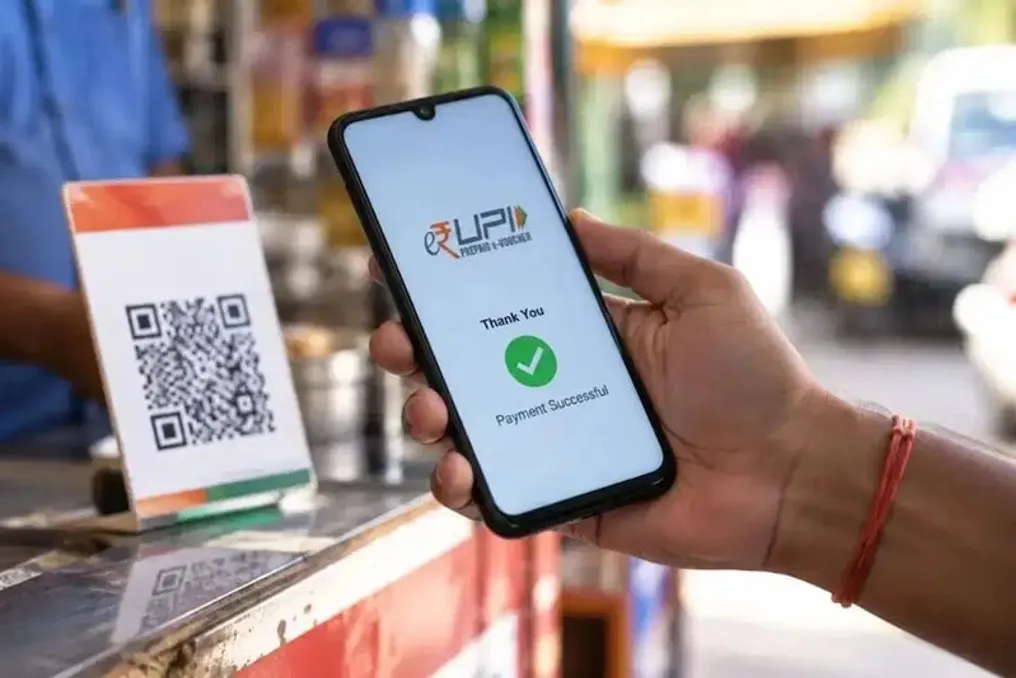
The UPI system has become an integral part of the daily lives of ordinary people, used for various operations—from buying vegetables and groceries to paying for taxis and making store payments. Any change concerning UPI directly affects millions of users. A new change is being introduced into the UPI payment system starting October 15th.
However, the good news for customers is that despite this change, they will not have to pay an additional commission when making payments. Starting October 15, 2026, a Merchant Discount Rate (MDR) of 0.4 percent will be applied to certain special transactions with merchants exceeding 2000 rupees. It is important to note that this charge does not apply to all UPI operations, but only to specific eligible transactions.
Simply put, MDR is a commission charged to the merchant within the digital payment system. Concerns arose that sellers might pass this fee on to buyers or refuse to accept online payments to avoid the charge, which could potentially lead to a decrease in UPI usage.
After reviewing monetary policy in October, the Governor of the Reserve Bank of India (RBI), Sanjeev Malhotra, was asked about a possible reduction in UPI transactions after the introduction of MDR. He responded that the decision to introduce this levy has already been made, and the central bank does not expect a significant drop in UPI transactions for this reason. RBI believes that despite the application of MDR to some payments with merchants from October 15th, it is unlikely to have a substantial impact on UPI usage, and no sudden sharp decline in people's reliance on UPI for daily transactions is anticipated.
The most important point of these changes is that the direct financial burden will not fall on the ordinary customer using UPI. For example, if you buy an item worth 5000 rupees in a store and pay via UPI, an MDR of 0.4 percent may be applied to such relevant transactions, but the customer will not be charged an additional 0.4 percent commission. That is, you will have to pay exactly 5000 rupees for the purchase. This charge will be applied between the parties of the payment system, not collected directly from the customer.
This change does not apply to all UPI payments. Starting October 15th, an MDR of 0.4 percent will only apply to certain special merchant transactions exceeding 2000 rupees. Consequently, regular money transfers to friends, family members, or relatives should not be considered in the context of this change. A uniform charge for all UPI payments will also not be introduced.
For a long time, UPI operated within a zero-MDR system. This is why this payment method became convenient and low-cost for both customers and sellers. Now, the system is changing for some larger sum merchant transactions. However, the scope of this change is limited and does not cover all UPI transactions.
According to the government, the goal of this system is to ensure the long-term sustainability of this digital payment system. The policy of keeping UPI free for ordinary customers also remains in effect. Thus, the government aims to support the growth of digital payment usage while ensuring a balance between the costs and revenues of various participants in the payment system.
If you use UPI for purchasing items such as vegetables, milk, groceries, or clothing, you will not pay an additional commission when making relevant UPI payments after October 15th. The changes are mainly related to payments to merchants exceeding 2000 rupees, where an MDR of 0.4 percent will be applied. This does not mean that every UPI payment will become more expensive; this charge must be covered by the merchant, not the customer.