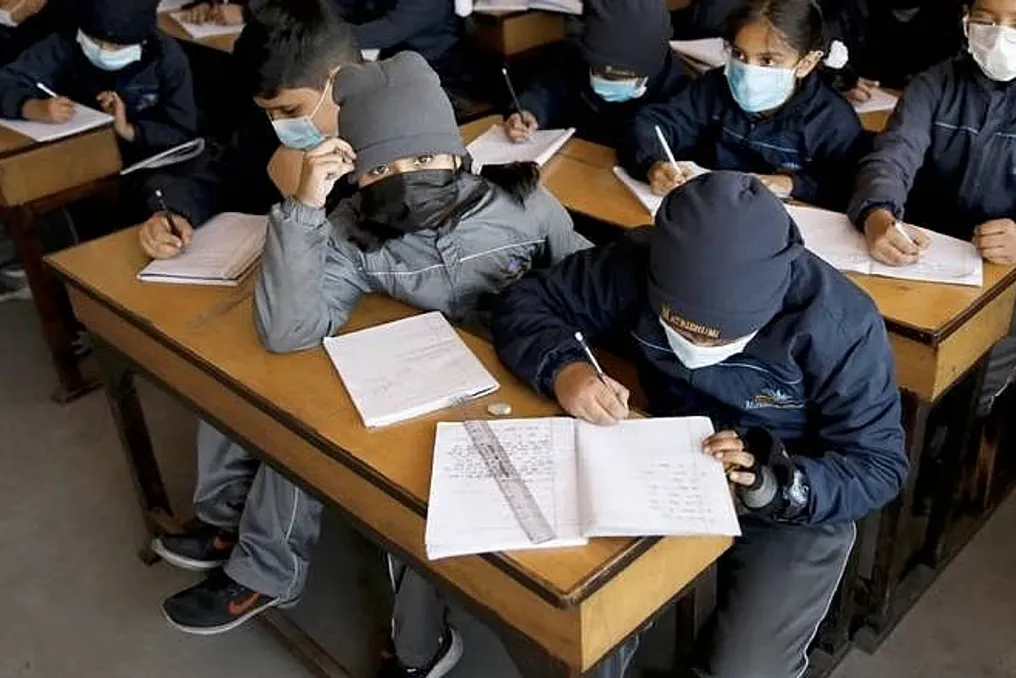
Some Dubai schools are ready to change schedules to reduce traffic load and shorten travel times
Read more
Khaleej Times
www.khaleejtimes.com

Some Dubai schools are ready to change schedules to reduce traffic load and shorten travel times

Due to increased road traffic during school commutes in Dubai, a number of educational institutions have expressed willingness to review the start and end times of classes. The goal of these changes is to ease congestion, reduce daily travel, and ensure a calmer start to the school day for students.

This issue is actively discussed by parents who face growing road congestion when rushing to get their children to school on time. This raises a discussion about how much flexible scheduling in schools can help alleviate pressure on families.

However, the Knowledge and Human Development Authority (KHDA) emphasized that schools cannot make such decisions independently. The regulator also noted that it does not intend to impose a uniform schedule across Dubai's diverse school sector, given the differences in curricula and extracurricular activities.

This leaves room for schools to explore alternative options provided that any proposed changes are approved and do not jeopardize the learning process or student well-being.

The Director of Dewvale School, Sima Omar, stated that the school is open to reviewing its schedule as the needs of families and students evolve. She noted that travel time and traffic are an important part of the overall school day experience, especially when long journeys can lead to children being tired even before classes begin.

Sima Omar stressed: 'We are always ready to revise our schedule in response to the changing needs of our students and families. Traffic and travel time are an important part of the overall school experience, and we understand that a long journey can affect a child's energy and well-being even before the start of the school day.'

Nevertheless, Omar emphasized that any change must be carefully planned considering learning time, transportation, and family routines. One option she believes could bring tangible benefits is shifting the start time between schools in the same area.

'The biggest difference will come from shifting the start time, especially between schools in the same locality. Even a difference of 15–30 minutes at the beginning and end of classes can help distribute peak traffic and reduce long commutes,' she said. She also added that unnecessarily early wake-ups for younger children should be avoided, as adequate sleep and a calm start to the day are necessary for their well-being. The priority should be schedule adjustment, not reducing instructional time.

Omar reported that schools are willing to cooperate with KHDA and other educational institutions to find practical solutions if greater flexibility can help reduce road congestion.

At Bloom World Academy, schedule flexibility is already integrated into the school's model. The main school day starts at 9 am, with a later start introduced to give families more freedom and ensure students arrive at school rested and ready to learn.

The school also offers an earlier extended option starting at 8 am for families who need it, while maintaining a full school day from 9 am to 4 pm. The school stated that this model was designed to give children more time in the morning without sacrificing academic rigor.

'Flexibility has been part of our approach since the beginning. The main school day runs from 9 am to 4 pm, while families needing an earlier start can utilize extended options from 8 am, giving parents more choice for drop-off while maintaining a full and structured school day,' the school clarified.

The Director of Al Diyafah High School, Nita Shetty, opined that changing the school schedule can have different consequences depending on the location of the schools and the nature of the surrounding traffic. She acknowledged that traffic jams are a serious problem for families across Dubai, but noted that traffic is currently quite predictable as most schools operate within a similar time frame for start and end of classes.

She suggested that greater scheduling flexibility could help some schools and families, but its impact would depend on the location and surrounding traffic flows. She also pointed out an often overlooked issue—the impact on parents and school staff whose children attend schools with different schedules.

She stressed that any change must consider the well-being of students, staff, and their families. For example, staff members might have children attending other schools with different schedules, which could create difficulties for family routines. Shetty also noted that shifting the school day might require institutions to incorporate a lunch break, potentially leading to students spending more time at school rather than shortening the day.

'Flexibility is certainly worth exploring, but it must be considered holistically, ensuring that any change genuinely benefits families while protecting instructional time, student well-being, and the practical realities of school operations.'
Similar stories

Dubai School Tests Personalized Learning Model Using AI and Human Mentors
Read more
www.khaleejtimes.com

Dubai School Tests Personalized Learning Model Using AI and Human Mentors

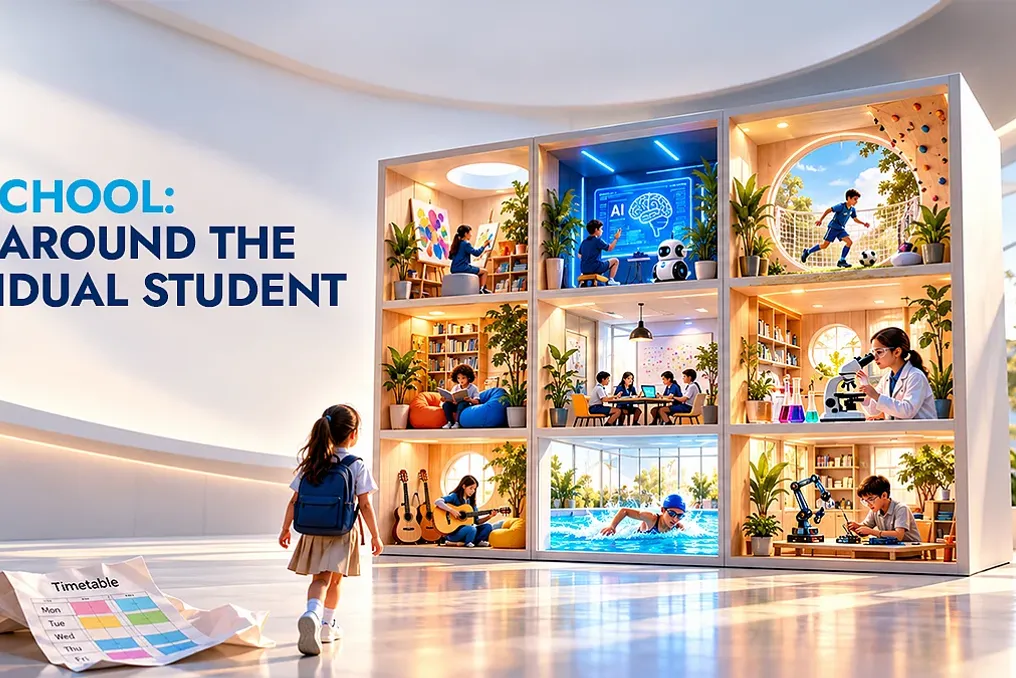
A new school model is being implemented in one of the educational groups in the UAE, combining personalized learning based on artificial intelligence with the work of teachers, mentors, and real-world experience. This concept questions the necessity for all students to study the same material at the same pace simultaneously.

GEMS Education has introduced GR8 School, which it positions as the world's first student-centric model, rather than one focused on a fixed classroom schedule. The first GR8 school is expected to begin a soft launch in January 2027, initially operating as an 'in-school school' within the existing GEMS campus.

This approach aligns with Dubai's ambition to explore new methods in education and ways to prepare students for the rapidly changing job market. The essence of the model is that students can advance through core curriculum materials at their own pace, while teachers dedicate more time to working directly with individual students, and specialists bring practical industry knowledge into education.

Sunny Varkey, Chairman and Founder of GEMS Education, noted that this model was shaped by the changing world in which children live. He emphasized that although artificial intelligence is transforming learning and work processes, the solution is not simply about increasing the number of technologies in classrooms. Instead, he asked what education should be like for today's youth.

Varkey stated that GR8 is the answer to this question. The model starts with an individual child and determines what combination of technology, outstanding teachers, industry experts, and real-world experience will help that young person achieve academic success and unlock their potential.

Under this model, students will use AI-based adaptive learning systems to master content at their own pace. The system will track progress, identify areas needing assistance, and signal when a student is ready for more complex tasks. However, the educational network stressed that technology will not replace teachers. Teachers will become 'Human Mentors,' using data from the learning system to provide more targeted one-on-one support, while still overseeing academic standards and practical aspects of the curriculum.

The structure of the school day will also change: students will combine self-learning with AI with approximately '90 minutes to two hours of teacher-led instruction,' plus additional time ranging from two to three hours. This extra time can be dedicated to projects, collaboration, creativity, sports, arts, specialized learning, and practical experience.

Varkey stressed that the model is not intended to replace traditional schooling for every child, asserting: 'GR8 is not for everyone, and it is not designed for that. There is no single educational model that suits every child.' He believes the model may be particularly appealing to students who are ready for greater independence and responsibility for their education, thinking it could be transformative for the right student.

GR8 will also connect students with industry specialists, experts, and practitioners based on their interests and potential future career aspirations. In addition to academic subjects, the model will focus on skills such as critical thinking, communication, teamwork, financial literacy, and life skills. GEMS reported that these experts, teachers, and specialists will form a broader 'GR8 Learning Community,' bringing the industry closer to students and creating pathways to higher education, entrepreneurship, and employment.

The model is planned to be available across various segments and price points within GEMS schools. Estimated annual fees are currently expected to range from approximately $8,000 to $10,000 USD (AED 29,000–37,000) for accessible options and $20,000 to $40,000 USD (AED 73,500–147,000) for premium options, although final fees will depend on the specific school and market.

GEMS noted that this model builds upon approaches already used in its schools, including personalized support, teacher-student relationships, and out-of-classroom learning. Varkey concluded that the role of people will remain central, even as AI grows in importance in education, stating: 'Technology can help us understand and personalize how a child learns. But education is, and always will be, a deeply human endeavor.'

KHDA inspection results will affect tuition fee increases in Dubai schools
Read more
www.khaleejtimes.com

KHDA inspection results will affect tuition fee increases in Dubai schools

With the start of the current academic year, the Knowledge and Human Development Authority (KHDA) has resumed quality checks, establishing a new link between school inspection results and potential tuition fee increases in private educational institutions in Dubai.

The regulator stated that in the future, any increase in tuition fees at private schools in Dubai will depend on the most recent inspection result for that school, even if the check was conducted more than two years ago.

During a media majlis on Thursday, the regulator announced that schools will no longer undergo the same types of inspections annually. Instead, the approach is shifting towards targeted visits based on data and areas where schools have potential for improvement.

This step comes amid the preparation of Dubai's private schools for the next stage of quality checks. KHDA aims to make inspections more meaningful for educational institutions while ensuring resources are used where they will have the greatest impact.

KHDA Director General Aisha Miran noted that no schools were permitted to raise tuition fees this year, which was positively received, including by investors, as they understood the logic behind the decision. She added that schools faced pressure from operating costs but managed to compensate for them.

For parents, the financial implications will be determined by the school's latest inspection result. KHDA clarified that it will use existing school data instead of requiring a new inspection before determining the payment status.

The new method also takes into account feedback from stakeholders, including teachers, who expressed concerns about the frequency of inspections and the time needed for schools to implement changes. Miran emphasized that teachers often lack sufficient time for rapid transformation.

Although the regulator conducted annual inspections for 17 years, the goal is now to focus on improvements that can significantly impact the overall quality of the school. There will be two types of quality checks: QA1 and QA2.

A QA2 inspection will not change the school's overall rating; instead, it will focus on specific areas where KHDA believes targeted support can help. Schools will not know in advance whether they are being considered for a QA1 or QA2 inspection; the decision will be based on data and KHDA's assessment of where the inspection might be most beneficial.

Under the new model, some schools may receive a rating for the current academic year, while others may continue to hold a rating from an inspection conducted two years ago. KHDA stated that it will visit schools with potential for measurable improvement, especially where progress in certain areas could ultimately affect the school's overall rating.

The regulator particularly stressed that when considering the possibility of increasing tuition fees, the most recent inspection result, which may date from the current or a previous year, will be used. KHDA also reported that the actual amount of permissible fee increase is still unknown, as the Education Cost Index (ECI), used to determine potential fee growth, is usually calculated in April.

Nevertheless, KHDA warned that it is currently unknown whether there will be any tuition fee increase at all, since the ECI is typically calculated no earlier than April. Meanwhile, QA1 inspections will retain their significant role, as any school entering its third year of operation will undergo a QA1 inspection, as it is still considered a new school.

Changes to KHDA Inspection System for Private Schools in Dubai for 2026–2027
Read more
www.khaleejtimes.com

Changes to KHDA Inspection System for Private Schools in Dubai for 2026–2027

Dubai's private schools have entered the 2026–2027 academic year with an updated quality assurance system from KHDA, as most established educational institutions resumed inspections after a two-year hiatus from full checks.

In June, the Knowledge and Human Development Authority (KHDA) confirmed that quality assurance visits will commence at the beginning of the new academic year, but schools should not expect a return to the previous inspection cycle in exactly the same form.

Under the revised approach, schools may receive either a comprehensive inspection or a more targeted monitoring visit. KHDA will determine the appropriate type of visit using existing data on performance and school information, instead of following a single inspection schedule. Another significant change concerns the notification period: schools will be notified no later than 24 hours before the inspection team arrives. This means that leaders and teachers must maintain readiness throughout the entire academic year, rather than preparing specifically for a scheduled visit.

Currently, the private school sector in Dubai serves approximately 387,000 students from 185 nationalities across more than 220 schools. KHDA has confirmed that quality assurance visits will take place in the 2026–2027 academic year, but there is no single schedule for all private schools in Dubai.

The authority is adopting a more flexible method, determining the time and method of assessment based on individual school data. One category has a clear requirement: private schools completing their third year of operation in Dubai will undergo a comprehensive quality review. Schools in their first or second year will not be subjected to a full inspection.

For well-established schools, the type and timing of the visit will depend on KHDA's assessment of circumstances, performance, and the school's improvement stage. Not every private school in Dubai will undergo a comprehensive inspection in 2026–2027.

KHDA uses a data-driven process to determine which schools require a comprehensive assessment and which are better assessed through monitoring. The information considered includes the school profile, history of previous inspections, student achievements, self-assessment data, and external evaluation data. Education specialists will analyze this information and use moderation to ensure consistency in decisions.

When selecting a school for a comprehensive visit, the assessment will cover the full UAE School Inspection Structural Framework. A detailed report will be issued, and an overall school rating will be published. However, for schools reaching their third year of operation, the comprehensive review is automatic.

A monitoring visit is a more focused form of quality assurance. Instead of examining every area covered by a comprehensive inspection, a smaller group will review specific areas or 'areas of inquiry' identified through KHDA's analysis of the school. The resulting report will indicate strengths and areas requiring further development. Nevertheless, this visit will not result in a new overall KHDA rating.

This means that parents or schools should not automatically interpret a monitoring visit as evidence of poor school performance. It is part of a new system designed to align with the nature of KHDA's interaction with the individual school improvement path. Thus, a school receiving a monitoring visit will retain its existing public overall rating.

Some schools will receive an overall rating and a new published rating during a comprehensive review. Schools selected for monitoring will receive a report on the reviewed areas, but their existing overall rating will remain unchanged. This will lead to a transition period where the last available rating will differ from school to school.

It is important to note that inspection standards remain based on the UAE School Inspection Structural Framework 2015–2016 and the DSIB Inspection Guide. The main change lies in how KHDA allocates its quality assurance resources, which are typically more detailed and conducted by education assessment specialists, culminating in a detailed report that includes an overall school rating and ranking. This does not replace the framework used to assess schools.

Institutions should continue to familiarize themselves with the established inspection standards while preparing for a more flexible inspection process. The UAE Ministry of Education has introduced a new inspection framework for public schools, but this framework does not apply to private schools in Dubai.

The reduction in notification time has been significantly decreased compared to the previous five working days. This step aims to give inspectors a fuller picture of normal school life, rather than allowing schools several days to prepare specifically for an inspection. This means inspectors expect to see teaching, learning, student well-being, and the daily operations of the school under conditions close to normal school routine. For school leaders and teachers, the practical implication is simple: preparation for inspection can no longer be viewed as a process starting a few days before the announced visit.

A key focus area in 2026–2027 will be the impact of schools' improvement work during the two-year inspection hiatus. Inspectors will examine what schools have done during this period and, importantly, whether these actions have led to measurable improvements for students. The emphasis, therefore, is not just on whether the school implemented new initiatives, but on the impact these efforts have had on the students.

Schools participating in the Excel Anywhere program will also undergo progress checks as part of the quality assurance process. This initiative was introduced as part of Dubai's Education 33 strategy to support improvement in schools with a high enrollment of Emirati students. KHDA also indicated that quality assurance work will consider broader circumstances in which schools operated, including recent regional events and disruptions affecting education.

The issue of inclusivity remains an important element of Dubai's school quality assurance system, including support for Students with Special Needs. The UAE School Inspection Structural Framework considers inclusivity alongside areas such as teaching and learning, curriculum, leadership, and student well-being. KHDA data shows that in 2023–24, 76 percent of Dubai's private schools received a 'Good' rating or higher for inclusive education. The focus on inclusivity also aligns with Dubai's broader Education 33 strategy and its All Rise initiative, which aims to strengthen educational opportunities and outcomes for students. For schools, this means that inclusive practice cannot be viewed as a separate area outside the inspection process. Evidence of how schools support diverse learners can be relevant in several quality assurance areas.

School self-assessment remains an important source of information for KHDA. In the previous inspection system, schools provided a Self-Evaluation Form (SEF) before the inspection. Since schools are now notified no later than 24 hours in advance, the role of continuous self-assessment becomes particularly significant. During the inspection hiatus, schools were required to provide regular SEF updates as part of ongoing monitoring. The current KHDA approach requires schools to maintain an accurate picture of their own strengths, weaknesses, and improvement efforts throughout the year. The practical takeaway for school leaders is that evidence of improvement should not only be collected after the inspection announcement.

It is important to distinguish between two concepts: the KHDA Compliance Guide, released in September 2026, establishes a separate process for compliance visits. These may include scheduled annual visits, complaint-driven or request-driven inspections from KHDA or other government departments, follow-up visits, and joint visits with other governmental bodies. Compliance visits may also occur without prior notice. In contrast, quality assurance visits relate to the assessment of educational quality and improvement through a comprehensive or monitoring visit.

This distinction is important for parents: a KHDA visit does not automatically mean that the school's overall educational rating is being reviewed or changed. The type of visit determines what is assessed and whether a new overall rating will be issued. The return of quality assurance visits will gradually provide families with more current information about private schools in Dubai after the inspection hiatus. However, parents should check the type of visit the school received before assuming its KHDA rating has been updated. A comprehensive review provides an overall rating and ranking. A monitoring visit provides a focused report but does not change the school's existing published rating.

Popular