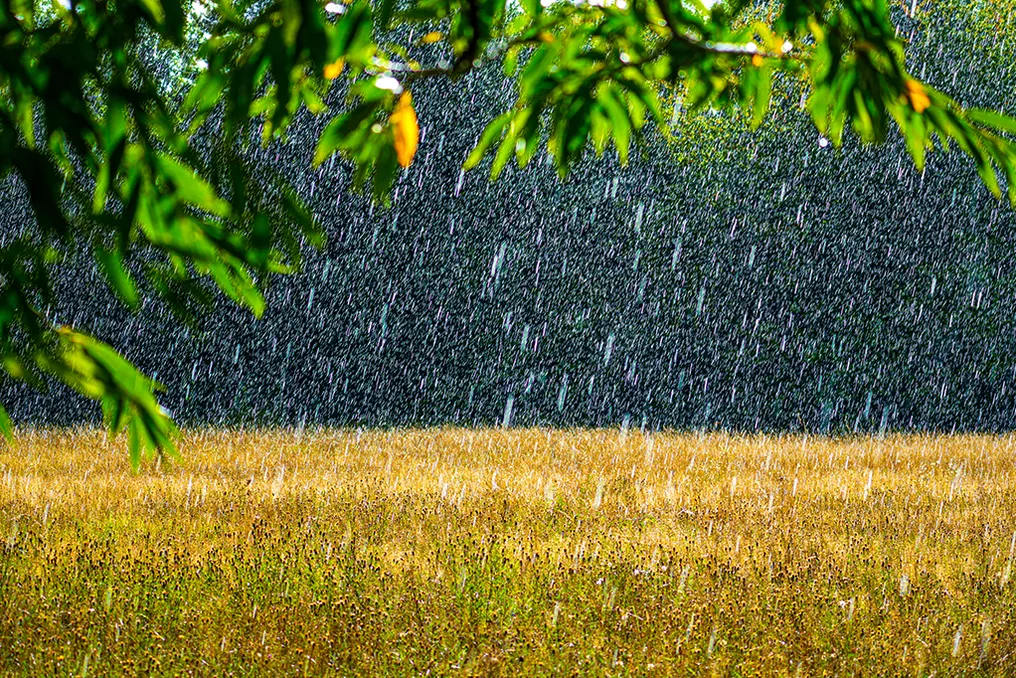
During the hot summer months, the precipitation of raindrops onto dry, heated soil releases substances into the air that accumulate in plants, generating a distinct aroma popularly called 'smell of rain' or 'wet earth'. This odor has the scientific name petrichor.
The denomination derives from the Greek word 'petros', meaning 'stone', and the term 'ichor', referring to the 'fluid that circulates in the veins of the gods'. Since 1964, scientists have dedicated deep studies to understanding the science behind this aroma, and this phenomenon is being modified due to global climate changes.
To understand this transformation, it is necessary to know how petrichor originates. In general terms, it results from the interaction between two elements: geosmin and plant oils. Both are natural components present in the soil and plants, and when they come into contact with rain, they trigger various chemical reactions.
During periods of drought, bacteria present in the soil produce geosmin as a defense mechanism; this compound serves to repel insects, such as fruit flies, preventing them from developing in the plant matter where the bacteria reside. Simultaneously, geosmin attracts animals, such as springtails, which help disperse the compound.
In parallel, plants accumulate aromatic oils that function to reduce water loss and aid resistance to intense heat. When raindrops hit the dry soil and plants, the impact creates microscopic bubbles containing geosmin and oils. These bubbles rise into the air and disperse into tiny particles that subsequently reach human nostrils.
The human sense of smell demonstrates extreme sensitivity to geosmin, allowing for the detection of minute quantities of the substance in the air. This explains why the smell of rain can be perceived even before the rain has completely reached the ground. To illustrate the potency of the odor, only a drop of geosmin diluted in an Olympic pool would be necessary for the smell to be detectable.
Since petrichor depends on a delicate balance involving dry soil, heat, and the arrival of rain, climate change ends up interfering with these essential conditions. However, these modifications to petrichor will not occur uniformly, as they will depend on geographical location, given that the impacts of rising global temperatures vary significantly between different places.
Generally, it is observed that regions with higher rainfall frequency tend to exhibit less petrichor, while areas prone to drought register higher concentrations. This is directly linked to geosmin production. During droughts, there is a greater accumulation of this substance, which thrives in higher temperatures, as the microorganisms responsible for its production accelerate their chemical reactions with heat.
Conversely, in locations with high precipitation, geosmin cannot accumulate adequately. This occurs because very intense rains are too strong to form the microscopic bubbles that release the aroma into the air; instead, the compounds are diluted, infiltrated into the soil, or carried away by floodwaters.
Another relevant aspect is soil degradation. This process, intensified by rising temperatures and more vigorous rainfall, plays a crucial role, as it compromises the conditions necessary for the development of geosmin-producing bacteria.
Besides human effects, changes in petrichor can also impact fauna. One example is that areas with a large release of the compound should show an increase in mosquito populations, since the aroma acts as an indicator that dry soil has turned into a humid environment favorable for egg deposition.