Starting January 1st, clients will be able to receive a monthly consolidated report combining information about their savings and investments across all asset classes. This has become possible due to the Reserve Bank of India's (RBI) decision to allow depositories regulated by the Securities and Exchange Board of India (Sebi) to include data on bank deposits in the Consolidated Account Statement (CAS) via NBFC Account Aggregators (AA).
The RBI stated that this will allow holders of demo accounts to see details of their assets in demo accounts and bank deposits in one place within the CAS. Previously, the monthly CAS was provided to mutual fund (MF) and stock market investors, consolidating transactional details for MF schemes and securities held in dematerialized form under a single Permanent Account Number (PAN). Pension savings through the National Pension System (NPS), regulated by the Pension Fund Regulatory and Development Authority (PFRDA), are also integrated into the CAS, but information on bank deposits was not previously included, leaving an important part of financial savings outside the report.
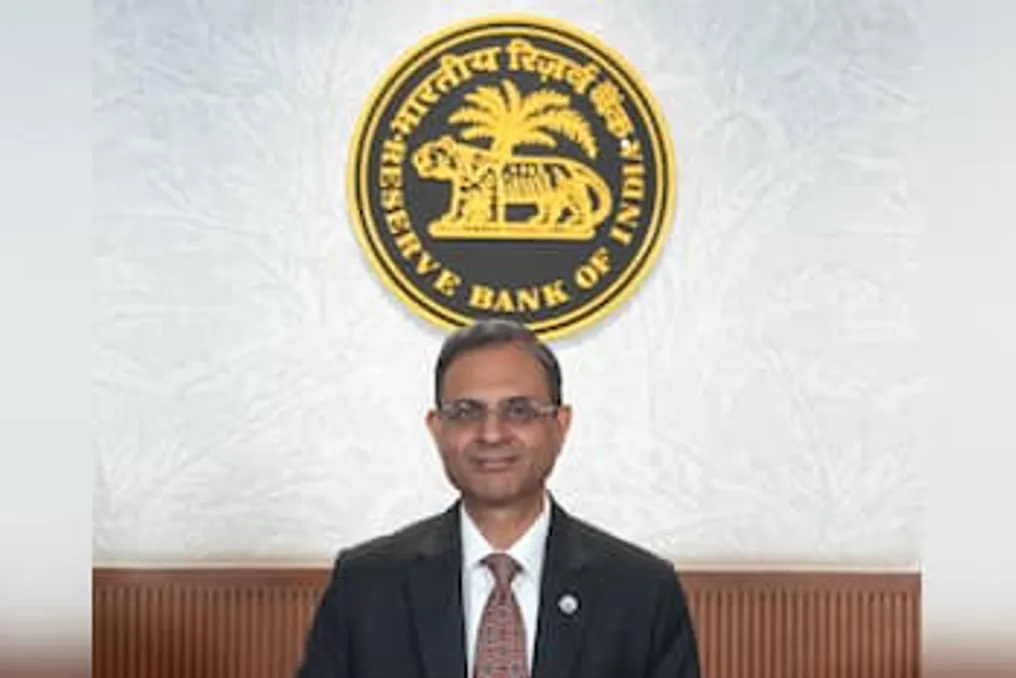
This change will allow bank deposits to be included in the system, providing people with a comprehensive view of their financial assets. RBI Governor Sanjay Malhotra noted that work is currently underway to integrate information on bank deposits in all already connected banks, while others will be connected gradually so that the data becomes available to clients through the CAS.
Malhotra emphasized that this will expand consumer capabilities by helping to solve the problem of losing bank deposit data, especially after people pass away, ensuring a unified overview.
The CAS is distributed by depositories to the registered email addresses of investors and contains details such as the current value of investments, returns, as well as expenses and commissions paid on MF investments. Information on electronic insurance accounts is also available if the data is in the National Insurance Repository.
There are two depositories operating in the country, regulated by Sebi: National Securities Depository Limited (NSDL) and Central Depository Services (India) Limited (CDSL). They hold investors' securities, including stocks and bonds, in electronic or dematerialized form.
According to Sahamati CEO B. G. Mahesh, the inclusion of bank deposits in the CAS can contribute to a more holistic view of a person's financial life. He added that these steps may accelerate the transition from AA as a data exchange mechanism to the foundational level of India's digital financial infrastructure, ensuring more seamless access and provision of financial services between institutions.
SBI Research noted in its analytical report that this measure will lead to improved customer profiling and hyper-personalization of products and services, as well as integration of financial services.
Harsh Rungta, founder of Fee Only Investment Advisors LLP, expressed hope that the consolidated report will help people better plan their finances and allow families to track the assets of a deceased investor, which might otherwise remain unclaimed. He also mentioned that insurance policy balances and EPF could be included in the future.
Interaction between account aggregators
Separately, the RBI plans to implement the capability for interaction between NBFC Account Aggregators (AA). This will give clients the ability to access and share financial data among various AA providers through one chosen aggregator.
Both measures are expected to be implemented by December 31st. Mahesh explained that this is a step towards integrating information that was previously available through numerous account aggregators. Previously, this information was scattered, but now it can be accessed by individuals as well as other entities such as insurers, stockbrokers, asset managers, and investment advisors, with the consent of the respective individual.
Mahesh called interoperability the natural next step in the development of the AA structure as part of India's digital financial infrastructure and a key layer of India's Digital Public Infrastructure. The ecosystem has exceeded 500 million executed consents and facilitated the provision of over 74 million financial services during FY26.
He added that this demonstrates that consent-based data sharing is already functioning on a significant scale.
AA are non-banking financial companies licensed by the RBI to act as a bridge between Financial Information Providers (FIPs) and Financial Information Users (FIUs). They ensure the secure transfer of client financial information, with their consent, from data-holding institutions to those who use it to provide financial services.
FIPs include banks and NBFCs that store client financial information, while FIUs use this data to provide services such as loans, insurance, and wealth management.
Over 17 RBI-licensed AAs are actively operating in India, including CAMSFinServ, CRIF Connect, NESL Asset Data, Protean, and PB Financial. As of August, 338.04 million accounts were linked through the AA structure, a 24 percent increase from 272.46 million in February. Only 11.72 million accounts were linked in August, with 27.94 million new consents executed. The cumulative number of executed consents reached 566.26 million as of August. During the month, AAs provided 352.48 million datasets on linked accounts, the highest monthly figure from February to August, compared to 265.67 million datasets provided in February, highlighting the growing use of this structure for financial information exchange.