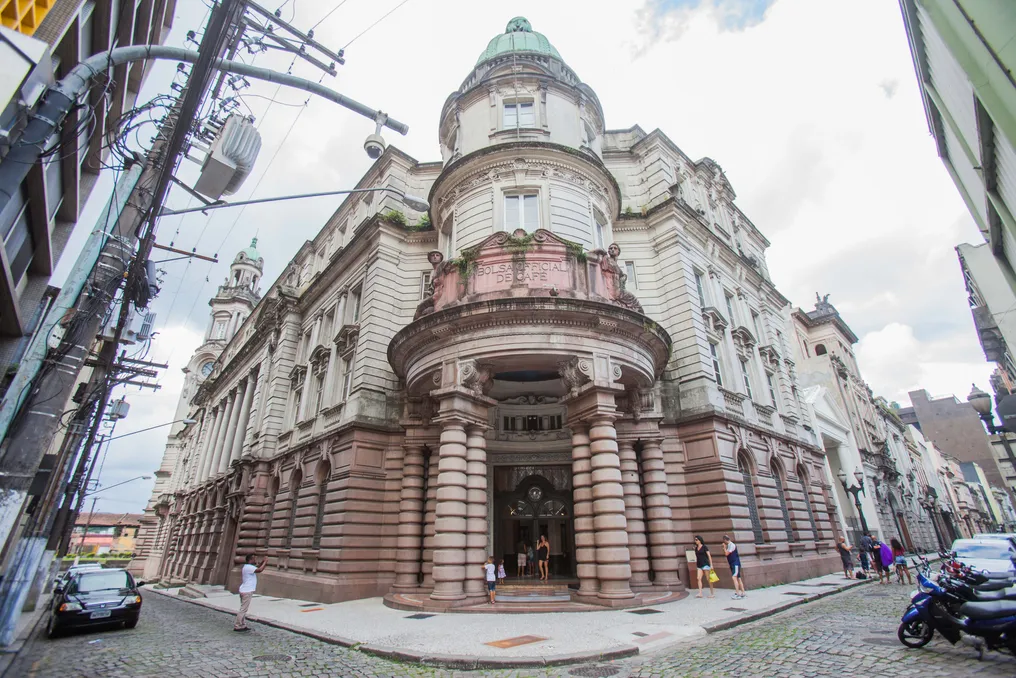
Coffee was one of the main export products in Brazilian history, and the city of Santos played a central role in this scenario for many decades. Although the municipality was not prominent in cultivation, its port was the outlet point for most of the world's production, and business was concluded in the lobby of the Coffee Exchange.
Located in the Historic Center, the former stock exchange palace ceased its commercial functions in the 1970s but remains a visited spot for those walking through Santos. Currently, instead of negotiating the price of sacks of beans, visitors to the Coffee Museum seek to learn about how this product shaped the country's social and economic development, a trajectory documented by the museum since 1998.
The attractions of the Coffee Museum utilize the facilities of the Stock Exchange Palace, where commercial transactions began in 1922. Besides the clock tower, 40 meters high, one of the most recognizable structures in the Historic Center, the building has various architectural, historical, and decorative elements that ensured its listing at municipal, state, and federal levels.
Auction Room
The Auction Room is an essential point of the visit, as it is where the quotations of the sacks were negotiated daily, from the inauguration of the Exchange until 1950. The floor, made of marble imported from European countries, features Masonic references, such as a Star of David. The current decoration recreates the furniture of the time to evoke the atmosphere of buying and selling, highlighting eleven chairs in the center for the president and secretaries of the exchange, surrounded by seventy others intended for brokers.
At the tops of the halls, large skylights are adorned with stained glass windows that narrate Brazilian myths and events. The economic phases of the country are represented in panels such as "The Vision of Anhanguera," which portrays the exploitation of gold during the colonial period; "Farming and Abundance," which celebrates the agricultural riches of coffee, sugarcane, and cotton during the Empire; and "Industry and Commerce," which focuses on the more contemporary forms gaining ground in the Republic.
The permanent exhibition of the Coffee Museum is entirely dedicated to presenting the science, history, and art linked to this commodity in Brazil. The show begins with the recovery of the arrival of the first coffee seedlings in the national territory, continues with records of planting and harvesting, and addresses the participation of European and Japanese immigrants in this work.
Additionally, visitors are informed about the relevance of this product to the country's modernization, including its implications for the expansion of the railway network and the consolidation of the Port of Santos as the most important in Brazil.
The museum also offers temporary exhibitions, whose themes and programming can be consulted in a specific link. Another highlight of the visit is the institution's cafeteria, which is awarded the Premium seal by the Brazilian Association of Coffee Industry (Abic) in the Quality Coffee Circle program, making it an ideal place to conclude the visit.
The Coffee Museum is located at Rua Quinze de Novembro, 95, in the Center of Santos, and operates from Tuesday to Sunday, from 9 am to 5 pm. Due to the implementation of a new long-term exhibition, entry is temporarily free.