Shavkat Umurzakov, the mayor of Tashkent, expressed categorical disagreement with the transfer of state school and kindergarten lands for the implementation of public-private partnership (PPP) projects. He stated this position in an interview with 'Gazeta'.
Commenting on the issue of returning land previously transferred to the state in various forms, Umurzakov mentioned instances where school territories were used under PPP, as well as plots that were initially removed from the school's composition, transferred to the city administration, and subsequently to other entities.
The head of the city administration declared that his policy is to completely oppose the transfer of school and kindergarten lands to PPP. He insists that only state schools or kindergartens should be built on educational institution grounds.
In response to 'Gazeta''s clarifying question about whether this ban also applies to private educational institutions, the mayor answered affirmatively. In his opinion, private facilities should also not be located on these territories. He added that under current conditions, the state is capable of independently constructing such facilities, and district mayors can take on this function. Previously, when the state lacked funds, PPP could be a justified solution.
Shavkat Umurzakov believes that the PPP mechanism can be applied in other urban spheres. For example, he suggested putting public transport stops up for auction: if a business pays for, maintains, and cleans the object, while ownership remains with the state, this should be utilized, provided the entrepreneur does not create obstacles and improves the infrastructure.
Nevertheless, regarding educational and medical institutions, the mayor proposed a different approach. He emphasized that education is a special sphere. When asked about allowing PPP on the territories of healthcare, education, schools, kindergartens, and institutes, he gave a negative answer.
The exception he recognized as an acceptable option for PPP in higher education was the construction of dormitories. He explained that if a university lacks dormitory space, it can provide the land, and the private sector, after coordinating with the university, can build a dormitory under a PPP. However, he categorically opposes any scenario where someone attempts to build a private institute on university territory.
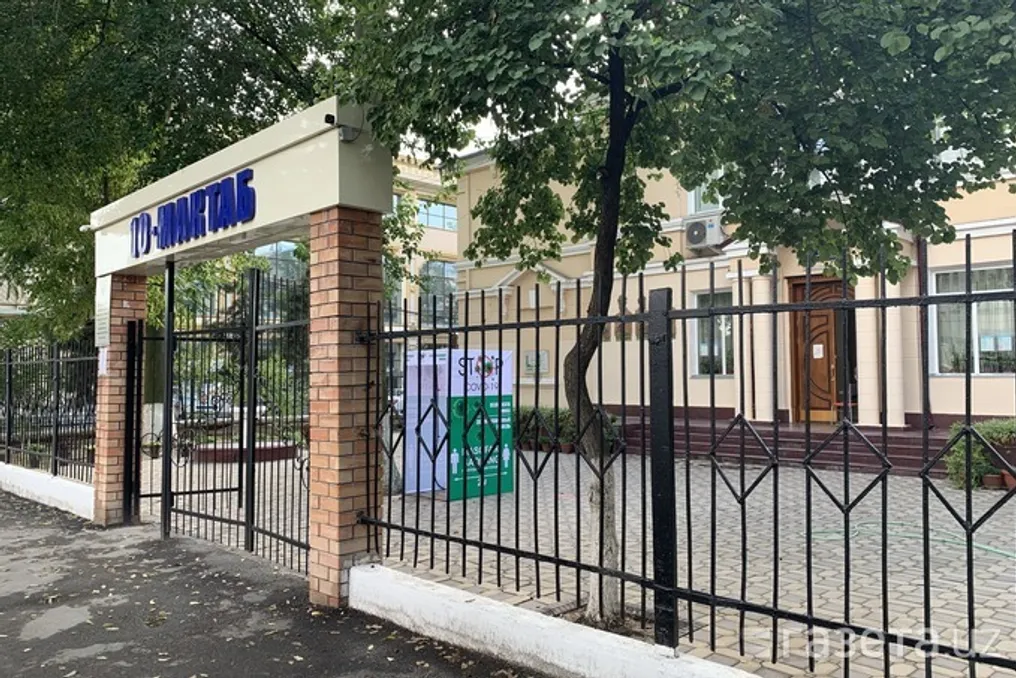
In recent years, several incidents related to the use of educational institution lands have been recorded in Tashkent. At the end of July 2026, authorities investigated the situation at School No. 271 in Yunusabad district. It was found that 4,000 square meters of this territory had been leased to Asian School based on a lease agreement and a PPP agreement. The inspection showed no illegal seizure or construction, as the plot and facilities were registered according to current documents. As a result of the investigation, the territory was fenced off, and the land plot was returned to its original condition.
Another incident occurred in August near School No. 243 in the 'Orzu' mahalla of Almazar district. The edge of a pit dug for building a hotel collapsed there. Representatives of the mahalla claimed that the plot originally belonged to the school, and later part of the school territory was allocated for construction. According to them, a two-story library was initially planned, but subsequently, the construction of another building began.
In May 2025, the publication Kun.uz reported another case in Uchtepinsky district. According to data from the Inspection for Construction and Housing and Communal Services Control, the project initially stipulated the construction of a private school, but in reality, a multi-story residential building was being constructed on the site. Despite repeated written directives from the Inspection, construction continued.
In 2022, former deputy Rasul Kusherbaev pointed out that since 2018, approximately 70 hectares of land on the territory of 198 schools had been illegally alienated in Uzbekistan. Almost a third of these cases concerned Andijan region, where 24.8 hectares were alienated in 61 schools. In Tashkent, the alienation of 0.2 hectares of land from three schools was noted. Since September 2018, the alienation of land and real estate of general and extracurricular institutions without the approval of the Minister of Public Education has been prohibited, except for cases stipulated by presidential decrees.