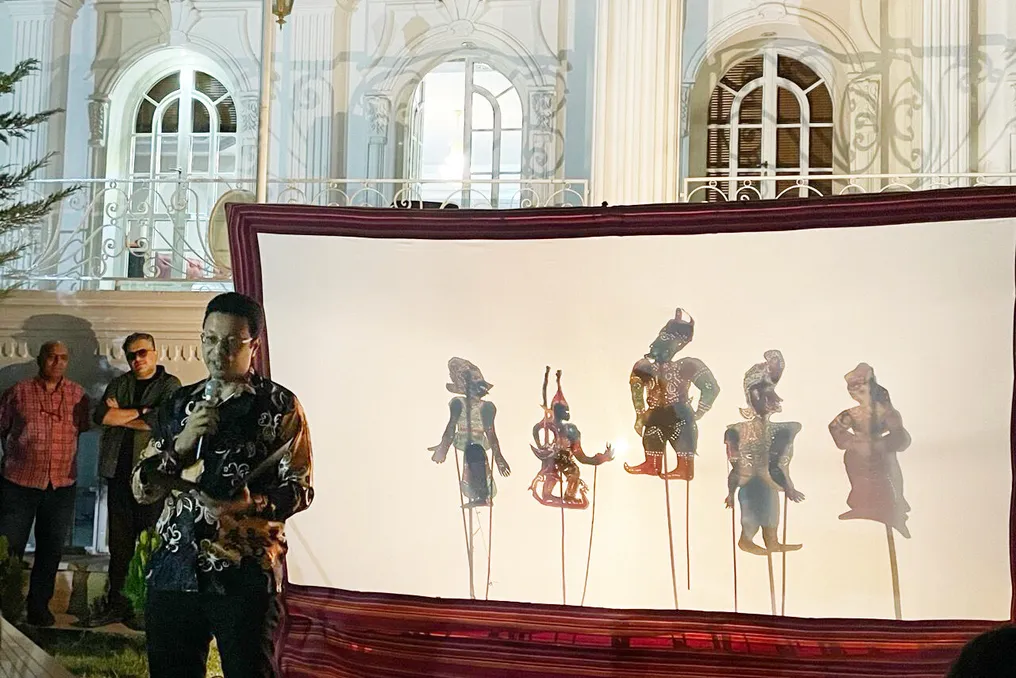
On the evening of October 6th, the Malaysian Embassy in Tehran organized a captivating cultural event—a performance of Wayang Kulit (shadow theatre). This event provided a rare opportunity to unite and enlighten, strengthening the invisible ties between the two nations—Malaysia and Iran—through light, shadow, music, and storytelling.
The history of this performance itself was as fascinating as the show. At Mobarak's invitation, Sri Rama's visit was initially complicated by poor planning on the host's part. After touring the sights, Sri Rama requested a local performance, which prompted Mobarak to organize a unique artistic collaboration: an Iranian dalang presented the epic of Sohrab and Gardaphrid, while Sri Rama performed part of his journey in search of Sita Devi. Before departing for Malaysia, Sri Rama received a souvenir from Mobarak, created at the intersection of cultures—a new dance called Ramasia.
This story, involving Mobarak, Sri Rama, Sohrab, Gardaphrid, Sita Devi, and the new dance Ramasia, became a symbol of intercultural creativity, demonstrating how two traditions can interact not as strangers, but as partners.
Datuk Wan Aznainizam Yusri bin Wan Abdul Rashid, the Chargé d'Affaires and head of the mission at the Malaysian Embassy, addressed the attendees. He welcomed officials from the Ministry of Foreign Affairs of the Islamic Republic of Iran, friends from Tehran Times, MTCP graduates, and Malaysian friends in Tehran.
He expressed deep gratitude for the presence of representatives from the Iranian Ministry of Foreign Affairs, emphasizing that their support contributes to strengthening diplomatic and cultural ties between the two countries. The head of the mission noted that the purpose of the gathering was to share a piece of Malaysia's soul, specifically the traditional shadow theatre, Wayang Kulit, which originates from the state of Kelantan.
For centuries, Wayang Kulit has served as a bridge through time, integrating folklore, philosophy, and community values onto a single screen of light and shadow. To celebrate this art, he shared the traditional Malay poetic form Pantun Melayu:
“Tengah malam dipasang pelita, Kelir dibentangmencerna bayang; Bukan sekadar penyeri cerita, Warisan bangsa pusaka moyang.” (At midnight the lamp is lit, / The screen is spread to cast shadows; / It is not just a decoration of the story, / But the sacred heritage of ancestors).
Referencing the vision of Jalaluddin Rumi, he noted that just as Rumi saw hidden depths embodied in physical art, Wayang Kulit brings to life hidden human emotions, moral truths, and spiritual wisdom using only light, movement, and leather shadows.
Although Malaysia presents Wayang Kulit, Iran possesses its own ancient traditions of puppetry, such as Heymeh Shabazi. Despite thousands of kilometers, their theatrical heritages bear striking similarities. For instance, just as a Tok Dalang directs the stage, speaking for the puppets, the Iranian Morshed performs before the cabinet, engaging in a lively, witty dialogue with the marionettes to reveal deeper truths.
In terms of the voice of the people, comedic figures from Kelantan, such as Pak Dogol and Wak Long, use humor and satire to convey wisdom. Similarly, the iconic Iranian clown in red attire, Mobarak, employs sharp wit to represent the voice of the common citizen. Furthermore, both traditions do not separate story and sound: shadow theatre is entirely dependent on the live energy of the orchestra, mirroring the energetic musical performances that accompanied Iranian puppet shows for generations.
Culture possesses a unique power to transcend borders and languages. Like magnificent Iranian traditions of epic poetry, storytelling, and Nakkali, Wayang Kulit reflects the universal human inclination towards narrative, wisdom, and moral legacy. By opening this window into Malaysian tradition, the organizers hope to foster deeper mutual understanding and cultural closeness between the peoples of Malaysia and Iran.
Datuk Wan Aznainizam Yusri bin Wan Abdul Rashid thanked the talented performers from Harathi Wayang and all attendees for coming to the show. He invited the audience to relax and enjoy the magical world of Kelantan Wayang Kulit.
The Wayang Kulit evening was a vivid example of cultural diplomacy. It not only showcased Malaysia's heritage but also placed it in dialogue with Iranian traditions, including Heymeh Shabazi, Rumi's poetry, Nakkali, and the figure of Mobarak. By highlighting parallels—Tok Dalang and Morshed, Pak Dogol and Wak Long alongside Mobarak, the live orchestral rhythm in both traditions—the embassy created a space where Iranians and Malaysians could see themselves in each other.
Such programs have a profound impact because they forge connections between people, soften formal diplomacy, and replace distance with curiosity. They remind us that culture is capable of surpassing borders and languages. For the Iranian audience, it was a window into the soul of Malaysia, and for Malaysia, it was an opportunity to honor the rich traditional art of the host country. For both sides, it was a reminder that shared human values—wisdom, humor, moral legacy, and love of narrative—are stronger than geography.
In a world often divided by politics, the evening of puppets, poetry, and music accomplished a quiet yet powerful feat: it made friendship visible. The shadows on the screen could disappear when the lights came on, but the bonds established by them will last much longer.