In the early 2000s, Peter Hegemann and Georg Nagel discovered and described in detail channelrhodopsins, which are light-sensitive ion channels. These channels allow chlamydomonas to perform phototaxis.
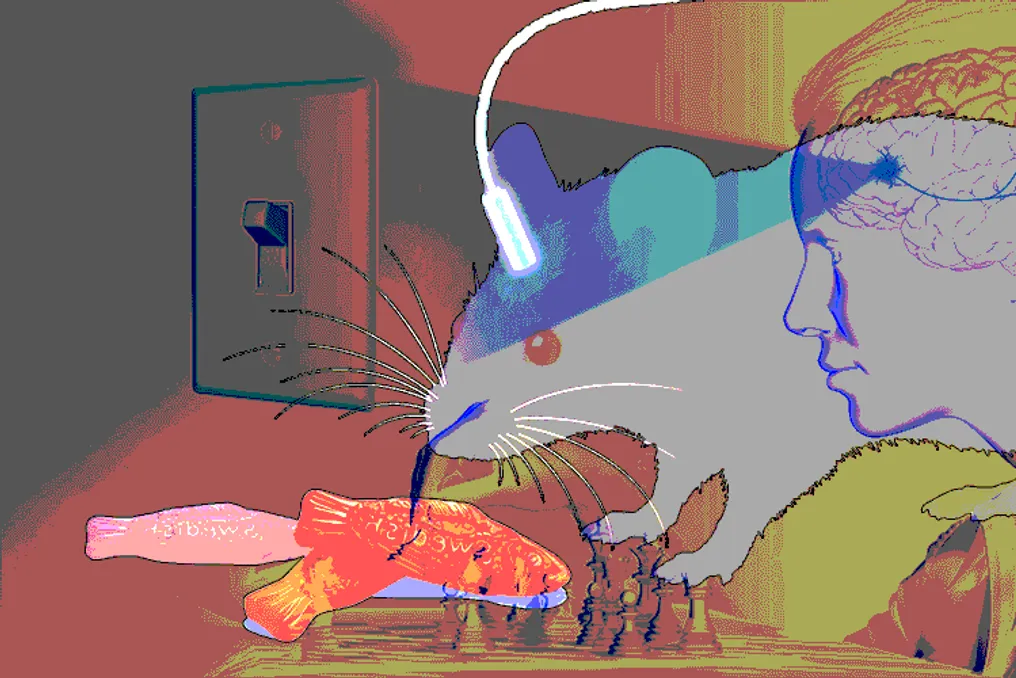
A significant step forward was made in 2005 when Karl Deisseroth integrated channelrhodopsin into neurons. Initially, he managed to provoke neuronal excitation in a laboratory culture using light, and just two years later, this method was applied directly in the brain of a live mouse.
Twenty years later, optogenetics has become a standard technique in fundamental neuroscience. However, the widespread adoption of this convenient tool has generated high, sometimes unwarranted, expectations. These expectations concern the possibility of determining which specific neural networks are responsible for forming emotions, behavior, and consciousness using light-sensitive channels.
Despite these ambitious claims, the Nobel Committee issues warnings regarding such assertions, although it uses them in its official press release.