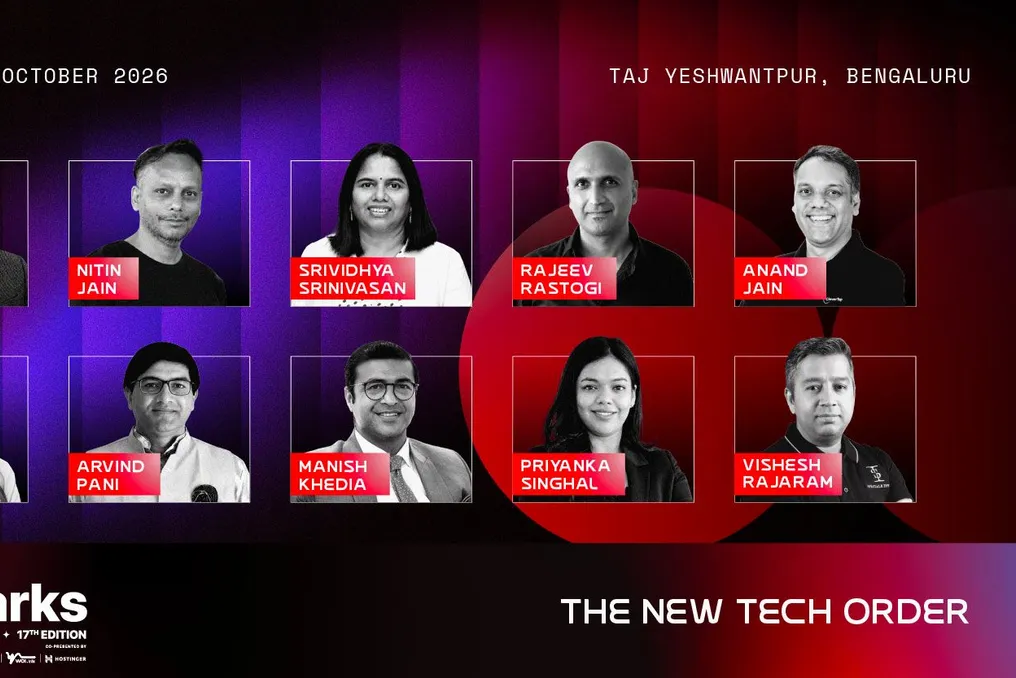
As part of YourStory's flagship summit on startups and technology, TechSparks 2026, scheduled for October 13–15 in Bangalore, participants will discuss the transformations occurring in India's technological ecosystem under the theme 'The New Technological Order.' These changes are driven by the development of artificial intelligence, critical data infrastructure, the local growth of defense startups, and the rethinking of business processes, including customer interaction and the workplace.
The event will bring together founders, technology leaders, and investors to examine how these trends are influencing India's tech landscape. Topics under discussion cover a wide range of areas: AI, deep technologies, digital infrastructure, consumer technology, education, defense, fintech, and the future of work.
Conference Participants and Speakers
Participants in the conference will include Karnataka state ministers: Priyank Kharge, Minister for Home Affairs, IT, BT, and E-Governance, and Krishna Bayre Gowda, Minister for Greater Bangalore Development. Pratyaya Amrit, Chief Secretary of the Bihar government, will also attend the event.
Among the speakers at TechSparks 2026 is Dale Vaz, co-founder and CEO of Sahi, a trading platform for retail traders. Before founding Sahi, Vaz worked as a technical director at Swiggy and spent over ten years at Amazon India, where he led engineering teams.
Nitin Jain, CTO of ShareChat and Moj, oversees technology for these two social platforms, focusing on AI, large-scale data systems, and personalized content for users across various languages and regions of India. Previously, Jain held leadership positions at TikTok, Gojek, and Tokopedia.
Srividya Srinivasan is a co-founder and CTO of Amagi, a cloud SaaS company for the media industry. She has been with Amagi since its early stages, working on technologies that enable broadcasters to manage and distribute content in the cloud.
Rajiv Rastogi, VP of Machine Learning at Amazon, leads teams working on machine learning applications in search, advertising, catalog quality, payments, and forecasting. He previously served as VP at Yahoo Labs and founded the Bell Labs research center in Bangalore.
Anand Jain, co-founder and CMO of CleverTap, focuses on building customer engagement platforms. With over thirty years of experience, he previously held roles as Director of Product and Director of Strategy at CleverTap, and co-founded the restaurant search platform Burrp.
Sushma Boppana, CEO and Director of Sri Chaitanya Educational Institutions, has focused her work on expanding access to education and developing learning models that combine academic training with technology. She is also associated with the edtech platform Infinity Learn.
Arvind Pani founded CoreMantle, which creates data infrastructure for AI in underserved languages and dialects. Previously, Pani co-founded Reverie Language Technologies, which was acquired by Reliance Industries.
Manish Khedia, Regional Managing Director at The Executive Centre, provides premium flexible workspaces. His experience relates to adapting workplaces as businesses reassess flexibility and collaboration.
Priyanka Singhal founded Ammunic Systems, a defense technology company developing ammunition and electronic fuzes in India. Her work aligns with India's growing efforts to develop indigenous defense manufacturing.
Vishesh Rajaram, Managing Partner at Speciale Invest, a venture firm specializing in deep technologies. He has invested in companies operating in space technology, semiconductors, robotics, and climate technologies.
Other speakers include Sridhar Vembu (Chief Scientist and Co-founder of Zoho Corp), Ambarish Kenge (Group CEO, Angel One), Nicolas Sauvage (Founder and President, TDK Ventures), Auxxe Jirgule (VP of Product, Hostinger), Prakash Jaiswal (Managing Director and India Head, SME Banking, DBS Bank), Navin Mistri (Strategic Partner, Stelcore Commerce), Srinivas Chamarty (Senior Vice President of Engineering, Site Lead and Country Head, Diligent India), and Naren Kachru (Head Artificial Intelligence, GTM India, Google Cloud).
These speakers represent various aspects of India's technological ecosystem—from creating AI and its underlying data to investing in deep technologies and applying technology in education, defense, finance, media, and labor. The TechSparks 2026 conference will take place in Bangalore from October 13 to 15.