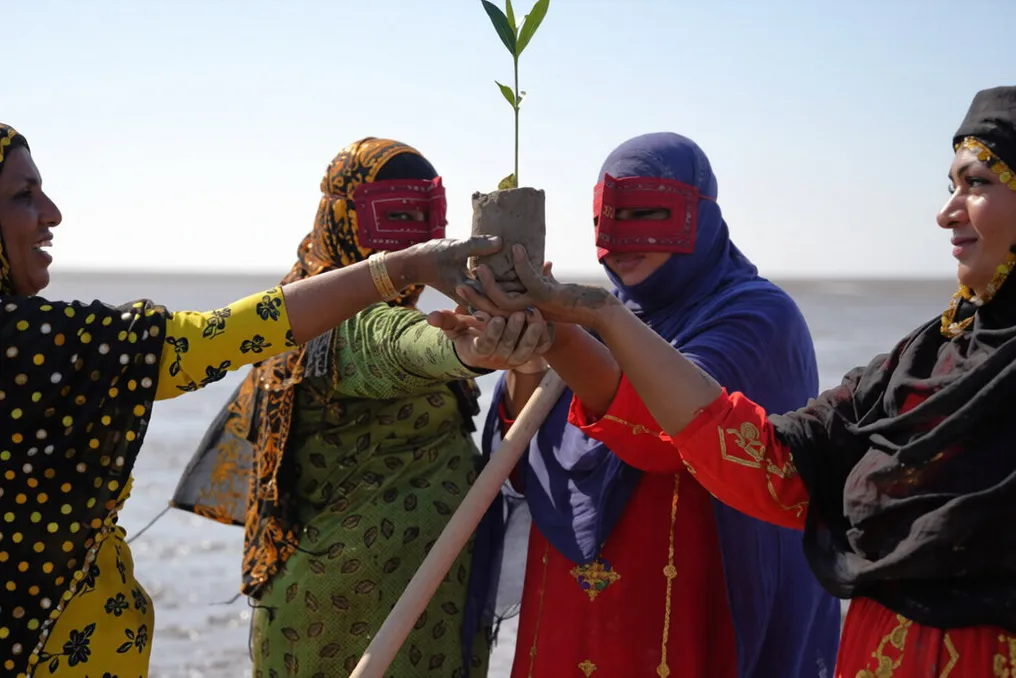
In the southern province of Hormozgan, rural women are actively involved in restoring mangrove forests and protecting the Shur-Shirin-Minab International Wetland, which is one of the country's ecologically significant coastal habitats.
In the village of Tiab, local women received training on collecting mangrove seeds, soil preparation, seedling cultivation, and nursery management as part of an initiative aimed at combining environmental conservation with sustainable income sources.
This project was implemented by the organization Mashgh Afarinesh Va Toseye Paydar with support from the Global Environment Facility's (GEF) Small Grants Programme (SGP) under the United Nations Development Programme (UNDP) and financed through ICCA-GSI. According to UNDP, the work was conducted in collaboration with the Provincial Organization for Natural Resources and Water Catchment Management.
Seminars and practical sessions provided participants with the skills necessary to establish and maintain a small mangrove nursery. As a result of this initiative in Tiab, the first women-led mangrove nursery capable of housing about 1500 seedlings was established.
The nursery has become a practical way to contribute to ecosystem restoration while providing local women with an opportunity to earn supplementary income through environmentally sustainable activities. For the people involved, this work has also forged a strong personal connection with nature.
Mehri Zarei, a member of the Tiab Women's Green Nursery, shared her feelings: 'We grew these seedlings with our own hands, like our own children. Planting each mangrove tree felt like a rebirth of hope. When I put the roots into the mud, I felt like a mother again, this time to the Earth.'
The project also promoted cooperation between communities in the region. Women from Tiab shared their experience with groups in neighboring villages, including Chak Sahari, where similar activities were implemented. This exchange allowed participating communities to share practical knowledge about mangrove seed collection, irrigation, and nursery management, thereby helping to build local capacity for long-term conservation.
The experience gained in Tiab highlights the role that community-led initiatives can play in addressing environmental challenges and strengthening agriculture. By directly involving women in conservation and restoration activities, the project helped transform local participation into a practical tool for protecting one of Southern Iran's valuable coastal ecosystems.