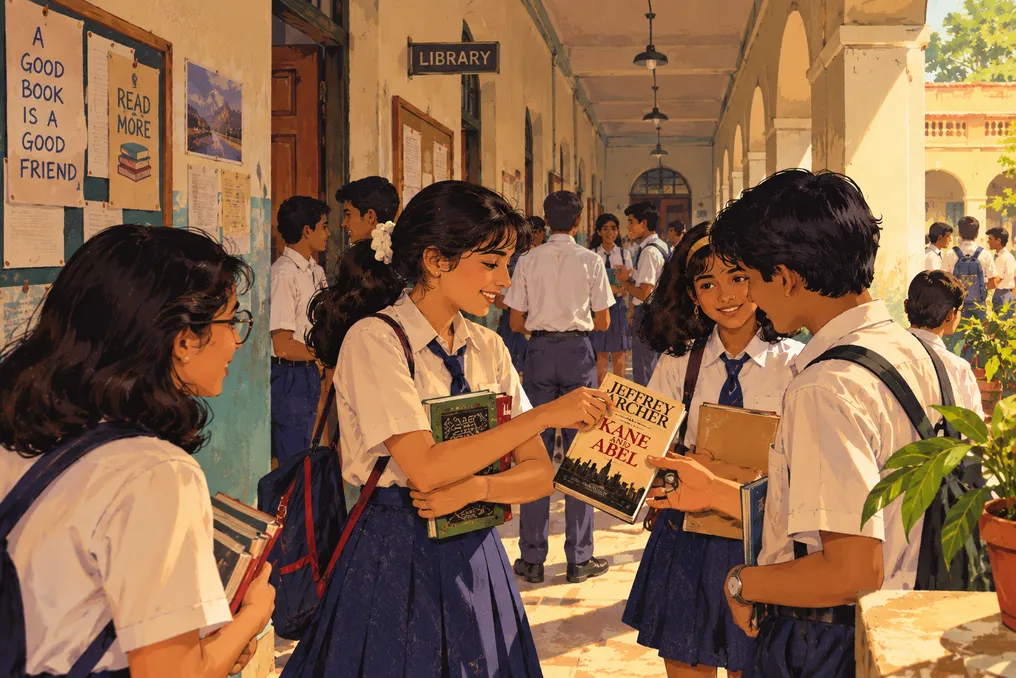
Jeffrey Archer's passing is perceived by many as a personal loss, as he reminds them of the India of the 1980s—an era of simple joys. Archer's books helped Indians love reading, awakening a sense of simple pleasure and anticipation for the end of another chapter.
The 1980s are considered a good time for growing up in India. This period was close to gaining independence and was two decades before the 21st century. It was an India that gave children enough space for self-discovery before they encountered the harsh outside world. Mornings were intense, while afternoons were relaxed. Evenings were long, a time for socializing with neighbors from verandas and terraces. At that time, young people had the freedom to play outside, although strict rules were observed. When night fell, it promised the opportunity to immerse oneself in favorite books, among which Jeffrey Archer was invariably found.
Even in families where both parents worked, the atmosphere did not differ significantly. Grandparents played a big role. The 1980s were not yet the era of the nuclear family; many homes had mini-libraries containing two or three shelves of books. These libraries featured works of various genres—mainly fiction—in the native language and in English.
The attraction of the brilliant and dramatic world described on the pages covered themes of money, power, revenge, love, recognition, and new chances in life. The books told stories of families, rivalry, fortunes, secrets, political ambitions, and people who seemed to possess everything until fate changed their situation. The actions unfolded in worlds far removed from the India most people knew, but the emotions were universal: ambition remained ambition, envy remained envy, and family feud remained family feud. The character who lost everything and wished to start life anew was understandable to any reader.
In the book 'Kane and Abel', when Archer toured the Western world, a typical autograph session in New York or London could attract about 200–300 readers. However, upon stepping onto the soil of Delhi, Mumbai, or Bangalore, he met crowds of 2000–3000 enthusiastic fans, like a pop star. He was most touched by the younger generation among these readers. At a meeting in Bangalore in 2013, where 1000 fans gathered, eight out of ten were under 20 years old.
Borrowed and Worn-Out Books
Many of us first encountered his work in school libraries or through friends, after which we began searching for his other books. Works such as 'Kane and Abel', 'A Twist in the Tale', 'Not a Penny More', and 'Not a Penny Less' generated constant interest. As soon as a reader finished one book, they realized others followed. This excitement is still palpable, and it was experienced by most of us upon hearing of the author's death.
'Kane and Abel' essentially tells the story of two men born on the same day but who ended up in completely different worlds, whose lives intertwine due to ambition and rivalry. William Lowell Kane is born into wealth in Boston, while Abel Rosnovsky grows up in poverty and endures incredible hardships before building his own empire. It is a grand story, but its emotional core is simple: two men strive for success in life, and neither is willing to yield.
Hollywood Dreams Mixed with Bollywood Masala
His stories also reflected an understanding that people are rarely absolutely good or absolutely evil; they are complicated by family ties, pride, love, money, and circumstances. This was familiar to the Indian experience. Indian storytelling has long been accustomed to characters who can be generous and selfish, noble and imperfect, loving and resentful at the same time. In this sense, Archer's worlds, however Western they seemed on the surface, did not feel alien.
The novel 'Shall We Tell the President?' immersed the reader in the world of American politics and a conspiracy against the president. 'A Quiver Full of Arrows' demonstrated how much drama could be contained in a short story, telling of deception, revenge, and unexpected twists. And 'The Prodigal Daughter', a sequel to 'Kane and Abel', moved the saga to the next generation, following Florentina Rosnovsky as she rises in American politics and strives to become the first female president of the United States.
The film 'Khudgarz', starring Jitendra and Shatrughan Sinha, drew inspiration largely from 'Kane and Abel'. This story spread through regional cinema, and years later, 'Not a Penny More, Not a Penny Less' served as the source for the clever plot of the film 'Ladies vs Ricky Bahl' by Yash Raj Films.
Archer was a good friend of the late Nawab Pataudi. Haimanti, although not pleased with every dog he meets (which surprises the dog owner and the dog itself), dreams of fantastic or classic books that can be read and reread. Perhaps this is the essence of everything, apart from the aroma of biryani, which beckons, or the idea lodged in the mind that refuses to leave until it is written down.