
WHO Recommends Diet and Activity Over Medication and Surgery for Obese Children
Read more
IOL
iol.co.za

WHO Recommends Diet and Activity Over Medication and Surgery for Obese Children

The World Health Organization (WHO) has released its first guidelines concerning the sharp rise in obesity among children and adolescents, strongly recommending the implementation of structured diets, physical activity, and behavioral changes, while rejecting pharmacological treatment and surgical intervention for younger children.

WHO stated that pharmacological treatment, bariatric surgery (operations modifying the stomach or digestive tract), or weight loss devices are not recommended for children aged 0 to 9 years. However, for adolescents aged 10 to 19 years, approved medication may only be considered if a comprehensive lifestyle program under supervision has not yielded desired results. Bariatric surgery may be considered for adolescents with severe obesity under strict conditions.

These recommendations for individuals under 19 differ from the UN health agency's directives issued in December 2025 for adults with obesity, following the surge in popularity of new generations of appetite-suppressing drugs, such as GLP-1 agonists, including well-known brands Ozempic and Mounjaro. WHO noted that the range of medications used for treating obesity and diabetes can be utilized to combat obesity in adults.

According to WHO, in 2024, approximately 70 million children aged five to nine suffered from obesity, as did 100 million adolescents aged 10 to 19 worldwide. The prevalence of obesity among those aged 5 to 19 has significantly increased, rising from two percent in 1990 to eight percent in 2024.

Luz Maria De Regil, Director of WHO's Nutrition and Food Safety Department, noted that the rise in obesity is observed in all regions. She emphasized that the problem is worsening in low- and middle-income countries, while some high-income countries have begun to slow this growth, although they have not yet achieved a reduction in rates. According to her, the foundation of treating obesity in children and adolescents is not medicine or surgery, but access to comprehensive support that promotes healthy eating, physical activity, and sustainable behavioral change.

The recommendations also highlighted the importance of addressing mental health issues concurrently with combating obesity. WHO indicated that anxiety, depression, and low self-esteem can contribute to unhealthy eating, sedentary lifestyles, and social isolation. Furthermore, the UN health agency added that obese children and adolescents may face stigmatization and bullying.

Maria Nives Garcia Casal, a scientist at WHO's Nutrition and Food Safety Department, informed reporters that bariatric surgery may be considered in adolescence in cases of severe obesity complicated by conditions such as type 2 diabetes or hypertension, provided that dietary and lifestyle changes have proven unsuccessful.

Similar stories

South Africa is boosting local drug production to reduce import dependence
Read more
iol.co.za

South Africa is boosting local drug production to reduce import dependence

President Cyril Ramaphosa visited the FuturePharma facility at CSIR in Pretoria as South Africa takes steps to strengthen domestic medicine production and decrease reliance on imported supplies.

The country is intensifying efforts to produce pharmaceutical ingredients and medicines locally, aiming to lessen import dependency and enhance its capacity to provide critical medical supplies during future healthcare crises.

During his visit to the FuturePharma facility at CSIR in Pretoria, President Cyril Ramaphosa was accompanied by the Minister of Science, Technology and Innovation, Professor Blade Nzimande, and the Minister of Health, Dr. Aaron Motsoaledi.

This facility is designed to bolster South Africa's capabilities in pharmaceutical manufacturing, assisting researchers and innovators in transitioning promising technologies from laboratory settings to large-scale production and commercialization.

South Africa's Goals for Reducing Drug Import Dependence

A key focus of FuturePharma will be supporting the local production of active pharmaceutical ingredients (APIs) and medicines. This will help mitigate South Africa's vulnerability to disruptions in international pharmaceutical supply chains.

The Government Communications and Information System (GCIS) reported that the facility will promote local production of APIs and medicines, thereby reducing import reliance and strengthening supply security.

The shift towards broader domestic production aims to give South Africa stronger control over the availability of vital medications while simultaneously developing local pharmaceutical potential.

Furthermore, FuturePharma is expected to provide infrastructure and technical expertise for researchers, innovators, and companies involved in pharmaceutical technology development.

Translating Research from Labs to Production

According to GCIS, one of the main objectives of the facility is to bridge the gap between scientific discoveries and commercially viable drugs or pharmaceutical technologies.

GCIS specified that the facility's goal is to connect promising laboratory research with the development, scaling, and commercialization of pharmaceutical technologies.

The facility will provide researchers, innovators, and industry partners with access to specialized infrastructure and knowledge to advance technologies to production, supporting technology transfer and skills development.

This means that pharmaceutical innovations created by scientists can receive the necessary technical support and infrastructure to move from experimental laboratory stages to production.

Building Capacity for the Next Health Emergency

This facility is also expected to be part of South Africa's preparation for future pandemics and other major public health crises.

The Covid-19 pandemic highlighted the risks faced by countries heavily dependent on international supply chains for medicines, vaccines, and other essential health products.

GCIS noted that FuturePharma 'will contribute to South Africa's preparedness for future pandemics and health crises by strengthening local pharmaceutical capabilities.'

Description of Pneumonic Plague and Assessment of Its Danger
Read more
www.egyptindependent.com

Description of Pneumonic Plague and Assessment of Its Danger

Recently, a 28-year-old research fellow died at a Russian institute specializing in the study of plague and dangerous pathogens, succumbing to pneumonia of unknown origin. This institute is located in Siberia, in Irkutsk, and several other individuals are currently under quarantine there.

The Russian agency for infectious disease surveillance, Rospotrebnadzor, minimized the link between the researcher's death and his work. Nevertheless, this case raised questions regarding the type of plague causing the pneumonia.

The US Department of State and the US Centers for Disease Control and Prevention stated that they are closely monitoring the development of the situation. The World Health Organization (WHO) reported on Monday that it contacted Russian health authorities to verify the incident, examine the tests being conducted, and assess potential consequences for global public health.

A WHO representative noted that, based on unofficial information, the risk to the general public is assessed as low, but this assessment will be updated as new data becomes available.

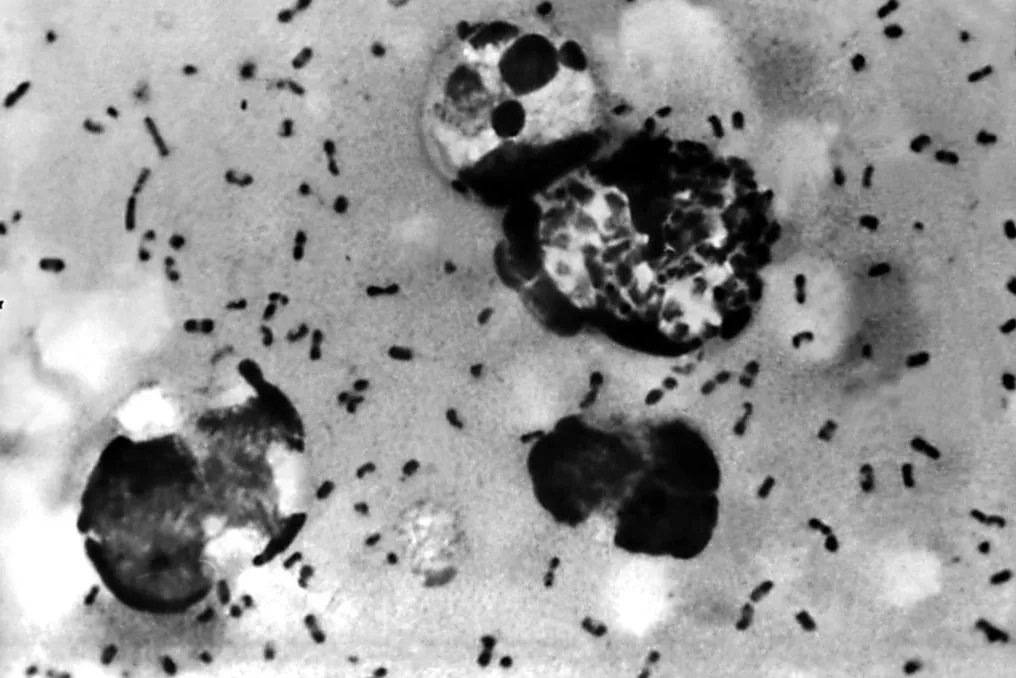
Pneumonic plague is a rare and fatal lung infection caused by the bacterium Yersinia pestis. Scientists consider this form of infection to be the most dangerous among all types of plague.

There are other forms of plague originating from Y. pestis that affect different parts of the body. The most common is bubonic plague, which often develops after a flea bite or when the bacteria enters through a cut or skin injury. This infection causes swelling and pain in lymph nodes and can progress to septicemic plague.

Septicemic plague affects the bloodstream, which can potentially lead to organ failure; it can also occur directly after a flea bite. Faccial plague attacks the throat after consuming infected meat.

Pneumonic plague is the only form of this bacterial infection that is transmitted directly from person to person. It spreads through respiratory particles expelled during coughing or sneezing, as well as through droplets from infected animals.

The last documented case of pneumonic plague transmission from person to person in the United States dates back to 1924 during an outbreak in Los Angeles.

With pneumonic plague, particles settle in the lungs and can trigger severe pneumonia, making breathing difficult. Symptoms may appear within 24 hours of infection. Other signs include fever, chills, headache, body aches, dizziness, weakness, fatigue, nausea, vomiting, and diarrhea.

Without treatment, the disease is almost always fatal. Doctors can treat plague with antibiotics over 10–14 days, most commonly using ciprofloxacin, levofloxacin, moxifloxacin, gentamicin, and streptomycin. Patients who take antibiotics within the first 24 hours of infection have the best chance of survival.

Doctors can also provide supportive care, offering supplemental oxygen, fluids, and encouraging rest.

Although plague vaccines have been used since the 19th century, it was unclear whether they provided protection specifically against pneumonic plague. The WHO does not recommend vaccination, except for high-risk groups such as laboratory personnel constantly exposed to the risk of infection.

According to infectious disease expert Dr. Tyler Evans, plague continues to exist today, even if people primarily know about it from the Bible or historical literature, or as a metaphor to describe broader disaster and poverty.

The infection known as the 'Black Death' in the 14th century claimed over 50 million lives in Europe. Although antibiotics have made it more manageable, it remains on every continent except Oceania. According to WHO data, most human cases have been recorded in Africa since the 1990s.

According to the CDC, the last case of death from pneumonic plague in the US occurred in Arizona in July 2025. A young man worked with sick cats and is believed to have contracted it from them. No one else who came into contact with the cats became ill.

Evans argues that the risk of plague is 'worsening due to environmental changes, especially due to the US withdrawal from infrastructure and public health measures.' He also notes that plague is relatively easy to diagnose, and that 'first and second-line antibiotics are very effective for this.'

Dr. Rutul Dalal, an infectious disease physician at Penn State Health St. Joseph Medical Center, emphasizes that the rapid onset of illness with pneumonic plague can slow down potential spread. He states that it is extremely difficult for a person to walk or perform daily activities, let alone travel. Symptoms can appear as early as 24 hours after exposure.

Dalal added that since there are no direct flights between Russia and the US, by the time an infected person arrives in the US, they will likely already be showing symptoms. He called for caution, reminding that the world has become a small village, but the current situation does not reach the scale of the Covid pandemic.

The WHO advises people around plague patients to avoid direct contact with the sick and to exercise caution when coming into contact with infected bodily fluids. Workers caring for patients with pneumonic plague should use standard protective equipment and may receive prophylactic antibiotics. In case of contact, health authorities will also monitor the patient's family members and other close contacts, prescribing antibiotics before symptoms appear, and recommending regular hand washing with soap and water.

Dubai student develops app to help people with Alzheimer's disease
Read more
www.khaleejtimes.com

Dubai student develops app to help people with Alzheimer's disease

After Galia Vakhbi saw her grandfather struggling to remember the names of his grandchildren, whom he had known and loved his entire life, she realized that she was witnessing not just memory loss, but a slowly fading connection.

A 12th-grade student from the American School in Dubai turned this deeply personal experience into an application called Alzimate. This program is designed to help people suffering from Alzheimer's disease reconnect with familiar faces, voices, and memories, while also providing families and caregivers with a place to store important information.

The recently available app has already received over 400 downloads, according to Galia herself. It allows families to create personalized profiles where they can add photos, memories, details about important people, voice recordings, music, and even medication details—information that can help make the daily life of someone with Alzheimer's feel more familiar to them.

The idea for the app originated with her grandfather. When she was about seven years old, a noticeable decline in his memory began, but one specific change made her realize how much this condition affected his relationships. She recalls: 'The moment I understood there was a real gap was when he started forgetting who his grandchildren were. They were people he had known and loved his whole life, but suddenly it became difficult for him to remember who we were.'

Galia emphasized that this particularly touched her because she saw how memory loss began to affect his closeness with the people closest to him. This prompted her to wonder if technology could help bridge this gap, which became the starting point for creating Alzimate.

Her grandfather played an important role in her childhood, filling ordinary moments with conversations and lessons. Even as his memory declined, these experiences remained vivid for her. Galia shares that at some point, her grandfather stopped calling her by name, yet she could see in his eyes that he knew who she was. At the same time, she noticed his struggle and near disappointment that he couldn't recall her name.

These memories shaped her view of Alzheimer's disease—she stopped seeing it merely as a condition causing forgetfulness and began to see it as a factor that makes recognizing familiar people and relationships increasingly complex. She notes: 'I think that's what changed my view on Alzheimer's. Even when he started forgetting parts of our relationship, I didn't forget them. It made me realize how much more there is beyond memory loss, and to want to find a way to preserve those connections.'

Alzimate allows family members or caregivers to create a personalized profile for the patient. They can add photos, memories, names, relatives, audio recordings, and music, which, according to Galia, creates a more personal rather than purely medical experience. The family can regularly update the app and create albums, providing the loved one with a constant place to return to and review these memories.

Another important idea for the app arose while observing her grandfather at a family event. She remembers him spending most of his time trying to figure out who the people around him were, which led her to consider the isolation that Alzheimer's disease can cause, even when surrounded by family. Galia believes this became the central idea for the family albums and photos in Alzimate. Her hope is that the app will help patients familiarize themselves with their closest loved ones before spending time together, so they can communicate and enjoy more, rather than spending time figuring out who is in front of them.

Furthermore, the app includes medication information and other vital details intended to support caregivers in the practical aspects of caring for someone with Alzheimer's. Galia's ambition is for Alzimate to eventually reach families far beyond the experience that inspired it. She wants to continue learning based on user feedback to improve the program and aims for Alzimate to become a support for millions of patients and families worldwide. Meanwhile, Galia insists that the app must remain free for all users, as accessibility is a key element of her vision.

Popular