Filming location for 'Drishyam 3': A 100-year-old Portuguese mansion in North Goa
Read more
Aaj Tak
www.aajtak.in

Filming location for 'Drishyam 3': A 100-year-old Portuguese mansion in North Goa

Some films remain mere memories, but 'Drishyam' is a film that viewers watch again and again, remembering every scene and line. The story of what Vijay Salgaonkar did to protect his family is known to many.

However, in the story of 'Drishyam', it is not only Vijay, Nandini, Mira Deshmukh, and the police that are important. Another character present in all three films is Vijay Salgaonkar's house. It is in this house that the entire story of Vijay's family and many serious secrets are revealed.

The question arises: where is the house of Vijay shown in the film 'Drishyam' actually located? According to Shiva Bharata, a content creator specializing in real estate, this famous mansion is located in Ucasaim, North Goa. The first part of the film was released on July 31, 2015, and since then, this place has become special for 'Drishyam' fans.

It is reported that this is a Portuguese-style mansion that is about one hundred years old. Although the exact details of what changes were made to the interior of the house for filming are unknown. In the first part, the house features yellow walls, and the overall atmosphere seems very warm.

As the plot developed, the color of the house also changed. In the second part, 'Drishyam 2', blue and gray shades appeared on the walls. The reason for this was obvious—a threat loomed over Vijay's family. This same ambiance no longer looked as calm as before; that is, the house reflected the state of the family along with the development of the plot.

In the story of 'Drishyam', Vijay used every possible method to save his family: he misled the police, played with evidence, and defended his version of events in court. Many of his actions were illegal, but viewers continued to support him. This is the main feature of this film.

Interestingly, according to an Instagram post, this mansion is private property, and it is maintained by an elderly woman around 85 years old. After the film's release, this place became so popular that it was called 'Drishyam Movie House'. Many people visit here daily to walk around and take photos.

The Ucasaim location was also used for the filming of 'Drishyam 3: The Conclusion'. The place that served as the home for Vijay Salgaonkar's family throughout the three films also appeared in the next part of the story, which increased the significance of this location.

Besides Vijay's house, the film also shows a medical college in Ucasaim, which serves as the headquarters of the Goa police. Additionally, some scenes were shot in Panaji, and one frame shows the Bandra-Worli Bridge in Mumbai. Furthermore, many indoor scenes of the film were shot at Yashraj Films studio in Andheri West, Mumbai. Nevertheless, for 'Drishyam' fans, the old mansion in Ucasaim will forever remain special because it is in this house that Vijay's family lived, and it held many secrets of his story throughout the three films.
Similar stories

Actors Mohit Malik and Rasika Dugal discuss working with an intimacy coordinator on the film 'Mirzapur: The Movie'
Read more
www.aajtak.in

Actors Mohit Malik and Rasika Dugal discuss working with an intimacy coordinator on the film 'Mirzapur: The Movie'

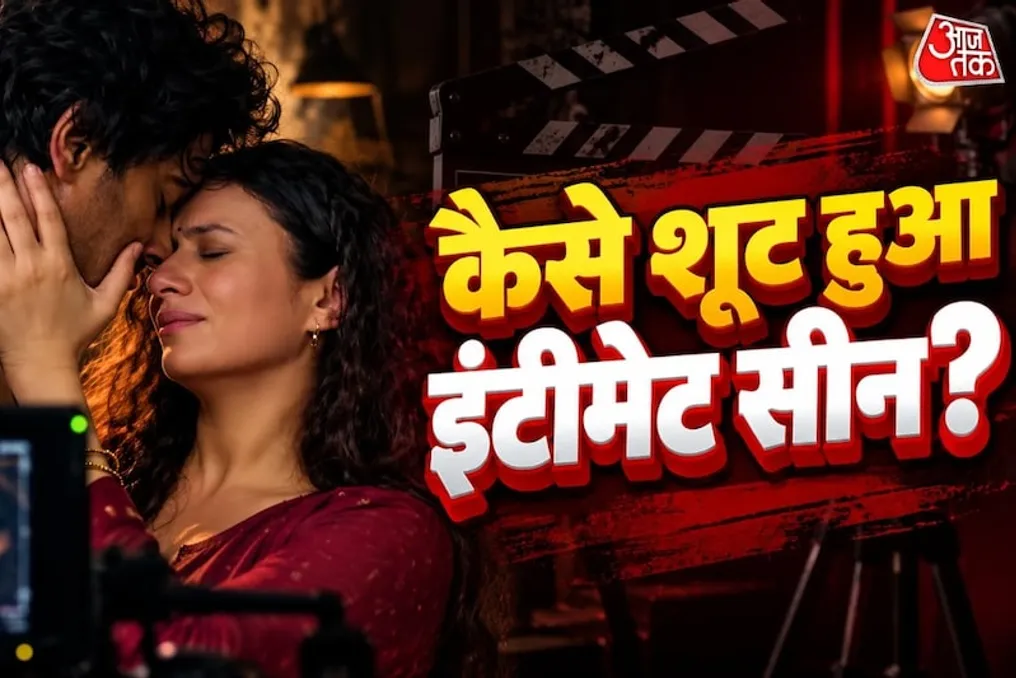
In the film and television industry, the focus during the shooting of intimate scenes shifts from the act itself to what happens before it. Due to increased discussions about consent, boundaries, and creating a safe working atmosphere on set, intimacy coordinators have become an integral part of production, especially in the project 'Mirzapur: The Movie.'

Actors Mohit Malik and Rasika Dugal worked with intimacy coordinator Ankita Poddar while filming an intimate scene. Mohit, who was filming such a scene for the first time in 'Mirzapur: The Movie,' shared his experience in an interview with India Today Digital. He recounted how Ankita Poddar helped him and his colleague Rasika Dugal navigate the scene, including discussing areas they were comfortable touching and the necessity of obtaining permission during filming.

Mohit also touched upon questions often posed to married actors involved in intimate scenes: 'What does your partner think?' Mohit's answer was simple: 'Before I became a married man, I was an actor.' He consulted with his wife Aditi Malik to ensure her comfort. He explained to her that it was a scene, and after watching the film, he asked her again: 'Are you okay with this?' She replied: 'You are an actor. This should be part of the character's journey. It was necessary, otherwise this scene wouldn't exist.'

He recalled being very nervous before the shoot because it was his first experience, noting that the coordinator helped Rasika feel confident. Mohit emphasized that the coordinator ensured they could focus on the work.

Rasika Dugal also shared her perspective during the conversation. She noted that they were able to fully concentrate on the acting because they did not have to worry about what was acceptable for her, for him, or for the director. Thorough attention to all details was provided.

For Mohit, this process was not limited to creating comfort for the actors on the day of shooting; it also involved establishing boundaries even before the camera started rolling. The actors openly discussed what they felt comfortable with and what they did not, and mutual consent became a key part of this process, rather than something decided later.

Mohit explained that this was his first time working with an intimacy coordinator. He finds it extremely beneficial for an actor to ask another person what they are comfortable with, where they can touch, and where they cannot. They conducted exercises where both voiced what made them uncomfortable. Permission was obtained for actions like 'Can I do this?', and control over who directed the scene was maintained.

Rasika added that at that time, it became part of the job. It depended not on personal relationships but on the fact that it was a full professional workshop where they conducted such exercises. She stressed that it was not simply 'doing something on set.'

Mohit particularly emphasized why the presence of intimacy coordinators should become standard in productions with intimate scenes. He concluded his remarks with a message to filmmakers: do not leave actors to figure everything out alone.

Popular