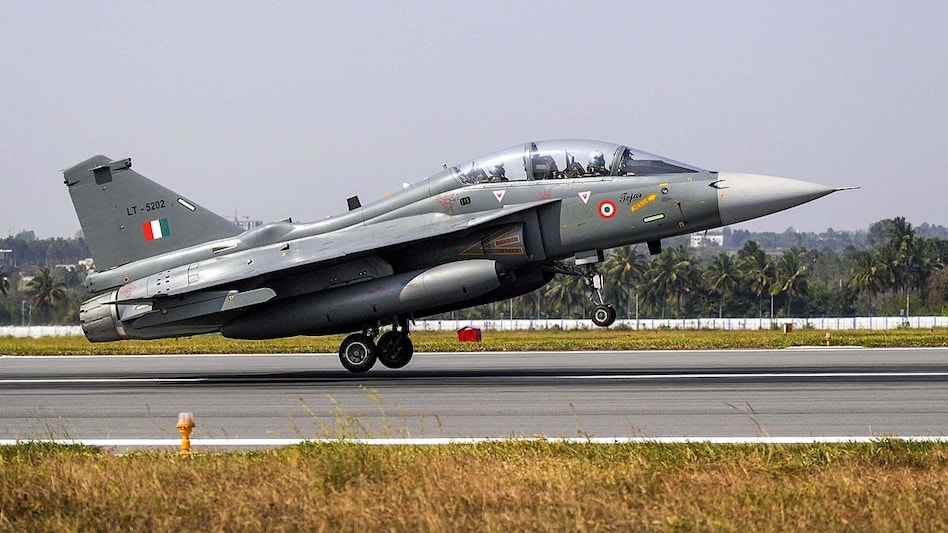
GE Aerospace delivered four engines for the Tejas fighter in September
Read more
Aaj Tak
www.aajtak.in

GE Aerospace delivered four engines for the Tejas fighter in September

The American company GE Aerospace supplied four F404-IN20 engines to India in September 2026. A company representative noted that they are focused on providing engines for India's domestic Tejas fighter. The company expressed pride in its partnership with Hindustan Aeronautics Limited (HAL) and the Indian Air Force.

This delivery is significant for the Tejas MK1A program, as engine shortages have long been the main obstacle to production. The Tejas MK1A is an Indian light fighter that the Indian Air Force ordered from HAL in a quantity of 180 units. Previously, a contract was signed with GE in 2021 to supply 99 engines for the first batch, valued at approximately 5375 crore rupees. The F404-IN20 engine is specifically designed for the Tejas.

This engine provides thrust of about 85 kilonewtons using afterburners. The first engine arrived in March 2025, but deliveries were slow; by August 2026, only 10 engines had been delivered. The delivery of another four engines in September clearly improves the supply situation. The Defence Minister had previously stated plans to receive four engines monthly from October to December, which would allow the total number of engines to exceed 20 by the end of the year.

HAL has several airframes ready, reportedly around 27 airframes, but due to the lack of engines, the aircraft could not be fully assembled. Even after installing the engines, radars, weapon systems, and flight tests are required. Thanks to the acceleration of engine supplies, HAL expects to deliver about 10 aircraft to the Air Force in the 2026-27 fiscal year. The Tejas is needed to replace older aircraft such as the MiG-21, and delays have affected squadron strength. Improved supplies may accelerate progress towards self-sufficiency.

This collaboration between GE and HAL is part of the defense cooperation between India and the USA. Furthermore, an order for an additional 113 engines has been placed. GE has promised to increase production, aiming to manufacture 24 engines in 2026-27 and 30 in subsequent years. However, challenges remain. Time is required for integration, testing, and quality control after engine installation. A technical issue with one engine arose previously but was resolved. India has long sought to produce its own engines, but currently remains dependent on imported engines. Engine technology will also be important for future aircraft such as the Tejas Mk2 and AMCA.

This delivery of just four engines is a solid step toward putting the entire program on the right track. If supply rates are maintained, the first squadron is expected to be ready by the end of 2026. The dream of creating a domestic fighter is approaching reality. HAL, the Air Force, and GE must work together to reduce delays and allow more Tejas fighters to fly in the Indian sky.


Similar stories

Fuel price hikes and inflation may trigger another interest rate increase in South Africa
Read more
iol.co.za

Fuel price hikes and inflation may trigger another interest rate increase in South Africa

South Africa is experiencing a sharp rise in fuel prices, creating a risk of further inflation and a potential increase in interest rates. This process forms a vicious cycle that puts pressure on already strained household budgets.

Increased Monthly Payments

Investec Chief Economist Annabel Bishop noted that the recent significant increase in fuel costs is likely to lead to a renewed rise in consumer price inflation (CPI) closer to 5% year-on-year. Furthermore, this could be the reason for another repo rate hike in South Africa in November.

On Wednesday, the price of petrol increased by between R3.12 (for 93 Unleaded) and R3.33 (for 95 Unleaded), while diesel fuel rose from R2.84 (500ppm) to R3.24 (50ppm).

Inflation in August was 4.4%, slightly higher than the July figure. Meanwhile, transport cost growth increased by 8.8% year-on-year.

Bishop also pointed out that market concerns regarding the impact of the Middle East war on oil and petroleum prices have intensified as the conflict escalates. She forecasts an increase of 0.25 percentage points for the remainder of the year. If the 25 basis point hike raises the base rate to 11%, this will affect households even before they refuel their cars.

Increased Monthly Payments

If the rate hike leads to the base rate increasing from 10.75% to 11%, the monthly payment for a R1.5 million mortgage over 20 years will increase from approximately R15,228 to R15,483, adding R255 to monthly payments. Similarly, a car loan of R500,000 over six years will increase from about R9,453 to R9,517, adding another R64.

Thus, for a household with both debts, this amounts to an additional R319 per month, not including rising costs for fuel, transport, and food. According to the latest quarterly bulletin from the South African Reserve Bank, household debt burden reached 62.2% of disposable income in the first quarter, with the cost of servicing debt at 8.4%.

The situation looks particularly difficult for consumers who are already under financial strain. A DebtBusters Money-Stress Tracker survey conducted among nearly 18,000 respondents showed that 53% spend more than 40% of their net income on debt repayment, up from 48% the previous year. Among respondents earning over R20,000 per month, 75% spend more than the recommended 30% on debt, and those earning over R50,000 per month theoretically might pay more than they earn while repaying loans.

Rising Transport Costs

Trucking companies delivering goods and other products across the country are feeling the same shock impact on diesel prices. The Road Freight Association reports that fuel accounts for between 35% and 55% of the operating costs of freight companies. Based on the September diesel price increase, the association estimated that freight operating costs could rise by approximately 4%–6%.

More than 80% of land transport is carried out by road vehicles, including the movement of produce between farms, processing plants, distribution centers, and retail outlets. However, an increase in transportation costs does not always lead to a direct and proportional rise in supermarket shelf prices.

For the average driver, the latest price increase means that even filling a 30-liter tank in a small car will cost R100 more, and for larger tanks—another R200. The cost of fuel per kilometer also increases by 19 cents to 32 cents, depending on the type of vehicle.

Some Positive Aspects

PSG Senior Economist Johann Els noted that there has not yet been a noticeable transfer of the rise in petrol and diesel prices into the prices of food and other consumer goods. He emphasized that food inflation has actually decreased compared to the beginning of the current year. Instead, consumers forced to spend more on fuel and transport have less money for other purchases, which, according to Els, creates a substitution effect.

Els also suggested that wholesale and retail sellers might partially absorb the price increases instead of passing them on to buyers and risking lost sales. Consequently, fuel price increases could cause 'deflationary forces' as consumers spend more on transport and less on other needs, while companies try to maintain sales volumes.

Despite this, the cost of the food basket, measured by the Economic Justice and Dignity Group's Pietermaritzburg Household Affordability Index, increased by 2% year-on-year, reaching an average of just under R5,500. The annual increase in the average cost of priority items in the household basket was 2.9%.

Titan reports 25% revenue growth in Q2 of FY27, jewelry sales up 21%
Read more
business-standard.com

Titan reports 25% revenue growth in Q2 of FY27, jewelry sales up 21%

Titan Co Ltd, the country's leading manufacturer of branded jewelry and watches, announced a 25% year-on-year revenue increase for the September quarter of fiscal year 27. This growth was driven by the performance of its jewelry, watch, and eyewear segments.

However, the consistent growth rate slowed down: revenue growth in September was 25%, which is lower than the over 40% recorded in each of the previous three quarters. Previously, Titan reported an autonomous revenue growth of 40% in the December quarter of fiscal year 26, and this figure later accelerated to 46% in March.

In the June quarter of fiscal year 27, the company demonstrated revenue growth of 41%. In the September quarter, the jewelry division, which accounted for 91.5% of the company's total revenue of over 75,000 crore rupees in fiscal year 26, showed an increase of 21%.

Titan, which operates in the branded jewelry segment under the flagship brand Tanishq and other brands including Mia, Zoya, beYon, and CaratLane, noted that consumer demand remained stable. However, towards the end of the quarter, there was some moderation due to the shifting of the festive calendar to the third quarter of fiscal year 27.

The company reported that thanks to the 'Diamond Festival' campaign and brand-level promotions, gemstone products showed strong growth in the low thirties, while pure gold items grew by 20% year-on-year. Meanwhile, demand for coins, driven by investments, decreased from a high level, leading to a decline within the high single digits.

Growth in purchasing activity (at the portfolio level) was around the mid-single digits, and the average check showed double-digit growth during this period. Within the jewelry business, the flagship brand Tanishq, along with Mia, Zoya, and beYon, achieved growth of about 20% for the quarter, while the digitally focused jewelry retailer CaratLane continued to perform better with a growth of 32%.

The watch division grew by 30%, supported by the trend towards premiumization. Titan's analog watch business showed healthy growth in the low thirties. The smart watch business, which had been declining over the last few quarters, also demonstrated 'a recovery with encouraging growth in the high single digits' in the quarter ending September 30, 2026.

Titan's EyeCare business increased by 28%, resulting from the targeted implementation of key strategic priorities. The company emphasized that the multi-brand approach, continuous updating of the existing store network, and a clearer assortment portfolio significantly improve the overall customer experience, bringing positive results to the business.

Among the growing areas, which generally grew by 21%, perfumery showed growth in the mid-thirties, and women's bags—in the twenties. The Taneira clothing ethical line demonstrated growth in the high single digits year-on-year. International business, which mainly includes jewelry brands—Tanishq, Mia, and CaratLane—continued to show confident double-digit growth in North America.

Furthermore, the business in the Gulf Cooperation Council (GCC) countries held up well amid unstable geopolitical conditions and shows improving growth for Tanishq, while Damas shows early signs of recovery. Damas Jewellery is a jewelry retailer based in the UAE, in which Titan acquired a controlling stake last July. Titan is a joint venture between Tata Group and Tamil Nadu Industrial Development Corporation (TIDCO).

Popular