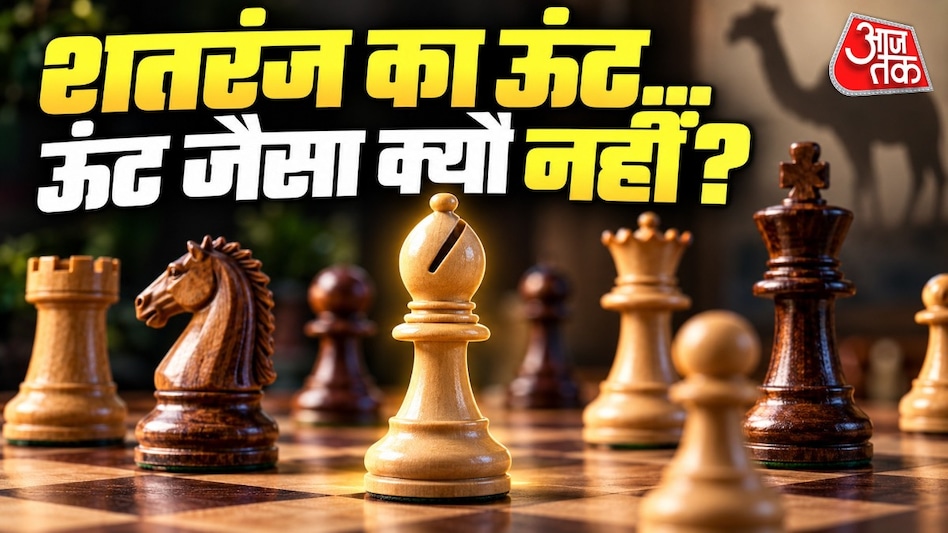
On the chessboard, we are accustomed to seeing pieces such as the king, queen, bishop, knight, rook, and pawn. However, we rarely think about why the names of these pieces differ from their appearance. For example, the knight is easily recognizable, but the piece called the 'camel' does not look like a camel, and the chess bishop also does not look like a real bishop. To understand these pieces, it is not enough to just look at the board; there is a history behind them spanning over a thousand five hundred years.
The game has traveled a long path: it began in India, then went to Persia, and from there spread to the Islamic world and finally to Europe. During this journey, the rules of the game, the moves of the pieces, as well as their names and appearance, constantly changed.
According to Chess.com, the origins of chess trace back to the ancient Indian game Chaturanga. This game, which was popular around the 6th century, depicted various divisions of the army of that time. Chaturanga had four main military units: infantry, cavalry, elephants, and chariots. These four military units later transformed into modern chess pieces: the pawn, knight, bishop, and rook.
Thus, behind the modern chess pieces lies a narrative of the military structure of ancient times.
The game moved from India to Persia, where its names and rules underwent changes. It then spread throughout the Islamic world and reached Europe. In each region, chess acquired features of the local culture and language, leading to the same piece having different names in different places. Over time, the moves of the pieces also evolved. A piece that originally represented a certain military unit eventually acquired a completely different name and appearance.
Consider one of the most interesting pieces. What is commonly called the camel in India today did not actually start as a camel. In ancient Chaturanga, this piece represented an elephant. In Persian and Western traditions, it remained in the form of an elephant. Later, in Europe, this piece transformed into the bishop. Thus, the historical roots of the modern bishop piece lie in the old elephant piece.
There is another interesting point: in old Persian and Western chess, this piece did not move diagonally across the entire board like the modern bishop. Its movement was restricted: it could move two squares diagonally and could jump over another piece if it was between them. Later in Europe, its rules changed, and the bishop's move became what we know today.
How did the name 'camel' appear? According to Chess.com's history, in some parts of India, this piece, which originally represented an elephant, came to be called a camel. This created a significant gap between the name and the original symbol. Therefore, when we see the camel piece on the chessboard and wonder why it doesn't look like a camel, the answer lies in its long history, passed through many names and forms in different countries and languages.
Now let's talk about the piece commonly called the elephant in India. The history here is even more curious. In ancient Chaturanga, this piece represented not an elephant, but a chariot. This same piece, transforming into Persian and European chess, became the rook. This can cause confusion in names between the English Rook and the Indian 'elephant'. Historically, its roots are connected to the chariot. That is, the piece we call the elephant on the chessboard today actually started as a chariot.
In Chaturanga, the knight was also an important military unit that later became the modern knight. The identification of the knight remained more obvious compared to other pieces. Its move also differed from the moves of the other pieces. In modern chess, the knight moves by jumping over other pieces, making an 'L' shaped move. Although there were some differences in its movement in early Chaturanga and subsequent chess, its connection to cavalry was preserved.
The king is the most important piece in chess. But the most powerful piece today is the queen. Interestingly, in old chess, there was no such powerful piece as the modern queen. In Chaturanga, next to the king was an advisor. In early chess, this piece could only move one square diagonally. As the rules changed in European chess, the power of this piece grew. Gradually, its move became so powerful that it transformed into the modern queen. Now the queen can move straight and diagonally any number of squares, making it the strongest piece in modern chess.
Infantrymen were also part of the army in Chaturanga, and they became the modern pawns. Infantrymen made up the majority of the army, so the number of pawns on the board is greater than that of other pieces. Although the pawn's move in old Chaturanga was not entirely like that of modern pawns, its rules also changed over time. Today, a pawn usually advances one square forward, and on its first move, it can advance two squares. If it reaches the last rank of the board, then...