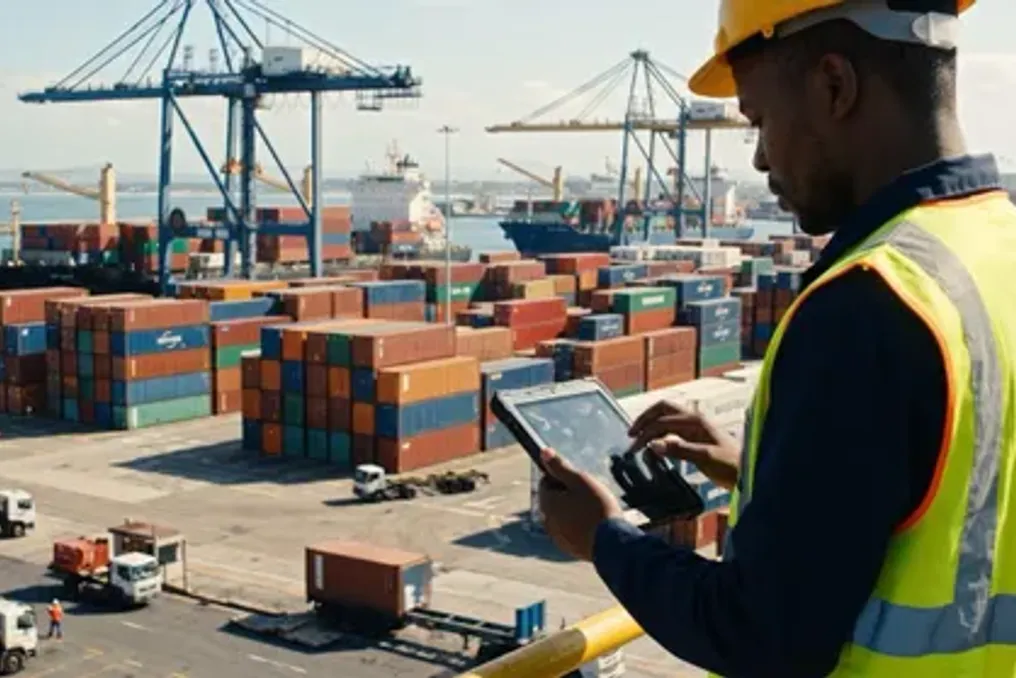
South African enterprises are implementing digital solutions, artificial intelligence, and agent technologies to enhance trade resilience and mitigate the impact of supply chain disruptions. According to a Standard Chartered report on the future of trade in 2026, up to 90% of companies in South Africa rely on digital tools for supply chain distribution.
Despite the complex trading environment, 59% of respondents agreed that digital transformation is an ongoing priority. The faster South Africa adopts digital tools such as artificial intelligence, local companies will be better prepared for global scaling and advancement.
Chris Egberlink, Chief Executive Officer and Head of Banking Services and Coverage at Standard Chartered in South Africa, noted that South African companies are already using digital means to respond more quickly to disruptions. He emphasized that the next step should be integrating these capabilities across trade, treasury, and supply chain functions so that companies have a clearer view of inventory, risks, and cash.
Egberlink added that closing integration gaps will help firms reduce friction in cross-border operations, manage currency and liquidity risks more effectively, and turn resilience into growth.
Meanwhile, Mick Amelish, AI advocate at Sumsub, elaborated on what agentic AI could mean for South Africa as local adoption grows. Hans Bezuidenhout, Vice President of Sales for Africa at Sumsub, and Jarred Jensen, Regional Director for South Africa, also shared experiences in this area during the session.
Amelish explained that the most significant shift towards an 'agentic' mode of operation lies in the concept of agency itself. Previously, AI acted merely as an assistant, helping to check texts or suggest basic ideas. Now, however, AI is capable of interacting with the external world, reading current internet information, communicating with other digital products, making independent purchases, registering on websites, or directly interacting with bank accounts with permission.