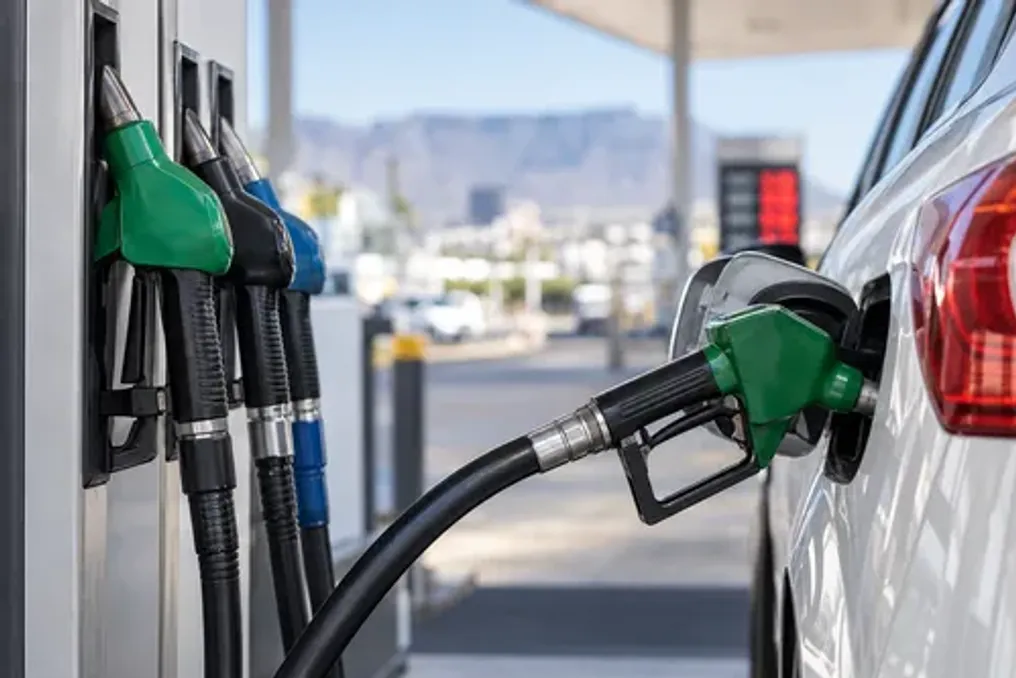
Drivers in South Africa are facing record fuel prices as economists assess the feasibility of resuming tax reduction measures. Following another significant price hike on October 7, petrol and diesel reached record levels, representing a more severe fuel crisis than the one that began in April.
A key reason is the non-renewal of temporary fuel tax reduction measures that were in effect from April to June. These measures reduced the General Fuel Levy by 3 cents per liter of petrol and, at its peak, by 3.93 cents per liter of diesel.
Despite international oil prices remaining high due to the ongoing Middle East conflict, South Africans are forced to pay the full GFL amount of 4.10 cents for petrol and 3.93 cents for diesel, to which other levies, including the Road Accident Fund levy, are added, raising the petrol tax to 6.58 cents per liter.
Many consider this amount excessive. However, according to economists surveyed by IOL before the October price increase, removing these sums from the state budget is not as simple as it seems.
Significant burden on the budget
Although many analysts predict that the cumulative rise in fuel prices will push core CPI inflation up to approximately 5%, inevitably slowing economic growth, resuming fuel tax reduction measures will be difficult from a fiscal perspective, states Patrick Buthelezi, an economist at Sanlam Investments.
Buthelezi noted that if the Ministry of Finance had once again absorbed the shock of the October fuel price increase by reducing the fuel levy, it could have cost the budget over 6 billion cents monthly. Nevertheless, given the uncertainty of the conflict's duration, extending fiscal measures could undermine efforts to consolidate the budget and ultimately negatively affect the sovereign credit rating forecast. He added that the Ministry of Finance lacks sufficient fiscal space.
Previously implemented measures cost the budget approximately 17.2 billion cents, but Buthelezi emphasized that this step was fiscally neutral. According to him, as the conflict drags on, countries worldwide are abandoning fiscal shields, allowing full price transmission as pressure on public finances intensifies.
He also believes that a fiscal response, even providing partial protection, is unlikely to solve the problem of chronic energy supply deficit. Instead, it might support demand, possibly keeping energy prices higher for longer. Therefore, less costly demand-side measures should be considered, especially if adopted by many countries simultaneously.
Hannah Marais, Chief Economist for South Africa at Deloitte Africa, agrees that resuming fuel tax reduction measures would not be financially prudent. She explained that previous support measures were financed by stronger-than-expected tax collection and departmental underspending, but this fiscal reserve is largely depleted.
Marais warned that reintroducing such measures would likely require additional borrowing or spending cuts elsewhere, while maintaining fiscal credibility and supporting sustainable public finances remains critically important for South Africa. The consequence of such a decision would be that households and businesses bear the full brunt of the fuel price increases.
She noted that the compromise lies in choosing between immediate and measurable fiscal costs and economic costs that may be greater but manifest more slowly.
Expert views on consequences
Sanisha Pakrisami, a group economist at Momentum, stated that the economic justification for fuel tax reductions is undoubtedly compelling. Record price surges in October put pressure on household budgets and business profit margins, and the increased cost of diesel raises transport, agricultural, and operational expenses. If this pressure pushes inflation, the South African Reserve Bank (SARB) may keep interest rates high for longer, weakening growth and consumer spending.
She suggested that a serious economic downturn could potentially cost the budget even more in lost revenue from personal, corporate, and VAT payments than the direct costs of reducing the fuel levy. However, she also stressed that tax breaks have their own fiscal price.
Pakrisami added that covering high fuel prices through additional government borrowing risks increasing government bond yields and weakening the rand, while cutting public spending in other areas carries its own socio-economic costs. Although politically difficult to argue against helping needy consumers, repeated extensions create unrealistic expectations that the government will absorb every external energy shock. She concluded that support for vulnerable groups may be necessary if the price shock threatens long-term structural damage, but this requires the Ministry of Finance to clearly articulate both the revenue from intervention and the broader economic risk of foregoing support to limit fiscal damage.
Challenges for the economy
Hannah Marais from Deloitte acknowledged that the latest price hike occurs during a period challenging for the economy, which contracted in the second quarter, while the central bank recently raised interest rates to 7.25%. Persistent high fuel prices increase transport costs, raise production costs for businesses, and reduce consumer purchasing power.
Marais noted that the key risk is the emergence of secondary effects. Indicators to monitor include rising wage demands, increased inflation expectations, and a significant weakening of the rand. If fuel price inflation becomes embedded in the broader economy, its impact could extend beyond transport costs, putting additional pressure on household finances, business profit margins, and economic growth. In her view, this strengthens the argument for temporary and targeted support for the most affected sectors and households.