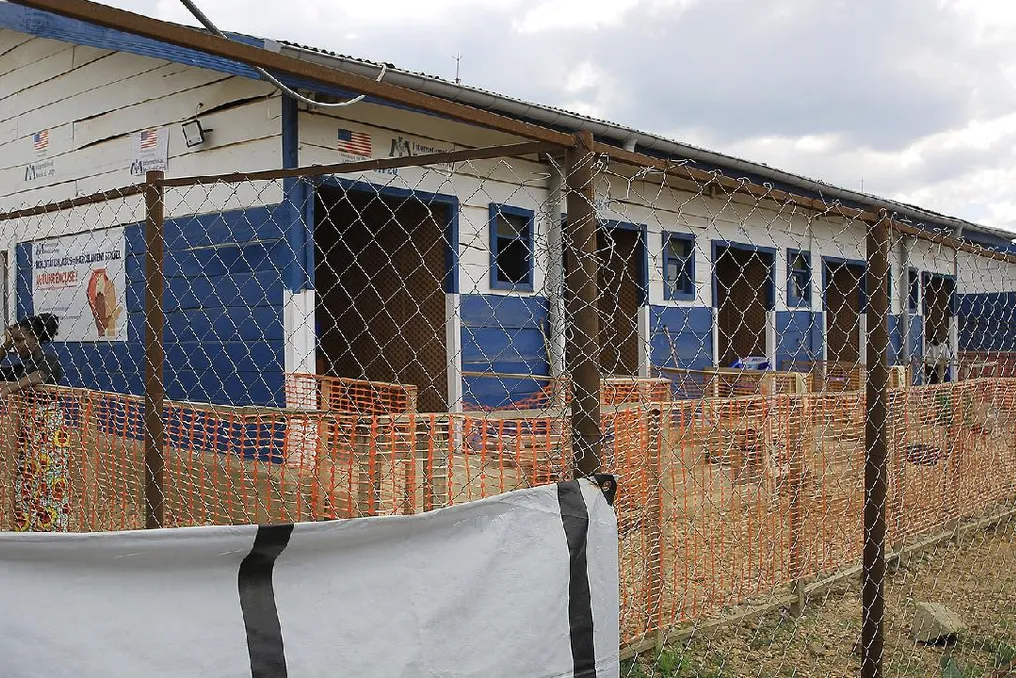
The medical humanitarian organization Médecins Sans Frontières (MSF) issued a warning on Monday about a sharp increase in Ebola infection cases in the eastern province of North Kivu, Democratic Republic of Congo, urgently calling on authorities to expand treatment capabilities.
The country declared its seventeenth Ebola outbreak in mid-May, several weeks after the epidemic began. This highly lethal disease has claimed over 15,000 lives in Africa over the past five decades.
As of October 2, the World Health Organization registered 8,463 cases and 4,082 deaths since the emergence of the Bundibugyo strain, for which there is no vaccine or specific treatment.
The outbreak started in the northeastern province of Ituri before spreading to seven provinces. The provinces of Ituri, North Kivu, and Haut-Uele recorded the highest share of cases.
MSF reported that the number of infections in North Kivu has sharply increased since September, and this province now accounts for almost 40% of all newly confirmed cases nationwide. Stephanie Hoffmann, coordinator of the MSF Ebola treatment center in Butembo, near the border with Uganda, compared the situation to 'fighting a mega-fire.'
The humanitarian organization noted that treatment capacities in North Kivu have reached their limit as new outbreaks regularly emerge, and existing facilities cannot cope with the increased demand.
MSF emphasized: 'Since new outbreaks occur every week, treatment capacities remain largely insufficient and inadequate. This situation puts both current patients and entire communities at even greater risk.'
According to MSF, on September 28, 34% of confirmed Ebola patients in North Kivu were treated in non-specialized medical facilities due to limited bed capacity in specialized treatment centers and diagnostic delays. MSF warned that many of these facilities do not possess the necessary resources and experience to manage Ebola cases, increasing the risk of transmission among patients and healthcare workers.
Hoffmann added that 'due to the lack of available beds, we are sometimes forced to transfer confirmed Ebola patients elsewhere, despite the significant risk this poses to the wider community.'
Furthermore, MSF highlighted the importance of building trust with local communities, some of which remain wary of Ebola treatment centers. Hoffmann reported that over 60% of Ebola-related deaths continue to occur within the communities themselves.
She concluded: 'Patients must be ready to seek help promptly and take isolation measures. Without this trust, we risk seeing more deaths and further spread of the disease into neighboring areas.'