China's deep-sea neutrino telescope project, known as Hailing or TRIDENT, is currently undergoing a critical construction phase in the South China Sea. This was reported by Zun-Dao Li, Chief Scientist at Jiaotong University of Shanghai, and Xu Donglian, following Francis Halzen's Nobel Prize in Physics award in 2026, who pioneered the IceCube project.
Francis Halzen, a professor at the University of Wisconsin-Madison and a member of the international advisory board of the Zun-Dao Li Institute, received the award for his significant contribution to the development of the IceCube neutrino observatory and the discovery of high-energy astrophysical neutrinos. The official scientific brief from the Nobel Committee mentions TRIDENT in the South China Sea among next-generation telescopes with an instrumental volume exceeding one cubic kilometer, alongside IceCube-Gen2, KM3NeT, P-ONE, and Baikal-GVD.
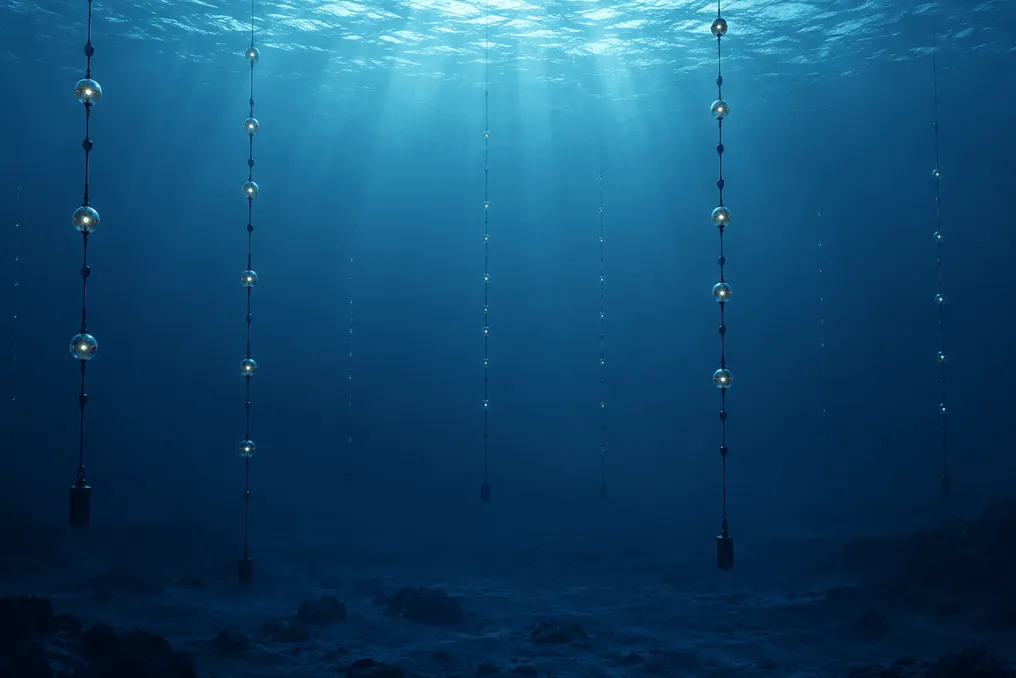
Xu, who worked at IceCube as a graduate student and now leads the Hailing project, noted that Halzen publicly supported the Chinese plan and once stated that such a telescope would open a new chapter for Chinese astronomy. The design of Hailing was presented in the journal Nature Astronomy in 2023. It is planned to deploy arrays at depths greater than 3000 meters, utilizing over a thousand vertical lines and approximately 20,000 optical modules across three phases, totaling about 10 cubic kilometers—equivalent to ten IceCubes.
Xu stated that a search sea test was conducted in 2021, and the full marine testing process concluded in August 2025. He asserted that suitable locations and the core technological chain have proven effective. The completion of the first phase is scheduled for next year, at which point it will become the first neutrino telescope near the equator, joining IceCube and other participants in the global multi-channel network. Xu expressed hope that China will be able to launch a leading high-energy neutrino telescope around 2035.
Neutrinos interact weakly and are not deflected by magnetic fields, allowing them to explore extreme cosmic environments inaccessible to light. IceCube completed its operation in 2011, using 5160 sensors on 86 lines beneath the Antarctic ice, and in 2013, it registered high-energy neutrinos from outside the solar system for the first time. Xu viewed the Nobel Prize not as an endpoint, but as the beginning of neutrino astronomy.
Jiaotong University of Shanghai is also conducting the PandaX experiment. Liu Jianlai, Deputy Director of the institute, emphasized that efforts to study dark matter and neutrinos should mutually reinforce each other, as Chinese groups strive to answer fundamental questions about the universe.