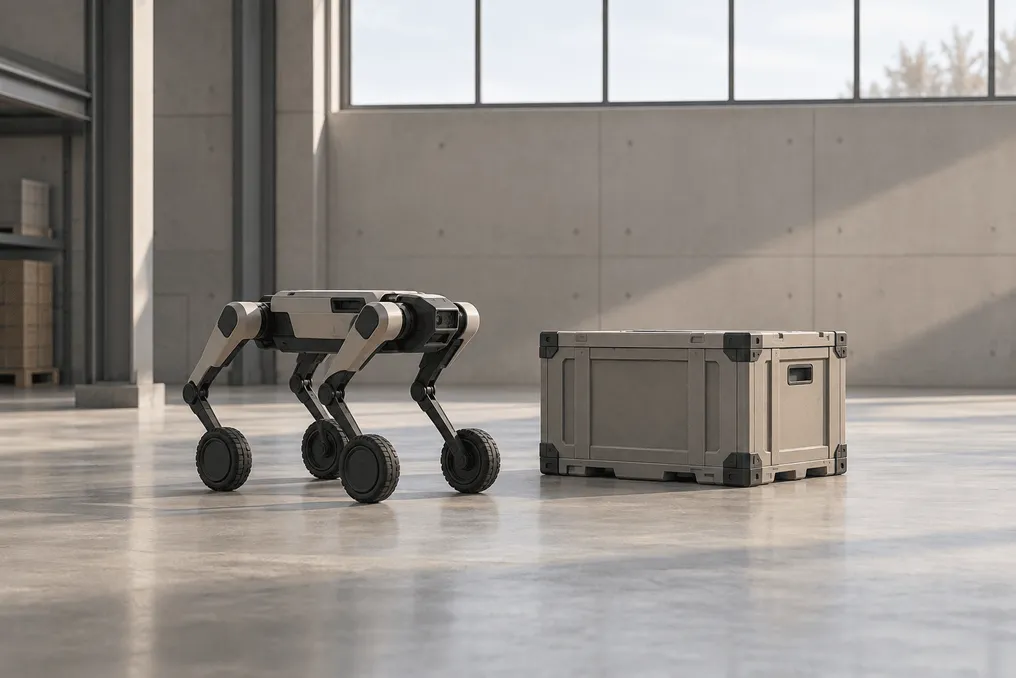
Micbot, a company based in Hangzhou, announced that the dispute regarding the purchase of four-legged robotic quadrupeds with a client from Zhejiang was resolved through negotiations. This dispute arose amid reports from Chinese media about delivery delays, stability issues, and disagreements over secondary development rights.
According to coverage referencing the Zhejiang Television's 'Golden Eye' program, Fazhiqing Robotics ordered two Micbot P2 units at the end of July for an inspection project under contract for 580,000 yuan, paying a 70% advance payment. The delivery date was set for August 10th. However, the company reported that the larger machines arrived late, which the supplier attributed to engine modernization.
On August 28th, the buyer additionally purchased two medium-sized Curiosity S01 models for 160,000 yuan each; these devices were shipped promptly. One S01 model was sent to an oil production site in the United States for inspection work. Another model, displayed in Wenzhou, had uneven legs, and on-site adjustments could not resolve the imbalance before the seller offered factory repair within a week.
A more serious issue for the buyer was that both medium-sized models arrived with locked base software. Engineers following the documentation could not activate commercial secondary development, and Micbot required a disclaimer limited to research and educational purposes before providing the keys.
The client stated that he needed to integrate suspensions, cameras, and models for park patrol and home security products that he planned to sell, so he rejected the conditions limiting use to research, demanding a refund, contractual penalties, and an independent quality inspection. A representative identifying himself as Micbot's Assistant Director of Marketing told reporters that the sales agreement did not mention secondary development, that Micbot was only responsible for the robot casings, and that responsibility for third-party development should not fall on the supplier.
Local market regulators in the Qiantan area of Hangzhou reportedly determined that the P2 delay was related to poor communication regarding the engine replacement, and the S01 balance issue was corrected. Nevertheless, mediation stalled over development rights issues, and the parties were advised to consider legal proceedings. On October 6th, Micbot published a statement that the procurement issue had been duly settled through consultation. The company emphasized its support for customer secondary development and innovation but insisted that open collaboration requires clear resolution, protection of core technology, and responsible use, especially in projects involving specific regions or sensitive scenarios.
Micbot, founded in early 2025 in the Hangzhou Robotic Gorge, specializes in four-wheeled platforms. This incident demonstrates how commercial deals involving embodied AI can be complicated by delivery schedules, field reliability, and the boundaries of software openness.