NASA develops new PRIMA space telescope to investigate inaccessible regions of the Universe
Read more
Olhar Digital
olhardigital.com.br

NASA develops new PRIMA space telescope to investigate inaccessible regions of the Universe

Even with the James Webb and Nancy Grace Roman telescopes expanding the boundaries of astronomy, NASA is working on the development of a new space telescope. This mission aims to explore a portion of the Universe that is currently practically unreachable.

Named PRIMA (PRobe far-Infrared Mission for Astrophysics), this mission will focus on far-infrared. It has the potential to assist scientists in investigating topics ranging from planet formation to the evolution of galaxies and supermassive black holes.

PRIMA recently advanced to Development Phase B, which includes preliminary design and technological development. This instrument is part of a new category of medium-sized NASA missions called Probe Explorers.

Although classified as a medium-sized mission in terms of budget and development timeline, its scientific goals are quite ambitious. Professor George Helou of Caltech informed IFLScience that PRIMA has three central scientific goals: understanding the origin of planetary atmospheres; detailing the co-evolution of galaxies and black holes at their cores; and monitoring the accumulation of dust and metals throughout cosmic history.

The introduction of PRIMA does not imply that the James Webb and Nancy Grace Roman telescopes are considered inadequate. On the contrary, the proposal is intended to complement the capabilities of these two observatories. While Webb has already transformed the observation of the Cosmos and Roman is being prepared to increase cosmic mapping, neither reaches the same far-infrared range that PRIMA will explore. The new mission may even collaborate with Roman.

PRIMA will observe certain celestial areas already analyzed by the existing telescope, allowing for the combination of data collected by both instruments. This will enable scientists to build a more complete perspective on how planets, galaxies, and supermassive black holes form and evolve. Alexandra Pope, leader of the PRIMA scientific team at the University of Massachusetts Amherst, emphasized that PRIMA will be extremely sensitive to light in far-infrared wavelengths that Roman and other telescopes cannot capture.

Both telescopes will have a unique opportunity to operate simultaneously. Roman's lifespan has been extended beyond its initial plan and can operate until the end of the 2040s, opening the possibility of joint observations with PRIMA.

More information about the mission

PRIMA will feature a 1.8-meter telescope and has an estimated cost of around US$ 1.2 billion (equivalent to approximately R$ 6.4 billion), excluding launch expenses and other costs not part of the project itself. The mission will be managed by the Jet Propulsion Laboratory (JPL), and the science center will be located at Caltech's Infrared Processing and Analysis Center. After launch, PRIMA will proceed to the second Lagrange point (L2), a location shared with Webb and Roman.

The planned launch date is 2033. After reaching its destination and completing testing and commissioning phases, the main mission should last five years. A possible extension may be evaluated later by NASA and the scientific community.

However, approval for Phase B does not guarantee the definitive launch. The mission will need to undergo a confirmation review, which will assess its projected performance, including financial aspects. If approved, it will advance to Phase C, which is the telescope manufacturing stage.

The mission is expected to investigate the trajectory and evolution of the Universe, aiding in answering questions about the genesis of galaxies, stars, planets, and black holes. Possibilities include studying how planetary atmospheres arise and even attempting to elucidate the arrival of water on Earth. Furthermore, the mission may analyze how dust and heavy elements accumulated in the Universe over time.

Another focus is observing how galaxies and supermassive black holes grew together in the cosmic past. Alexandra Pope emphasized that a particularly interesting aspect is the ability to measure the rate at which galaxies formed stars and supermassive black holes about ten billion years ago, using the dust itself to track element accumulation in the Universe.

Thus, PRIMA is not just another large-investment space telescope. Its purpose is to complement the observatories that are already revolutionizing astronomy, focusing specifically on a portion of radiation that is still needed to complete the picture of the Universe.

Similar stories

India Mobile Congress kicks off in Delhi with focus on 6G and AI; Prime Minister to open the event
Read more
www.aajtak.in

India Mobile Congress kicks off in Delhi with focus on 6G and AI; Prime Minister to open the event

A large-scale event called India Mobile Congress (IMC2026) starts in India today, October 7th. This four-day forum will run until October 10th and will take place at the Yashobhoomi complex located in New Delhi. The Prime Minister has scheduled to open this major event the following day.

Over these four days, telecommunication operators, technology companies, and startups will present new developments. Special attention will be paid to the development of 6G and artificial intelligence (AI) technologies. The official theme of IMC 2026 is 'Scale Without boundaries,' which means expansion without any limitations.

Participants expected at the event include representatives from international companies. Specifically, Lauren Dreyer, Vice President of Business Operations at Starlink, as well as Hideyu Fused, Deputy Minister for Foreign Affairs of Japan's Ministry of Internal Affairs and Communications. Amit Agrawal, Secretary of the Department of Telecommunications (DoT), and Raj Kumar Upadhyay, Executive Director of C-DOT, will also be present at the event.

Prime Minister N. Modi will open IMC 2026. Representatives from industrial corporations, including Akshay Ambani, Chairman of Reliance Jio, will speak during the forum. There is a possibility that the Indian government will announce several significant initiatives.

The central theme of IMC 2026 will be artificial intelligence (AI) and 6G technology. The third day of the program will be dedicated to sessions, panel discussions, and discussions with industry experts on these topics. Topics under discussion include 6G, AI-oriented telecommunication networks, intelligent RAN, cybersecurity, satellite communications, network solutions, cloud and edge computing, and semiconductors.

Anyone can obtain a pass on the official IMC 2026 portal, with a separate section provided for students where access to attend the event can be arranged after filling out the details.

Duhua University researchers weave transistors into soft fibers for robot sensors and contactless control
Read more
pandaily.com

Duhua University researchers weave transistors into soft fibers for robot sensors and contactless control

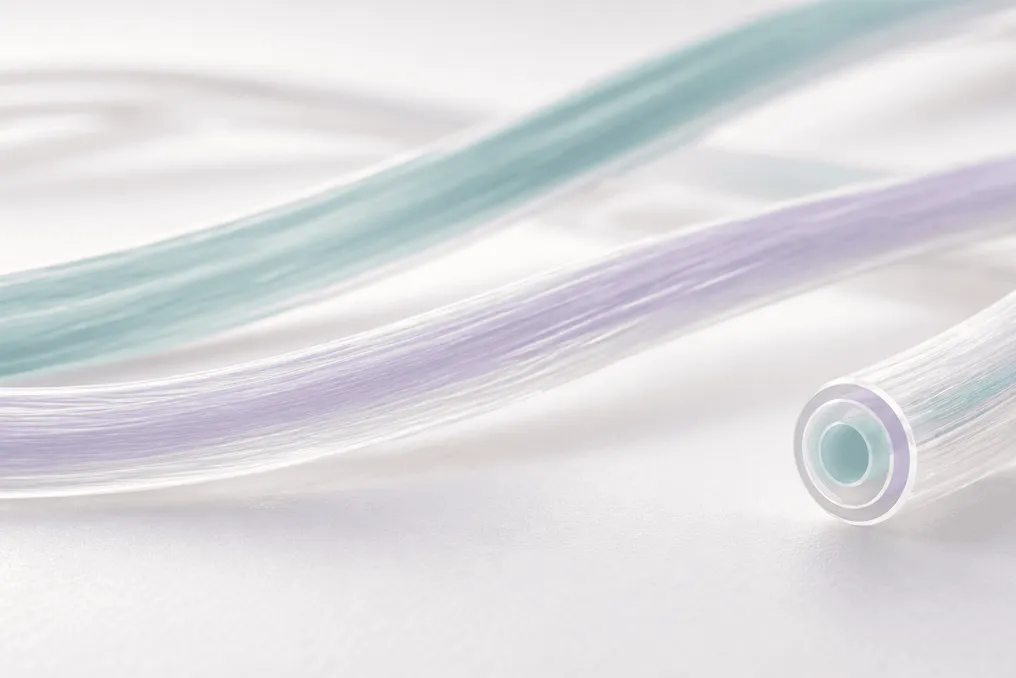
Scientists from Duhua University have developed a method to weave transistors, resistors, and capacitors into a continuous fiber, turning the thread itself into an electrical circuit. This opens prospects for wearable computing and electronic skins for robots capable of bending with soft bodies.

The work, led by Maifan Zhu, an academician of the Chinese Academy of Sciences and a professor at Duhua University, and researcher Gan Wang, was published in the journal Nature Electronics under the title 'Programmable Weaving of Integrated Circuits.' According to university news on September 24, the team used microfluidic coded weaving to place materials and connections inside the fiber as it formed, instead of attaching individual chips afterward.

When examining the cross-section, conductive, insulating, light-emitting, or semiconducting fluids are configured into stable functional layers. By varying the supply of each spin solution along the length, researchers can make these layers either continuous or discontinuous, thereby connecting devices. As a result, stacks of materials, device geometry, and interconnections are formed within a single process, transforming the fiber into a circuit.

On this platform, the group created modules for multi-color electroluminescence, analog signal processing, digital logic, and non-contact spatial sensing. By combining different types of devices into one fiber, they demonstrated configurable filters and inverters, transitioning from individual functional threads to circuits that operate coherently as designed.

In practical tests, the spatial sensing fibers were placed on a robotic gripper. Changes in the electric field coupling upon approach or movement of an object allowed the system to determine its position and automatically direct the manipulator to track it. In another demonstration, a flexible fiber interface and auxiliary system enabled a finger to control a robotic arm and a drone without physical contact.

Embodied artificial intelligence requires electronics that conform to complex shapes and movements. Soft fibers are a natural carrier, but integrating individual fiber devices into complete circuits required simultaneously solving problems of material placement, device structure, and electrical connections. The Duhua University method treats circuit layout as a weaving program while maintaining flexibility, sewability, and weaveability, and offers combinable building blocks for soft robots and multimodal sensory shells.

Chinese Neutrino Telescope Hailing (TRIDENT) Plans to Complete First Phase of Work in South China Sea Next Year
Read more
pandaily.com

Chinese Neutrino Telescope Hailing (TRIDENT) Plans to Complete First Phase of Work in South China Sea Next Year

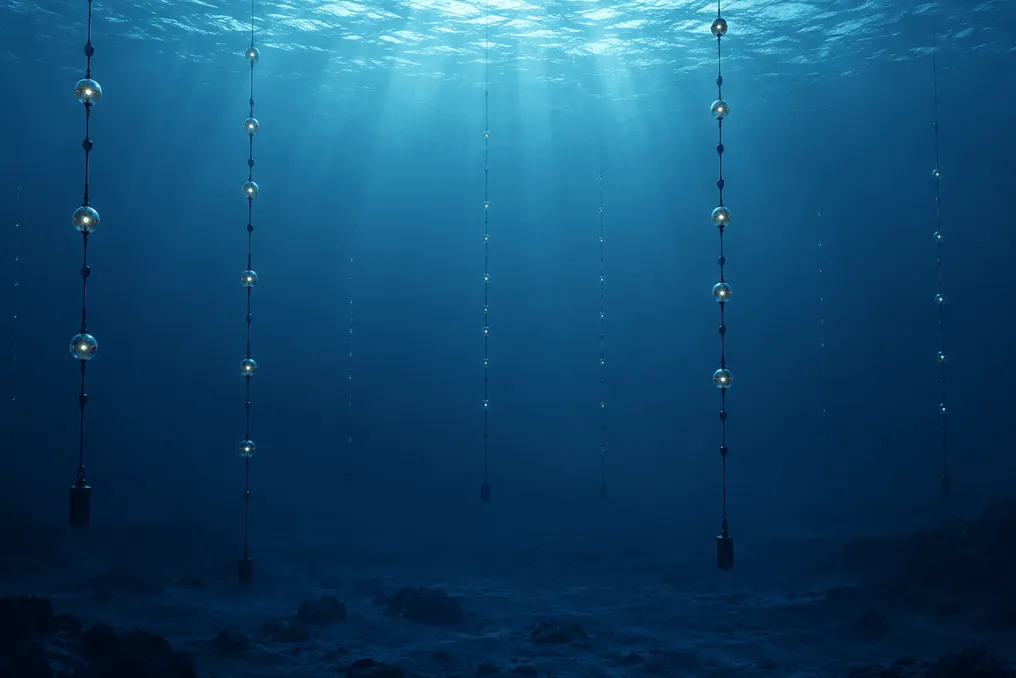
China's deep-sea neutrino telescope project, known as Hailing or TRIDENT, is currently undergoing a critical construction phase in the South China Sea. This was reported by Zun-Dao Li, Chief Scientist at Jiaotong University of Shanghai, and Xu Donglian, following Francis Halzen's Nobel Prize in Physics award in 2026, who pioneered the IceCube project.

Francis Halzen, a professor at the University of Wisconsin-Madison and a member of the international advisory board of the Zun-Dao Li Institute, received the award for his significant contribution to the development of the IceCube neutrino observatory and the discovery of high-energy astrophysical neutrinos. The official scientific brief from the Nobel Committee mentions TRIDENT in the South China Sea among next-generation telescopes with an instrumental volume exceeding one cubic kilometer, alongside IceCube-Gen2, KM3NeT, P-ONE, and Baikal-GVD.

Xu, who worked at IceCube as a graduate student and now leads the Hailing project, noted that Halzen publicly supported the Chinese plan and once stated that such a telescope would open a new chapter for Chinese astronomy. The design of Hailing was presented in the journal Nature Astronomy in 2023. It is planned to deploy arrays at depths greater than 3000 meters, utilizing over a thousand vertical lines and approximately 20,000 optical modules across three phases, totaling about 10 cubic kilometers—equivalent to ten IceCubes.

Xu stated that a search sea test was conducted in 2021, and the full marine testing process concluded in August 2025. He asserted that suitable locations and the core technological chain have proven effective. The completion of the first phase is scheduled for next year, at which point it will become the first neutrino telescope near the equator, joining IceCube and other participants in the global multi-channel network. Xu expressed hope that China will be able to launch a leading high-energy neutrino telescope around 2035.

Neutrinos interact weakly and are not deflected by magnetic fields, allowing them to explore extreme cosmic environments inaccessible to light. IceCube completed its operation in 2011, using 5160 sensors on 86 lines beneath the Antarctic ice, and in 2013, it registered high-energy neutrinos from outside the solar system for the first time. Xu viewed the Nobel Prize not as an endpoint, but as the beginning of neutrino astronomy.

Jiaotong University of Shanghai is also conducting the PandaX experiment. Liu Jianlai, Deputy Director of the institute, emphasized that efforts to study dark matter and neutrinos should mutually reinforce each other, as Chinese groups strive to answer fundamental questions about the universe.

Popular