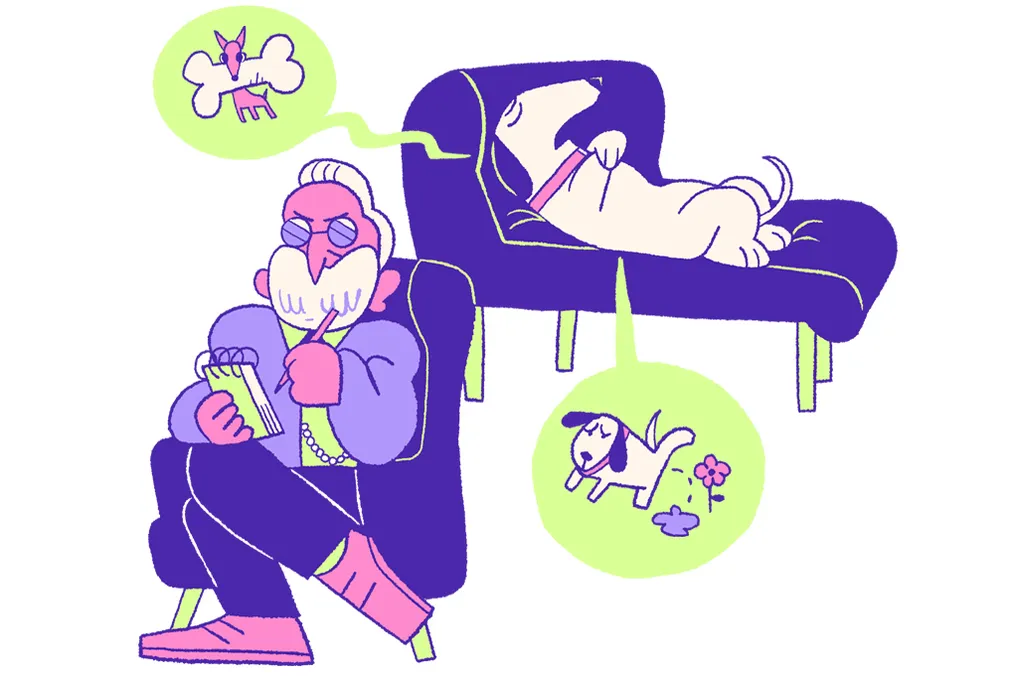
Yes, animals can manifest conditions resembling mental disorders, although the diagnostic process differs significantly from humans. In humans, many psychological diagnoses are based on subjective reports of symptoms, something that cannot be measured like a fever or hormonal change.
Since animals cannot go to the vet to describe their feelings, diagnosis depends entirely on observing their behavioral patterns. People who live with animals, whether owners or wildlife biologists, know that these beings' actions are generally predictable: dolphins swim in groups, pigs roll in mud, dogs play, cats hunt, canaries sing, and parrots imitate sounds.
A warning sign for some type of suffering or imbalance appears when an animal stops displaying interests or activities that were previously habitual. Similarly, drastic changes in the previous pattern, such as walking in circles, causing destruction, or showing increased aggression, also warrant attention.
However, this reliance on human observation introduces a bias: mental problems tend to be noticed more when they negatively impact the lives of their owners. Symptoms that would be considered harmless to humans, such as sleeping excessively or crying in the absence of people, can be clinically relevant and overlooked.
Veterinary medicine currently lacks a standardized protocol for diagnosing mental disorders. Although professionals may use specific manuals or protocols for analysis, they do not possess the rigor of the DSM-5, the manual used for humans and reviewed by a committee of specialists.
Generally, animals' clinical pictures are categorized based on the description of their behaviors, without the obligation to fit them into a specific disease or disorder.
It seems that mental disorders in animals are associated with environmental stresses and are more frequent in captive animals. To prevent this suffering, all animals, from pets to those in zoos, require environmental enrichment measures—which include objects, structures, and activities designed to stimulate natural behaviors and combat boredom. In more serious situations, psychiatric medication can be prescribed by a veterinarian.
The five-domain model, created in 1994, aims to assess animal welfare beyond mere survival. Animals are monitored in five main areas: nutrition, physical environment, health, behavior, and finally, mental state.
The mental state is deduced from the results of the previous four categories, under the premise that physical and behavioral deprivations generate negative mental and emotional states. For example, it is reasonable to infer a precarious mental state in an animal exposed to factors such as hunger, thermal discomfort, illness, or injury, and which does not have the freedom to express its natural behaviors.
Such physical factors act as an indicator of mental well-being, even if they do not constitute a formal diagnostic manual with specific disorder categories, as is the case with the DSM for humans. The question was asked by Ronaldo Magalhães, a resident of Fortaleza, CE.