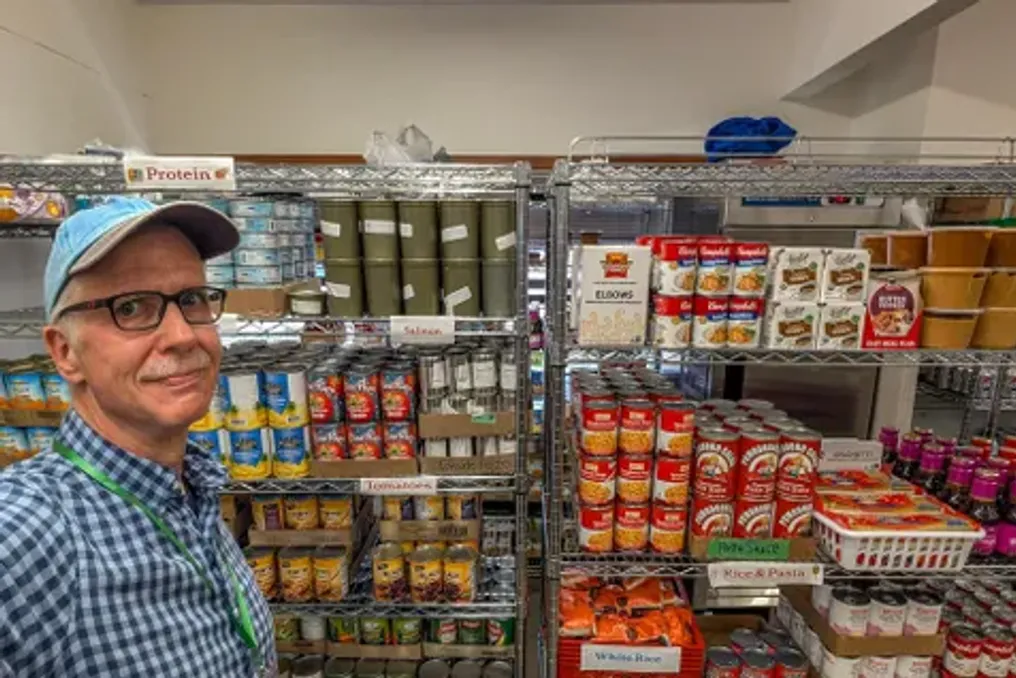
Michael Jensen began volunteering at a food bank in Port Townsend, Washington, this April. Initially, he feared that he would often have to deny people the desired amount of food, knowing the difficulties food banks face due to rising prices and hunger.
Jensen admitted that he initially felt some anxiety about having to say 'no' to anyone. However, after starting his volunteer work, he realized how mistaken he was.
Not only did he no longer have to deny anyone, but he often had to encourage people to take what they needed. In an interview with The Washington Post, Jensen noted that some people clearly do not receive enough food but continue to think of others.
He shared his experience on a Reddit post, writing that the extra portions were a 'humble lesson' for him and strengthened his belief in the fundamental kindness of people. Comments on his post went viral, gathering hundreds of similar stories.
One commenter suggested that the poorer people are, the more generous they usually are. Another recounted their experience organizing a 'fill the boots' fundraiser for a fire station supporting muscular dystrophy, noting that the oldest cars often brought in the largest sums, and donors apologized for being unable to give more.
Yet another person told of their mother, who is financially struggling. She visits the food pantry and takes a large box home but uses less than a quarter of the contents, packaging the rest to deliver to elderly people who cannot leave their homes in her senior community.
Colton En, 27, commented on the post, calling Jensen a 'pillar and institution' because his story resonated with him, and he now donates small amounts from his budget, believing that many people without much money act the same way, knowing what it is like to have nothing.
Psychological studies show that people with less money may be more inclined to give what they have to strangers.
Stephanie Sullivan, Assistant Director of Marketing and Communications at Food Bank for the Heartland in Nebraska, regularly observes care and generosity from clients of her food bank. She notes that neighbors tell her, 'I only come here when I absolutely need to because I know other people need this food.' Sullivan emphasized that people facing hunger understand the importance of these resources.
Jensen's post received thousands of upvotes on Reddit and over 800 comments, many of which contained personal stories of generosity from people experiencing financial hardship.
Sonja Matthews, Vice President of the Board of Directors of the Jefferson County Food Bank Association, which includes the bank where Jensen works, reported noticing an unusual number of donations last week. Upon checking, she found about $3,000 in digital donations, with most of them being very small amounts.
Matthews explained that most food bank employees in Jefferson County are volunteers, and many of them are also clients who visit the bank when in need. They want to give back to the community in some way. She suggested that a strong sense of community in the small town of Port Townsend might be the reason for this.
However, after reading the comments on Jensen's post, Matthews concluded that generosity among people with the fewest means seems universal. She remarked, 'When I read the comments, I thought: 'Oh, this magic is everywhere.' And I am so glad Michael decided to share this message.'
Jensen concluded that when people personally encounter need, they understand how much even a small helping hand can mean. He added that every time he works, people thank the volunteers for their presence and work, which brings him great satisfaction and a positive outlook on the world.