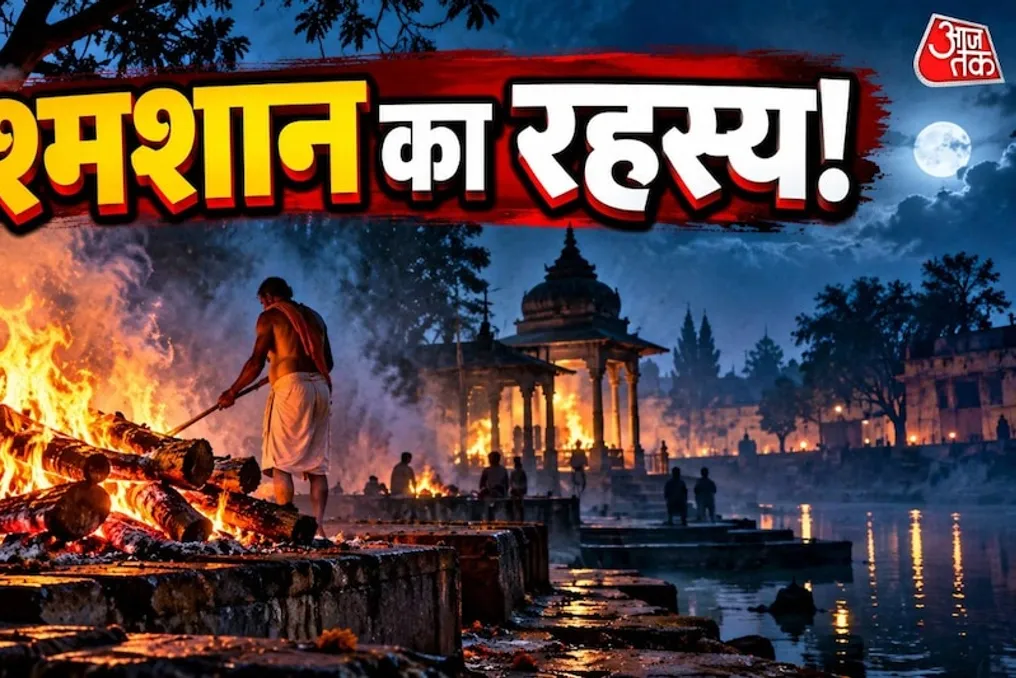
Explanation of the placement of cremation grounds near rivers in Hinduism
Read more
Aaj Tak
www.aajtak.in

Explanation of the placement of cremation grounds near rivers in Hinduism

In the tradition of Hinduism, there is a practice of ancestor worship and conducting Shraddha rituals during Pitru Paksha. Our deceased relatives are called Pitrus. The physical farewell to ancestors takes place at cremation grounds. However, many wonder why most of these places are located on the banks of rivers. Although some cremation grounds have been built among residential areas due to population growth and decreasing available land, all old cremation grounds in Hinduism are traditionally located near water.

Vivid examples of this include Manikarnika Ghat in Varanasi, ghats in Haridwar, and burial sites in the Sangam area of Prayagraj.

According to Hindu philosophy, the human body consists of five elements: earth, water, fire, air, and ether. After death, the body decomposes into these elements. Through fire, the physical form returns to nature, and the tradition of scattering the remaining ashes and bones in water is considered a symbol of the completion of this natural cycle.

From a religious perspective, water is viewed as a symbol of purity, life, and sanctity. Water plays a critically important role in all Hindu rites, from birth to death. Among the five elements, water has the ability to quickly absorb energy. This is why ancient sages practiced meditation while holding water in their palms.

From a scientific perspective, the human body is mainly composed of water and organic substances. During cremation, high temperatures cause water to evaporate from the body, and most organic substances turn into carbon dioxide, water vapor, and other gaseous compounds. The mineral components of the body do not completely turn into gas; minerals primarily associated with calcium and phosphorus, as well as small amounts of potassium, sodium, and other minerals, remain in the ash.

After cremation, the ashes and bones retain their significance, and the tradition of scattering them in water persists. Scientifically, it can be stated that water does not simply absorb these remains magically; some soluble minerals may dissolve in water, while other particles settle in the bottom sediments. Thus, the substances gradually become part of the natural ecological cycle. This is why the custom of bathing after burial exists.

In ancient times, most cities were located on the banks of rivers. The river served as the main source of drinking water, for agriculture, transport, and daily life. Open space was also available on the riverbanks, making the area suitable for conducting burials. Over time, ghats were created in these locations, which became an integral part of religious and social life.
Similar stories

Festivities held in Nainital honoring goddesses Nanda and Sunanda as they depart for Kailash
Read more
www.aajtak.in

Festivities held in Nainital honoring goddesses Nanda and Sunanda as they depart for Kailash

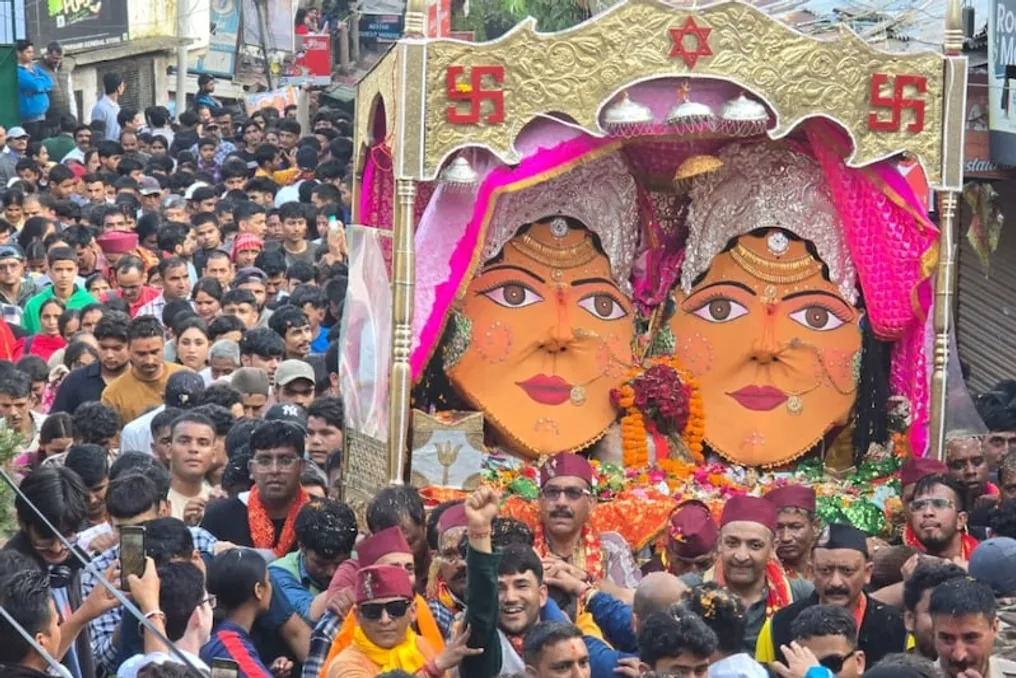
The town of Nainital in the state of Uttarakhand awaited the day when its streets would fill with cheers in honor of the goddesses Nanda and Sunanda. On Wednesday, during a procession as part of the 124th Shri Nanda Devi festival, thousands of pilgrims walked with processions, demonstrating deep faith. Despite the drizzling rain, the enthusiasm of the devotees remained unchanged.

After conducting ritual ceremonies at the Nayana Devi temple, the procession with goddesses Nanda and Sunanda left for the city. A shower of flowers descended upon the chariot. Following this, crowds of pilgrims rushed to the temple to see and receive blessings from the goddesses. The procession followed a route that included the DSA fields, the mosque, Sharda Sang, and Mal Road, moving towards Tallital.

Along the entire route, people stood with folded hands, awaiting the opportunity to see the goddesses. As the procession advanced, the excitement of the pilgrims grew. Representatives of all age groups participated in the procession—women, children, the elderly, and youth. Aarti and flower showers were held at different points. The sound of drums, brass bands, and traditional musical instruments added even greater religiosity to the atmosphere.

During the city procession, local traditional artists presented the cultural heritage of Kumaon, showcasing elements of local culture. The rain continued, but the pilgrims did not stop. The streets and hills of Nainital filled with cheers in honor of goddesses Nanda and Sunanda, coloring the entire city with the colors of religious faith and folk traditions.

For the pilgrims accompanying the procession, various services were organized in the city. Free meals (bhandaras) were arranged in different places, distributing halwa-puri, water, fruit juices, and sacred offerings. Despite the rain, the spirit of service among the locals and volunteers remained; some distributed food, while others offered water to the pilgrims.

On Wednesday, the streets of Nainital featured not only the chariot with goddesses Nanda and Sunanda but also the entire culture of faith, tradition, and service. Crowds of pilgrims were visible from Mal Road to Tallital. A single call echoed around: 'Jai Maa Nanda, Jai Maa Sunanda.'

This city procession became not just a religious event, but a living reflection of centuries-old faith, folk traditions, and the cultural heritage of Kumaon. Joy shone on the faces of the pilgrims upon meeting the goddesses, and sadness in their eyes upon bidding farewell. Every step taken with the procession was filled with reverence and faith in the goddesses.

After arriving in Tallital, the procession with goddesses Nanda and Sunanda will be moved towards Mallital. Later in the evening, near the Golu Devata temple on the wet street, the procession will be immersed in Nainital Lake.

With this conclusion, goddesses Nanda and Sunanda will depart from their home in Nainital for Kailash. At this touching moment of farewell, thousands of pilgrims will shed tears. Cheers in honor of the goddesses will once again resound in the atmosphere of Nainital, and the pilgrims will sadly bid farewell to Nanda and Sunanda before their departure to Kailash.

Popular