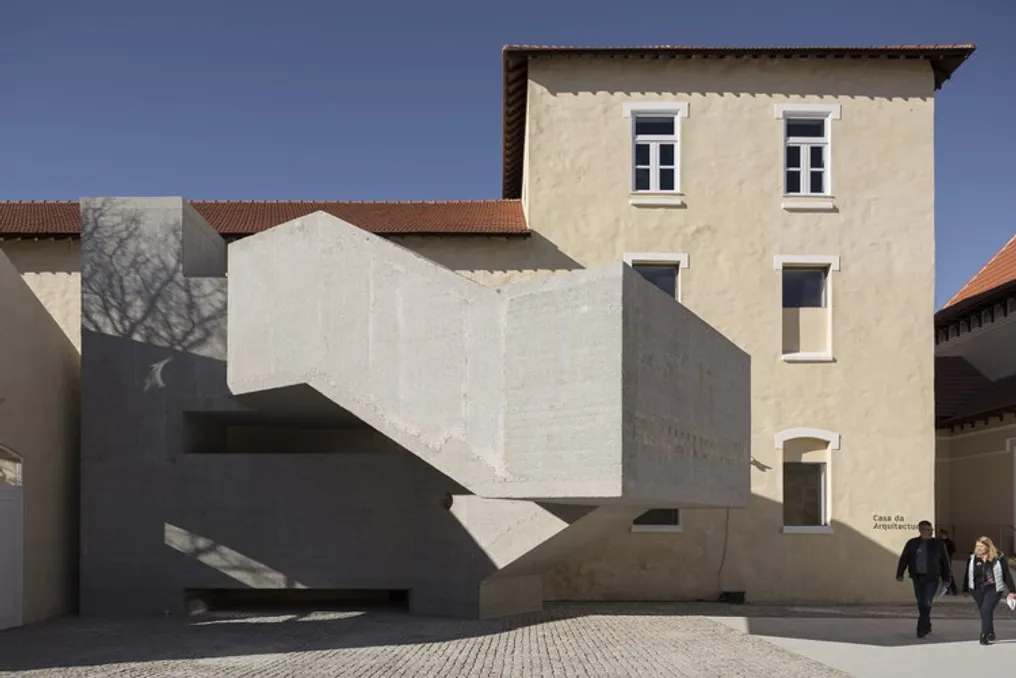
Casa da Arquitetura in Portugal is hosting the CICA International Conference 2026 for the first time, scheduled for October 10-11 and October 17-18. The main theme of the conference is 'Architectural Critique: Resistance and Commitment.'
Due to the diminishing opportunities for architectural critique in mass media and specialized publications, the CICA conference series aims to create a regular space for meetings and discussions among both established and emerging architectural critics. The goal of this event is to foster the development of criticism in both practical and academic aspects, as well as to preserve the results of these discussions through publication.
Key Speakers and Format
The 2026 edition holds special significance for this initiative as it will be held predominantly in person in Portugal for the first time, thanks to the collaboration with Casa da Arquitetura. Four key speakers—Patti Anahori (Cape Verde), Joan Ockman (USA), Kazi Khalid Ashraf (Bangladesh), and Valerio Paolo Mosco (Italy)—will participate in Matosinhos, along with half of the other speakers.
Four keynote lectures are distributed across the four days of the conference. Valerio Paolo Mosco will open the program on October 10, introduced by Ana Tostens. On the following day, Joan Ockman will be introduced by Luís Santiago Baptista. On October 17, Kazi Khalid Ashraf will introduce Susan Ventura, and on the final day, Patti Anahori will be introduced by João Belu Rodeia. Each keynote lecture will last one hour and will be followed by remarks from the presenter and a Q&A session with the audience.
Program and Themes
The program also includes four panel sessions that will bring together researchers and critics from different geographical regions and generations. These sessions address issues such as cultural policy and the critical construction of contemporary architecture, the relationship between architecture, power, and heritage, forms of spatial and political resistance, memory and colonialism, as well as processes of decolonization and urban critique.
Examples and themes under consideration include the debate surrounding the Isozaki and Uffizi Loggia, the reconstruction of Palazzo Ponti, the critique of Ada Louise Huxtable Guggenheim Bilbao, the occupation of colonial housing blocks in Luanda, the writings and drawings of Bogdan Bogdanovich, and decolonization through architectural and institutional practices.
Each session features moderated debates led by Pedro Baia, Marta Sequeira, Carlos Mashadu and Moura, and Nuno Grande, emphasizing the collective discursive nature of the conference.
History and Previous Editions
With support from CICA, the series of international conferences began in 2020, with the first in-person edition taking place in 2021 at the University of Texas in Austin. Due to the COVID-19 pandemic, the conference transitioned to an online format, allowing authors and researchers from around the world to participate. Since then, the initiative has gathered critics, architects, and researchers to discuss various topics related to architectural critique and thought.
Previous editions have covered themes such as 'On the Duty and Power of Architectural Criticism' (2021) at the University of Texas in Austin; 'Defining Architectural Quality' (2022) at the University of Navarra; 'Architecture as Built Criticism' (2023) at Tonji University; 'Architecture between Autonomy and Engagement' (2024) at McMaster University and Federal University of Rio Grande do Sul; and 'Temporality and Territoriality in Architecture' (2025) at Yale University.
Throughout its editions, the conference has attracted leading figures in architectural criticism, theory, and practice, including Kenneth Frampton, Philippa Tumwbaine, Ruth Verde Zein, Zhen Shilin, Silvia Arango, Rahul Mehrotra, Tosin Oshinovo, Juhani Pallasmaa, Al Borde – David Barraga, Pasquale Gangotenu, Marilauiza Borju, and Esteban Benavides, Van Shu, Lyndon Neri, and Rossana Hu, Deniz Scott Brown, Nzinga Mbup, and Alvaro Sizu.
The conference proceedings are published by Park Books in Zurich, with the 2026 volume scheduled for publication in 2027.
Biographies of Key Speakers
Joan Ockman is an architectural historian, critic, and professor. She teaches at the Weitzman School of Design at the University of Pennsylvania and at Cooper Union School of Architecture. From 2020 to 2024, she was a visiting professor of architectural history at Yale School of Architecture, where she also served as Director of Doctoral Studies. Previously, she taught for over two decades at the College of Architecture, Planning and Preservation at Columbia University and directed the Temple Hoine Buell Center for American Architecture from 1994 to 2008. She began her professional career in the mid-1970s at the Institute of Architecture and Urban Studies in New York, where she edited the journal Oppositions and the Oppositions Books series. Among her major publications are Architecture School: Three Centuries of Educating Architects in North America (2012), The Pragmatist Imagination: Thinking about Things in the Making (2000), and the award-winning Architecture Culture 1943–1968: A Documentary Anthology (1993). Her recent work includes the essay 'Toward a Political Ecology of Architecture' (2022).
Kazi Khalid Ashraf is an architect, historian, and architectural critic working at the intersection of architecture, urbanism, and landscape. He founded and currently directs the Bengal Institute for Architecture, Landscapes and Settlements in Dhaka, Bangladesh, which focuses on researching and designing urban futures that integrate urbanism, landscape, and hydrology. Educated at BUET, MIT, and the University of Pennsylvania, he has taught at the University of Hawaii, the University of Pennsylvania, and Temple University in the United States. He is the author and editor of works such as Muzharul Islam: An Architect of Tomorrow, The Hermit's Hut: Architecture and Asceticism in India, Designing Dhaka: A Manifesto for a Better City, The Great Padma: The Epic River that made the Bengal Delta, and The Mother Tongue of Architecture: Selected Writings, which received Honorable Mention at the CICA 2026 Bruno Zevi Book Awards. In 2022, he served on the main jury of the Aga Khan Award for Architecture.
Patti Anahori is an architect from Cape Verde whose work lies at the intersection of architecture, art, research, and pedagogy. Her practice explores African and Afro-diasporic spatial practices as forms of decolonial knowledge production, highlighting the connections between power, place, belonging, memory, and identity. She is dedicated to creating alternative and independent spaces for experimentation and collective exchange that challenge dominant spatial narratives and promote the building of a more just and restorative future. Anahori was a visiting professor at Columbia University and the founder of CIDLOT, an interdisciplinary research center at the University of Cape Verde. She is also a co-founder of the platform Storia na Lugar, a platform for narrative and counter-narrative, and her(e), otherwise, an experimental platform dedicated to African women and women of the diaspora working in creative and spatial thinking fields.
Valerio Paolo Mosco received a Bachelor of Architecture degree in Rome in 1992 and earned a Ph.D. in Design from the same university between 2005 and 2008. He later worked as an assistant lecturer at the University of Rome and in Pescara, before becoming a contract lecturer at the University of Giov Venice, where he became a researcher, and later qualified as an associate professor between 2002 and 2005. He was a visiting lecturer at IIT (Illinois Institute of Technology) in Chicago in 2006 and taught at the Polytechnic University of Brescia from 2007 to 2008; at the Faculty of Architecture at the University of Ferrara from 2008 to 2010; at the Politecnico di Milano, where he taught architectural history in English from 2010 to 2013; and at IED in Rome (Istituto Europeo di Design), where he taught architectural history in Italian and English from 2010 to 2017. He currently teaches at the University of Giov in Design and Architectural Theory. He has participated in numerous national and international competitions, winning Europan 4 in Osijek, Croatia, in 1997 with Andrea Stipa; the competition for the new Wind headquarters in Rome in 2000 with Aldo Aimonino and Officina 5; and the kindergarten competition in Galtsettello, Prato, in 2008 with Andrea Stipa. He is the author of several books, including Architettura italiana dal postmoderno ad oggi (Skira, 2017), Perché ora l'architettura italiana e altri scritti (AREdizioni, 2017), Ensamble Studio (Edilstampa, 2013), Naked Architecture (Skira, 2012), Steven Holl (Motta Edizioni, 2009), Sessant'anni di ingegneria in Italia e all'estero (Edilstampa, 2010), and Contemporary Public Space. Un-Volumetric Architecture (with Aldo Aimonino, Skira, 2006). In 2008, he was responsible for including 'City and Public Space' in Enciclopedia Italiana Treccani.