
Venture Naveli Ventures, founded by Navya Naveli Nanda, focuses on investments in deep and advanced technologies
Read more
YourStory [india, en]
yourstory.com

Venture Naveli Ventures, founded by Navya Naveli Nanda, focuses on investments in deep and advanced technologies

Entrepreneur Navya Naveli Nanda officially introduced Naveli Ventures—the venture arm of the Nanda family's Family Office. This structure will focus on research-based startups and projects in deep technology, space, clean energy, artificial intelligence, advanced manufacturing, and healthcare.

In a LinkedIn announcement, Nanda specified that the platform plans to invest through direct startup investments, institutional funds, co-investments, as well as partnerships with academic circles and intellectual property owners. She emphasized that the evaluation criterion is not a specific sector, but the scale of the problem being solved and the conviction of the people solving it.

Furthermore, Nanda stated that the Family Office's connections in industry, government, academia, and among investors can be utilized to support partners. According to her LinkedIn profile, Nanda holds the position of Managing Partner at Naveli Ventures.

Naveli Ventures LLP was registered in March 2023, with Nanda and Agatha Nanda serving as designated partners. This announcement marks the official presentation of the investment strategy. The Family Office is affiliated with the Nanda business group, which includes Escorts Kubota, a company dealing in agricultural machinery and construction equipment.

The emergence of this initiative comes against the backdrop of increased government funding for commercially complex technologies in India. A government scheme for research, development, and innovation allocates a volume of 1 lakh crore rupees over six years, prioritizing deep technologies, AI, biotechnology, energy transition, and space. The Startup India Fund of Funds 2.0, approved in April 2026, will add a pool of 10,000 crore rupees, partially directed towards deep technologies and technology-driven manufacturing.

Private capital is moving in the same direction, albeit unevenly. In April, the fund Capital-A closed the first round of its second fund totaling 160 crore rupees, focused on manufacturing and deep technology startups. In August, Bluehill.VC closed an advanced technology fund worth 400 crore rupees. Last month, IIT Madras, IIT Madras Research Park, and Unicorn India Ventures announced the first round of the IITM Unicorn Frontier Fund I amounting to 450 crore rupees, which is part of a planned 1,000 crore rupee deep technology fund.

Naveli's promise of patient capital is timely, but not unique. Nanda noted: 'We are not chasing quick profits, but striving to help build lasting companies with outstanding people for the future of India.' However, the question remains whether such a long-term approach can facilitate the transition of technologies from the research and prototype stage to sustainable and scalable business.

Similar stories

PanIIT and Andhra Pradesh government plan to create a deep technology fund worth 500 crore rupees
Read more
yourstory.com

PanIIT and Andhra Pradesh government plan to create a deep technology fund worth 500 crore rupees

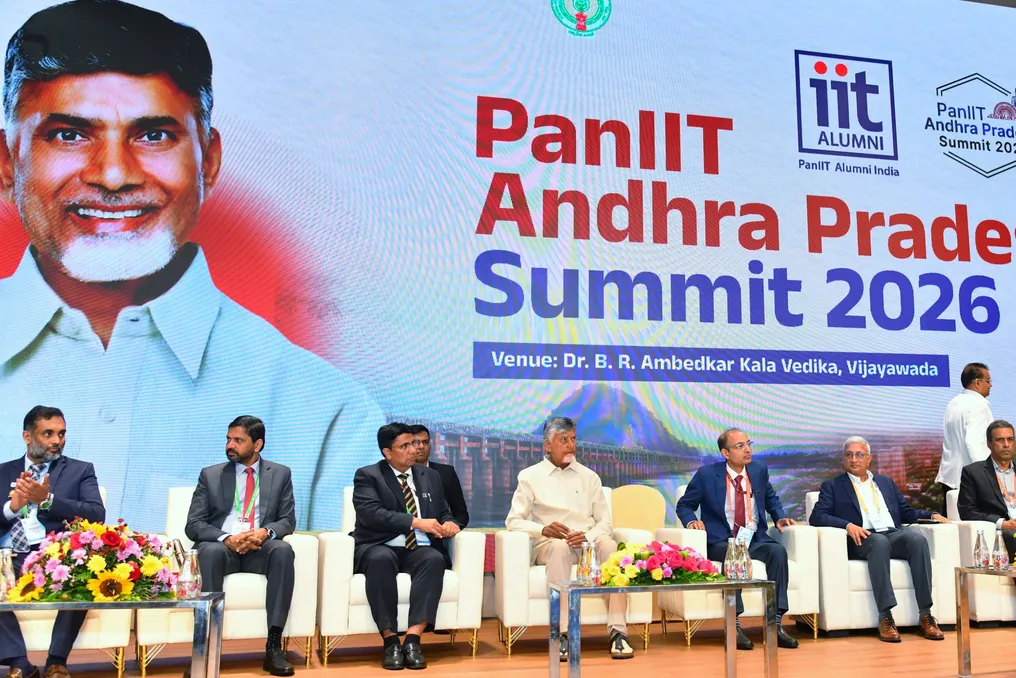
Alumni of PanIIT India, in collaboration with the Government of Andhra Pradesh, intend to establish a venture fund focused on deep technology companies with a capital of 500 crore rupees. This initiative is part of broader efforts to attract capital, research activities, and manufacturing capacity to the state.

The proposed PanIIT Amaravati Venture Fund will attract funds from IIT alumni, industry representatives, and institutional investors. According to plans presented at the PanIIT Summit in Andhra Pradesh in Vijayawada on Saturday, the first round of fund closure is expected by July 1, 2027.

The primary goal of the fund is to support at least 25 deep technology startups in Andhra Pradesh by 2030. Although the exact structure of the fund, including the financial commitments of PanIIT, the Andhra Pradesh government, and private investors, was not immediately clear, it was noted that at least 50% of the companies the fund invests in must have their primary R&D or manufacturing facilities in Andhra Pradesh.

This localization requirement is intended to ensure that the fund does more than just invest in companies headquartered elsewhere, linking a significant portion of its portfolio to research or production activities within the state.

Addressing the group of venture capital investors at the summit, Chief Minister of Andhra Pradesh N Chandrababu Naidu made a direct appeal to investors to bring both capital and expertise. Naidu stated: 'You bring the money, you bring the mentors. I will ensure alignment with your contribution.'

The precise mechanism by which the state will match private contributions was not immediately clarified, nor whether this commitment would go directly into the PanIIT Amaravati Venture Fund.

The proposed fund aims to address two challenges frequently faced by deep technology startups: access to long-term capital and access to experienced operators and industry networks. Deep tech companies typically require longer product development cycles and larger capital expenditures compared to software-focused startups, especially in areas such as semiconductors, quantum technologies, aerospace, defense, healthcare, and advanced manufacturing.

This venture fund fits into the broader concept outlined in the Andhra PanIIT Declaration, which seeks to establish long-term institutional links between the IIT ecosystem, industry, and the Andhra Pradesh government. Proposed measures include the creation of a permanent PanIIT Amaravati Council, which should serve as a coordinating platform for deep technology, research, and innovation initiatives in the state.

The framework also includes a technology transfer pipeline to identify research from IITs that can be commercialized in Andhra Pradesh, as well as a global network of 100 IIT mentors from 10 industry departments in the state's universities and institutions.

IIT Mentor Network

The Amaravati Council is conceived as a means to connect IIT alumni, startups, universities, industry, and policymakers, providing a more permanent structure for initiatives arising from the summit. The broader concept is also aimed at deepening collaboration between academia and industry, supporting startup creation, and streamlining the transition of research developed in the IIT ecosystem to commercial implementation.

Furthermore, it sets a goal to incubate at least 50 startups in Andhra Pradesh by 2030. PanIIT plans to create a mentor network parallel to the fund. The proposed Global IIT Mentor Network of 100 individuals should connect founders with IIT alumni who can provide guidance on product development, market entry strategy, scaling, and execution.

According to the plans presented at the summit, an initial cohort of 25 deep technology startups should be matched with mentors. The mentor network is intended to complement the proposed venture fund by providing operational experience and industry connections alongside capital.

Amaravati Declaration

Collectively, the fund, the mentor network, and the Amaravati Declaration represent an attempt to link venture capital with IIT research and alumni expertise, using Andhra Pradesh as a base for creating startups, R&D, and manufacturing.

WIPO reports that artificial intelligence is transforming innovation investments amid the rise of deep science startups
Read more
cgtn.com

WIPO reports that artificial intelligence is transforming innovation investments amid the rise of deep science startups

The World Intellectual Property Organization (WIPO) reported on Tuesday that artificial intelligence (AI) is stimulating the recovery of venture capital and research and development (R&D) spending. Simultaneously, a new generation of deep science startups is turning advanced scientific research into new industries.

According to the WIPO Global Innovation Index for 2026 (2026 GII), Switzerland, Sweden, the United States, South Korea, and Singapore led the rankings. Over the last decade, countries such as China, India, Vietnam, Turkey, the Philippines, Morocco, and Indonesia have seen significant acceleration in growth.

The report indicates that global R&D spending increased by more than 3.3% in real terms in 2025, and is expected to reach $3.4 trillion by 2026. Corporate R&D spending grew by 5.8% in 2025, reaching a record $1.5 trillion, driven by research in software, AI, and defense industries.

Venture capital funding for innovative startups increased by 28%, totaling $510 billion in 2025, marking the strongest growth since 2021. However, there is an increasing concentration of investments: AI accounted for 53% of total venture capital deal value, despite the number of deals declining for the fourth consecutive year. African startups attracted about $3.2 billion in 2025, a 40% increase.

Deep science startups are showing rapid growth: over 30,000 such companies have been created since 2000, nearly ten times the figure from 2010. Their share among venture capital-backed startups reached 16% in 2025, with these enterprises having a total valuation of $7.6 trillion, a 23% increase from 2024. Among the leaders in the number of firms are the United States (12,752), followed by China (3,466) and the United Kingdom (2,133).

The fastest growth since 2020 has been recorded in Central and South Asia, Latin America and the Caribbean, as well as in Sub-Saharan Africa. These enterprises cover fields such as semiconductors, robotics, quantum computing, life sciences, space, and advanced materials.

WIPO Director General Darren Tan noted: 'AI is opening up new technological horizons in all areas of science.' He added that the 2026 GII report shows how the new generation of deep science startups is transforming breakthroughs into tangible products, reshaping fields such as life sciences, space, robotics, and clean energy.

The GII, published annually, assesses the innovation ecosystems of 139 economies using 79 different indicators.

Popular