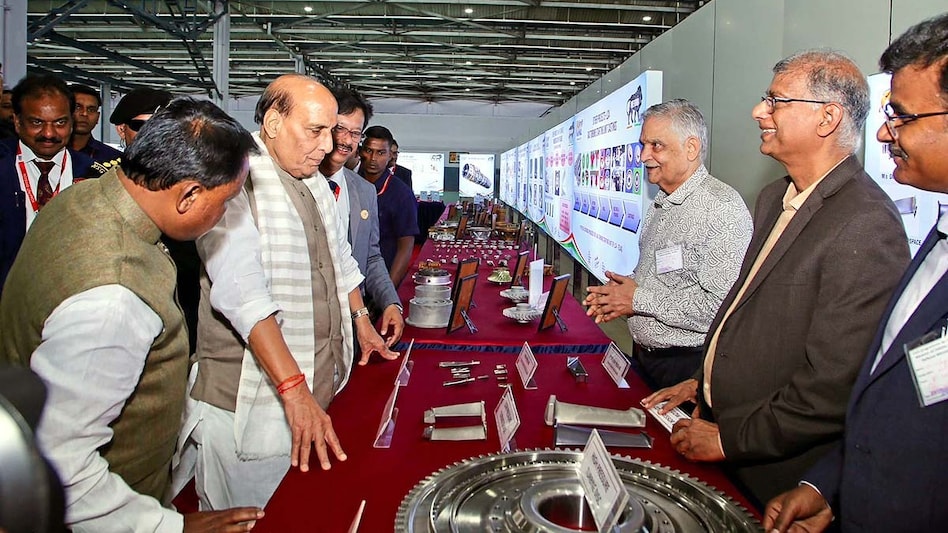
Hindustan Aeronautics Limited's (HAL) Koraput division has supplied its 2000th aero-engine to the defense forces, marking a significant advancement in India's aero-engine manufacturing capabilities. Defence Minister Rajnath Singh was present at an event held in Koraput, Odisha, on October 6, 2026, where he made several important announcements regarding the enhancement of aero-engine manufacturing capabilities in the country.
HAL plans to increase the annual production capacity of the AL-31FP engine from 30 to 50, which will require an investment of ₹335 crore. Additionally, a second production line for the Shakti engine will be established, costing ₹218 crore. This new line will be capable of producing 100 Shakti engines annually, with a target completion date of 2028-29.
HAL's Koraput division commenced operations in 1964 and has been engaged in the manufacturing and repair of engines for the nation's military aircraft and helicopters for nearly 60 years. Engines manufactured here have been used in fighter jets such as MiG-21, MiG-27, MiG-29, and Su-30MKI. This division has successfully overhauled more than 9,000 engines to date.
In 2024, the government had ordered HAL to manufacture 240 AL-31FP engines for Su-30MKI aircraft. Despite challenges related to supply and raw materials, HAL delivered the first engine ahead of schedule. According to the government, the target was to produce 60 engines by the end of the second year, but HAL prepared and delivered 63 engines. Now, the annual production capacity of this engine will be increased from 30 to 50 with an investment of ₹335 crore, ensuring timely availability of engines required for Su-30MKI aircraft.
A second production line for the Shakti engine will be set up at HAL, requiring an expenditure of ₹218 crore. This new line will be capable of producing 100 Shakti engines per year and is planned to be fully operational by 2028-29. The Shakti engine is used in helicopters manufactured in India, such as the Dhruv Advanced Light Helicopter (ALH) and Prachand Light Combat Helicopter (LCH). The increased availability of these engines will help meet the demand for engines for these helicopters.
Defence Minister Rajnath Singh emphasized that India should not solely depend on building aircraft and helicopters, but must also enhance its indigenous engine manufacturing capability. Indigenous engines are particularly crucial for the Advanced Medium Combat Aircraft (AMCA). The government is working on an indigenous high-thrust engine program with an investment of approximately ₹5,000 crore towards this objective. This program focuses on developing necessary raw materials and other components for engine manufacturing domestically, involving collaboration with MIDHANI.
Rajnath Singh also clarified that the aero-engine is a critical component of an aircraft, so merely manufacturing the engine is insufficient; having the necessary facilities in the country for its testing, repair, and long-term use is also mandatory. He stated that HAL Koraput should be developed not just as an engine manufacturing center but as a comprehensive aerospace propulsion center. In this endeavor, MSMEs, startups, private companies, universities, and research institutions will also be involved. The 2000th engine from HAL Koraput is a major milestone of nearly six decades of work, and now the focus of the government and HAL is on strengthening the capacity for advanced and high-thrust engines in the country, alongside increasing engine production.