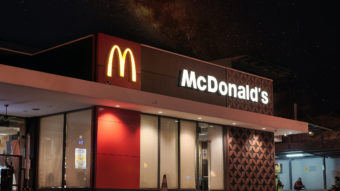
McDonald's has become the target of a class-action lawsuit in the United States after it was discovered that the corporation uses an artificial intelligence system to coordinate its menu prices. The lawsuit was filed on Friday (10/02) by a consumer in the city of Chicago, accusing the company of violating the country's antitrust laws.
The petition alleges that the chain established a collusion with independent franchisees to standardize and determine prices using AI models fed by confidential business information, as reported by Reuters. Furthermore, the action claims that prices should be decided individually by each establishment, but the system implemented by McDonald's allegedly reduced competition between stores.
This legal move comes just days after an agency revealed that an AI-based pricing tool used by McDonald's in the US analyzes local purchase history to calculate so-called 'price sensitivity.' In practical terms, the technology allows the company to estimate how much customers in each area are willing to pay for snacks.
The investigation pointed to significant disparities even between very close stores, reaching a difference of 21% in two units located approximately 3.2 km apart within the same city. Although the company insists on the autonomy of franchisees to set prices, operators reported feeling pressure to adhere to the system's suggestions. The headquarters sends guideline reports and monitors deviations from proposed values, a behavior that could influence franchise license renewals, according to Reuters.
The proponents of the lawsuit argue that the core of the problem lies in this alignment of practiced costs. Consumers argue that the centralized pricing system nullifies part of the competition, including among franchises, which should make their commercial decisions independently.
Lark Turner, the plaintiff's lawyer, accused McDonald's of leveraging its large scale and the data collected through the franchise network to inflate prices. He stated that the restaurant 'is leveraging its treasure trove of data and its franchise system to extort consumers.'
This lawsuit joins other litigation in the United States involving the use of pricing algorithms in markets where independent companies may end up adopting similar values. Antitrust issues have also begun to arise in cases related to digital tools used in the hospitality and real estate sectors.
In a statement released the day before (10/05), McDonald's refuted the accusations, classifying the lawsuit as unfounded. The company stated in a note that 'artificial intelligence does not set the price of a Big Mac or any other menu item.'
The company maintained that the allegations are 'speculative and misinformed' and reaffirmed that the final decision on prices belongs to the franchise managers. McDonald's also defended the use of price analysis and recommendation software, arguing that such instruments are legitimately used in various sectors of the economy.